


Colleen Krestensen, Deputy President of the Australian Brumby Alliance, and proud owner of two beautiful rehomed Snowy brumbies, June 2026.
The NSW Environment Minister, Penny Sharpe, released new estimates of brumby numbers in Kosciuszko National Park (KNP) on 22 May 2026,1 which implied a dramatic and biologically impossible population increase of up to 315 per cent over a 12 month period from the previous year’s survey results. An increase of this size, when fertile mares only have one foal a year, simply doesn’t pass the pub test or objective scientific scrutiny. And it certainly can’t be explained simply by a mild summer resulting in higher foaling rates as some ecologists have suggested.
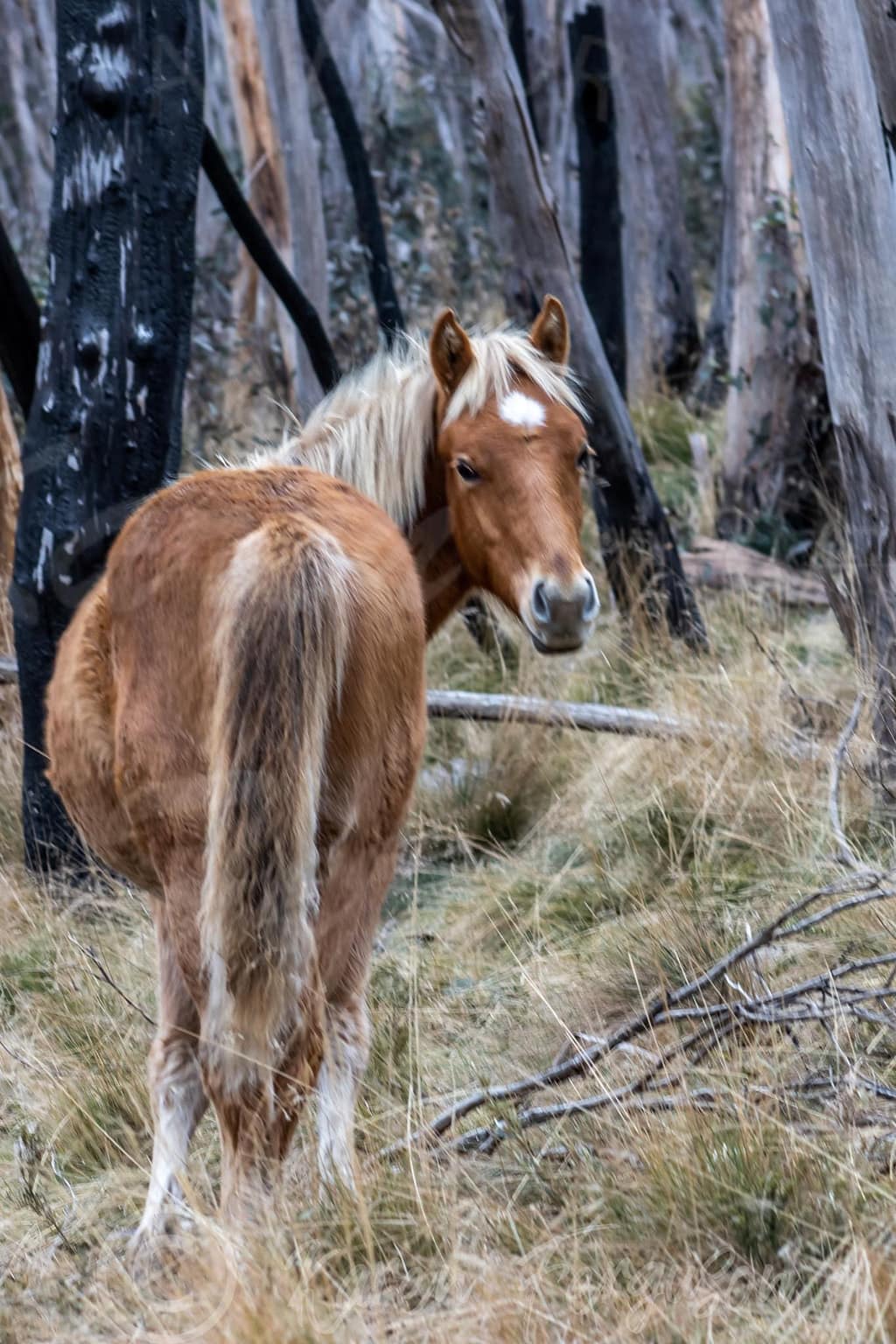
Photo: Karen Ferguson.
The concern for the community is the government is accepting this alleged increase without question as a basis to resume aerial culling brumbies, commencing in the coming days. In a debate which sometimes has been pitched as science versus sentiment, science is on the side of the brumbies this time.
An unbelievable increase in brumby numbers
The 2024 survey of wild horse numbers in the KNP, released in 2025, estimated a range of between 2,800–3,950.2 The government drew from this report a central estimate of 3,949 horses. The recently released 2025 survey report estimated a range of 6,476–16,411 brumbies, with a central estimate of 10,309 horses. Some increase in numbers is possible. However the alleged increase based on central estimates is around 160 per cent. The increase based on top of the range numbers is over 315 per cent.
It simply is not possible for the population to have increased anywhere near these numbers even if every mare produced triplets. Horses reproduce in the wild at a rate of between 7 per cent and 15 per cent, unlike wild pigs, foxes or cats which produce litters and can spread quickly, and more neatly fit common definitions of an invasive species which generally include rapid reproduction as a key characteristic.
Both survey reports were the subject of a peer review process. Analysis of the peer reviews, of the most recent report on the 2025 survey, reveals concerns that the methodology may have contributed to the significantly higher numbers. Reviewers respectfully noted, for example that the survey method “quite possibly inflates” the population estimate. They also noted that the direct extrapolation of average numbers from surveyed areas into terrain which was not possible to survey due to steepness or dense vegetation was “almost certainly wrong”, given the likelihood of lower numbers of horses in these area.3 The name of the organisation which undertook the survey was not publicly released by the government.
What about the apparent recovery of the Kosciuszko National Park after the removal of so many horses?
The survey also seems at odds with the feedback from National Parks and Wildlife (NPWS) about recovery in the KNP after the reduction in horse numbers. NPWS advised in May 2026 that 9,198 wild horses have been removed from the Park since 2021, 6,041 of which by aerial shooting.
We’ve seen a number of reports and photographs on social media from NPWS and from the Invasive Species Council suggesting the KNP was recovering well and looking in great shape after the significant reduction in horse numbers. This suggests, like many of us who visit the mountains, that they thought numbers were down, not up. We have seen no recent evidence of damage from dense numbers in particular locations, other than photos recycled from many years ago, most of them from the 2020 drought when horses gathered around the waterways. We can only assume they were also quietly surprised by the survey results.
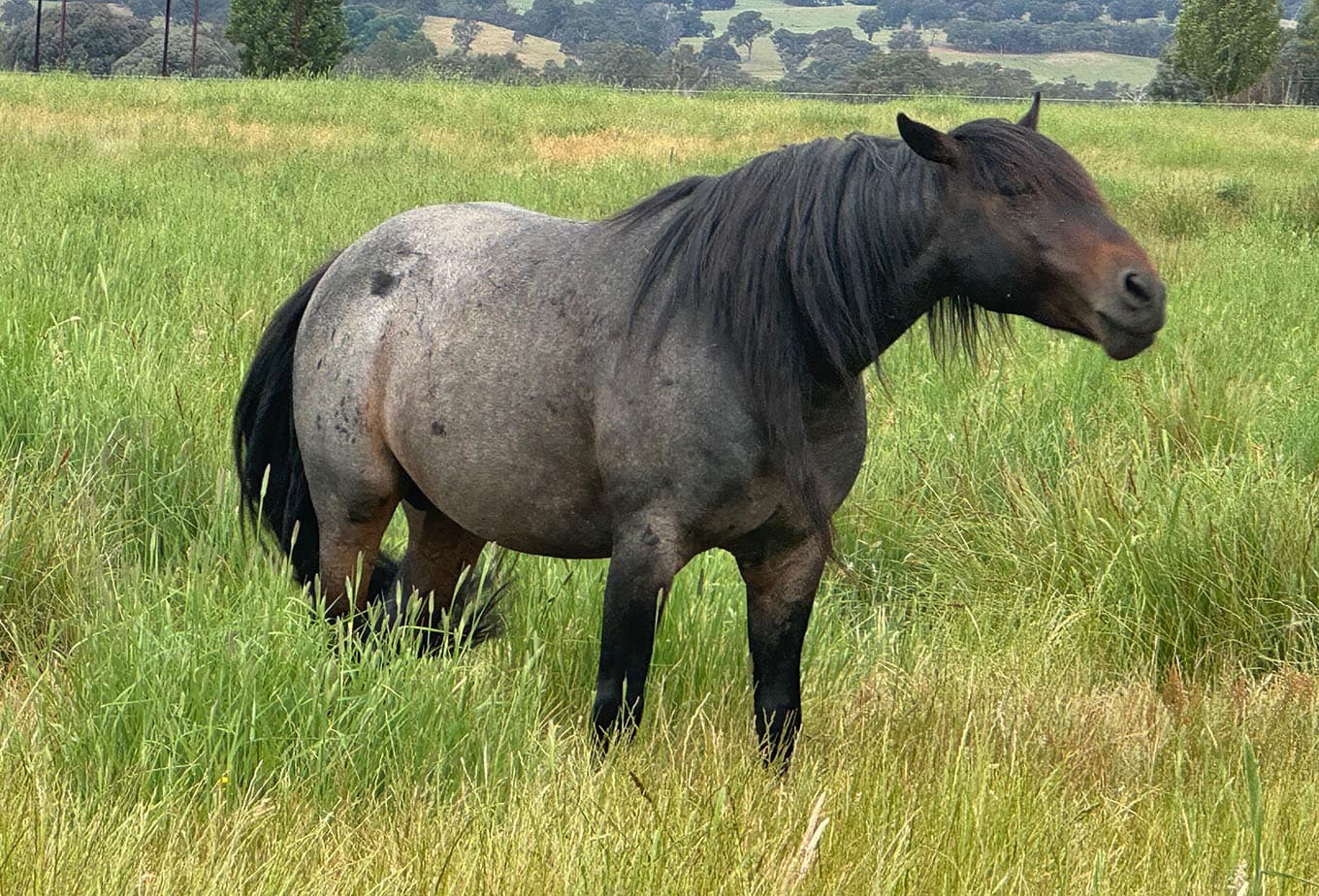
Photo: Jenni Cole.
Simply the result of a mild summer in the mountains?
Ecologists from Charles Sturt University and Sydney University who are arguing for recommencement of aerial culling have suggested in The Conversation of 1 June 2026 that the increase can simply be explained by “a mild summer” with significant rainfall during which most mares will have bred. 4 This argument definitely fails the biology test. Even a 20 per cent increase, which is very high for wild horses, would only result in an additional 800 horses, not the 6,500 horses required to reconcile the two survey reports. They have also suggested horses were coming into the KNP from nearby state forests or moving within the park. While it’s possible there may have been some movement of horses who previously fled the bullets, there appears to be no evidence on the ground of large numbers travelling into the KNP. Thousands of new horses suddenly appearing in the park would have been noticed and the subject of public comment by NPWS and by those who photograph brumbies in the KNP.
Resources for rehoming, not bullets
Brumby advocacy groups do not dispute there may have been some increase in numbers. However, the maximum increase possible over a 12 month period could reasonably be expected to be in the hundreds not thousands, and manageable by humane alternatives to aerial culling. Minister Sharpe has promised a trial of fertility control. The Australian Brumby Alliance (ABA) welcomes this promise and supports future exploration of fertility control for the brumby population. However ABA points out that passive trapping and rehoming is an immediately available humane alternative to the aerial cull. Unlike other introduced species in the KNP, there is a non lethal alternative to management. Horses can be easily domesticated and have value to the community. Through the rehoming pathway, brumbies passively trapped are assigned to registered rehomers from whom, usually after some early handling and care, they go to sanctuaries or private homes. ABA is deeply concerned that despite the NSW Government investing over $8.2 million in aerial culling, there’s been no government investment to support rehoming.5
Jenni Cole from Umbango South Brumby Sanctuary, the home of the famous brumby stallion Posterboy, asks “Why are there millions of dollars allocated by the government to killing these horses, when the non-lethal pathway – rehoming and sanctuaries – has never been properly supported or taken seriously? Rehoming has been around since long before there was a National Park. It’s part of our history and our heritage and it is the solution Government is ignoring.”
The Australian Brumby Alliance supported by Umbango South and other registered rehomers put a proposal to the NSW Government for a modest investment in rehoming to expand and support the role the sector plays as a humane alternative to aerial culling before this most recent survey report was released. We aren’t looking for additional spending by government – just a better use of existing funding for wild horse management to achieve more humane outcomes. There is more interest than ever in the community in rehoming a brumby to support this pathway. We are still waiting to hear back from Minister Sharpe’s office.
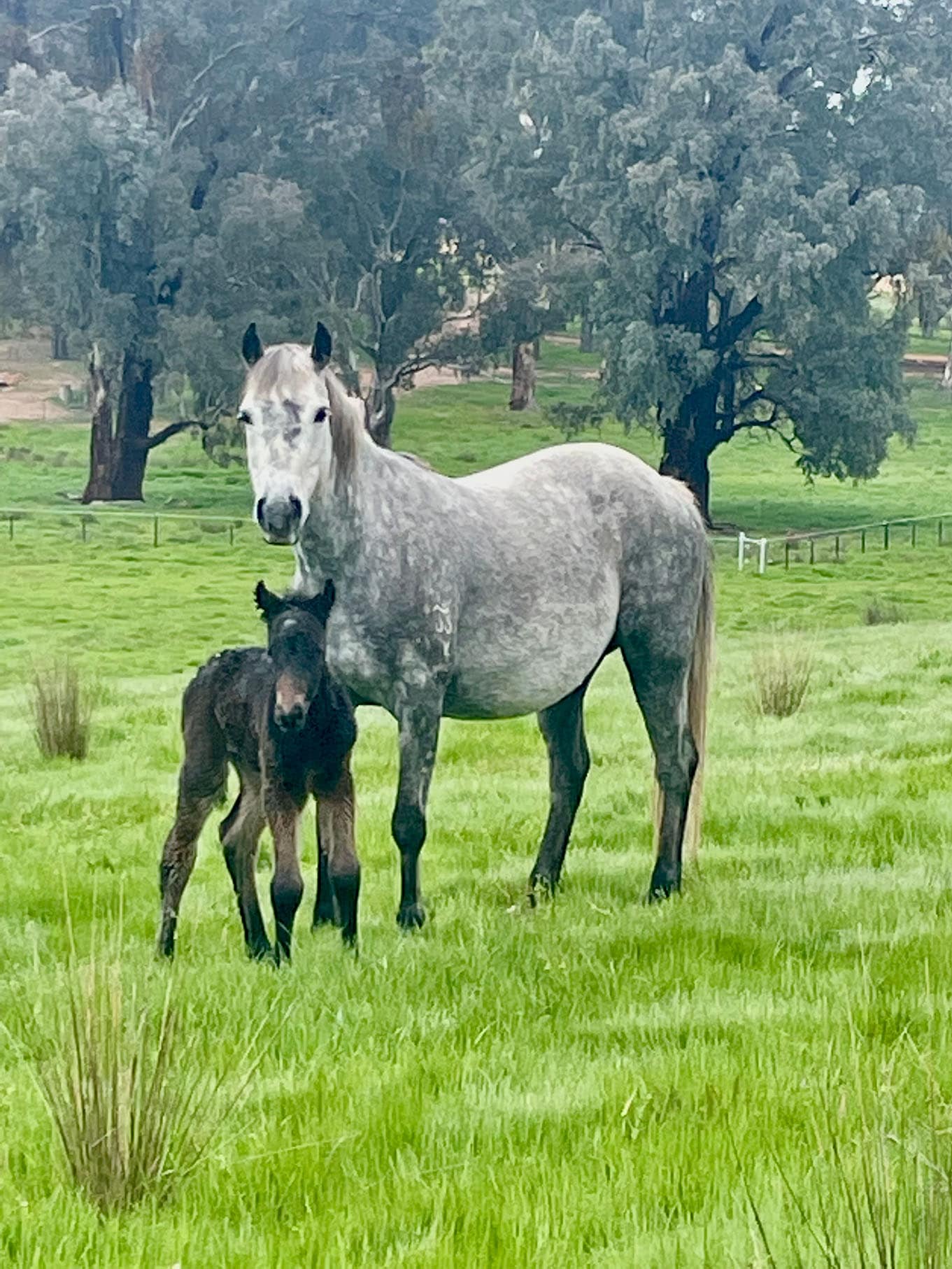
Photo: Jenni Cole.
Related stories: Is there a future for the Snowy Mountain brumbies?, brumby.
References
1. NSW National Parks and Wildlife Service (2025), Kosciuszko National Park Wild Horse Population Survey 2025: Abundance Estimates and Methodology, NSW Department of Climate Change, Energy, the Environment and Water.
2. NSW National Parks and Wildlife Service (2024), A survey of the wild horse population in Kosciuszko National Park, NSW, October-November 2024, Report to the NSW Department of Climate Change, Energy, the Environment & Water, November 2024.
3. NSW National Parks and Wildlife Service (2026), Draft Kosciuszko National Park Wild Horse Population Survey – Peer Review Correspondence.
4.“Feral horse numbers in Australian alps are on the rise again. It’s time to act”, The Conversation, 1 June 2026, David M Watson and Patrick Finnerty.
5. Minister’s evidence, NSW Legislative Council Animal Welfare Committee, 31 July 2024.


Yes , they must halt this cull, clearly from the huge outcry from the public they don’t have the social license to shoot !
These horses must be preserved ! The numbers are incorrect and the method in humane !
It is appalling that NPWS are Stopping people from savings some of the Brumbies. There are sanctuaries & people waiting to rehome Brumbies, but they won’t let anyone go in and round them up, and move them to private property, Why?
NPWS aren’t trapping (because they can’t even find enough Brumbies to trap). There is only a couple of hundred at most, left in the entire park.
This isn’t a cull to reduce population numbers!
They are DELIBERATELY trying to COMPLETELY ERADICATE the VERY LAST of the Iconic
SNOWY MOUNTAIN BRUMBIES
STOP THE CULL UNTIL REHOMING IS EXHAUSTED
They are blatantly lying about the population numbers, they REFUSE to use cameras to record the Real numbers they have culled, or if they are killing them humanely.
Police have to use cameras so why aren’t they forced to do the same? Why are they above the law?
How are they allowed to be Aerial shooting in a Public Park, shooting into tree canopies from a moving helicopter 100m above ground, what if people are in there, like what happened in 2022 – innocent people were almost shot. How can they tell if horses are injured? There is NO VET on the ground checking if the horses are dead, or if foals are orphaned, it is unnecessary barbaric cruelty, and all based on Lies about population numbers […edited]
Stop the barbaric cull. This is Yesr if the Horse, gow significant!
Government numbers just do not add up. The government should negotiate with the various groups who have contacted them trying to offer humane solutions. If only the government would hear what these groups can offer instead of completely ignoring them. They may find there is a much better way to achieve a suitable, and humane, outcome.
The numbers have to be false unless the stallions are giving birth too. Well human males apparently can, so why not horses?????
So much Public Outcry against these senseless, heartless killings of these beautiful animals should have been enough to stop the culling! There are other alternative ways beside bloodshed and suffering to reduce numbers! The ones responsible for ticking the boxes to approve this massacre should be ashamed of themselves! WAKE UP AND STOP THIS IMMEDIATELY! Work with the public with alternative ways to help reduce numbers. And be honest and transparent about the numbers! Brumbies are not causing all the damage that has apparently been recorded! These majestic animals have a right to live! GROW A HEART ??
So what’s NATIONAL PARKS NSW SAYING ABOUT THE MASSIVE SINK HOLES THEYVE CREATED AFTER DRILLING TUNNELS THROUGH THE GUTS OF THE MOUNTAIN? WHAT BOUT THE MAASIVE CHUNK AS BIG AS THE SYDNEY OPERA HOUSE THAT HAS BEEN REMOVED CAUSING THE EARTH TO LEAK ALL SORTS OF STUFF NATURAL ACIDS SPILLIN INTO THE PRISTINE WATER WAYS YALL SAYIN YA WORRIED ABOUT! ITS ALL LIES AND YAS ARE SHOOTING THE HORSES AS SPORT! ITS RICH MAN POACHING! I NEAR PUT MONEY ON IT THE SHOOTERS ARE PAYIN BIG BUCKS TO SHOOT THE HORSES!
TELL US ABOUT THE SINK HOLES AND EVERYTHING ELSE YAS HAVE DONE TO OUR LAND! ITS OUR LAND NOT YOURS! ITS OUR RESOURCES NOT YOURS! WE NEED GO IN ON MASS NUMBERS AND GET THE BLOODY HORSES OUT OF THERE! ITS SICK! THE GOVERNMENTS SICK! NOONE EKSE IS ALLOWED LEAVE AN ANIMAL INJURED TO DIE A SLOW PAINFUL DEATH! LEAVIN BABIES OUT THERE! ASHAMED TO BE AUSTRALIAN! THIS NIT AUSTRALIAN! THERES MORE AGAINST THAN FOR! WHY WON’T YOU LET US GET THE HORSES OUT??? CAUSE PEOPLE ATE PAYING TOP DOLLAR TO SHOOT THEM OTHERWISE YOU WOUKD GIVE US A WEEK EVEN TO GET THEM ALL OUT EVERY LAST ONE, WE DINT WANT THEM UNDER YOUR CONTROL EVIL BASTARDS
What have y’all done to the mountain??? What ya real plans cause all we hear are lies! And all we see is a barbaric massica it’s evil! Sick! Good luck getting voted next year! I got one not doing law anymore it’s ridiculous!
If the law is unjust we’ve every bloody right to disobey it, we are obliged to do so! Be brave people and stand up and Stand next to the ones that stand! Think about it they have to stop shooting if hundreds walk out into the park the advocates no were they are! We need round these horses up guys
Following from the U.K. You are not alone, we are doing our best to help. Good Luck! #SAVE_THE_BRUMBIES #STOP_THE_MASSACRE
Mass riot and everyone head for park. It’s the the only way to stop the helicopters taking off!!
.This Government is not listening and why are they so he’ll Bent on killing all the brumbies?? They are iconic and they helped during World war 1. I’m just devastated by what is happening and should never be allowed to happen.
I still remember seeing these beautiful brumbies running free many yrs ago in the national park & was so excited just to see them as I know then in 2008 there was not many & lucky to even see them . In 2023 I saw a few grazing near a bridge with foals & my partner . Stopped the truck to reverse so I could watch them in there natural habitat . So lovely just pray these idiots back off & leave them in peace . ???????
The type of software used to count the Brumbies is flawed. It is marine based. It was developed to count Whales etc on a flat dense surface. It cannot cope with mountains or slopes. Minister Sharpe was warned the figures were not right in 2023. They have used other company’s but the underlying software is the same marine based. She never told you that did she. The figures are a complete farce. This cull should never have happened. There are less than 1.5 k horses in the park. She is going for complete eradication. Australia you should be proud!