

Patricia Gill, Denmark Bulletin
Obi Manuel wants to be an artist when he grows up. The 14-year-old made his debut into the art world at the Brave New Works Festival at the end of March.
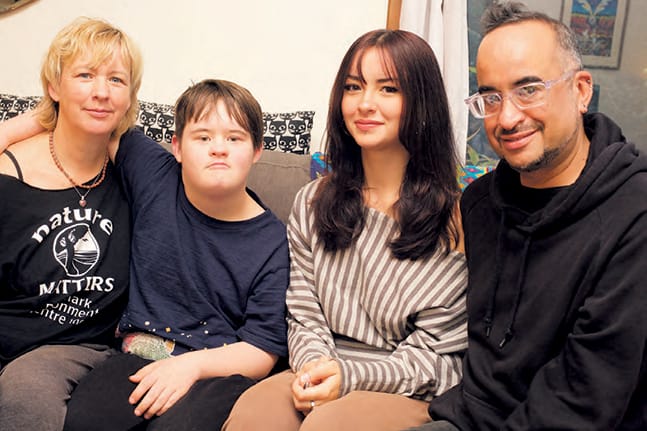
Obi lives with Down syndrome and attends the Albany Secondary Education Support Centre and started drawing and colouring in on bus trips to and from school three years ago. His designs were a focus of Obi’s Cubby – an indoor tent – at Denmark Arts House over the BNW festival and in the cubby visitors could watch or join him in drawing and colouring in of his Monster Series while a movie was screened.
The movie was made with the help of Obi’s friend and former education assistant Laura Vermeulen and filmed by his dad, Brendon Manuel.
Mum, Josephine Lebbing, says Laura is good at playing with Obi and knows how to let him lead.
Like his dad, Obi loves horror movies, his favourite being Goosebumps, so the 35-minute footage has elements of horror and comedy.
For example, Obi appears in double and morphs into a headless creature with a twin body in a striped black and white T-shirt ballooning and shrinking amid flashing lights as he transitions into Little Big Foot.
Obi’s art ? It’s love actually
Then, at a time in the future, Obi becomes the Good Witch who does the cooking.
“I just kept it really quite loose,” Brendon says.
Since his son discovered art, Brendon has maintained a prolific supply of colouring books.
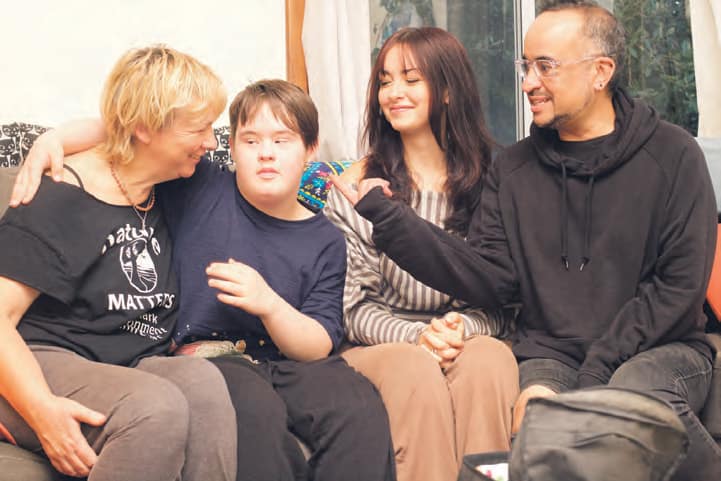
“I show Obi the pages that haven’t been coloured in but I keep buying him more books,” Brendon says.
These are stacked in piles around the family living room where a giant tabby tom cat, Bowie, weaves about.
Obi’s drawings will become T-shirt and sticker designs to be sold in the future and, at this stage, the project is being funded through garage sales.
As Josephine says, the process enables him to be supported in his creativity and to interact with people.
The BNW cubby house was valuable in providing a safe place for him to hang out with people.
Over the years, Obi has built many cubby houses, pulling out books, toys, anything he can fi nd, sometimes creating challenges for the family.
Agreements to pack up afterwards rarely occurred without ‘intense negotiations’.
So, this became an invitation for the family to drop their expectations of keeping the house in order.
“It’s good for all of us to use our wonderful imagination and, when we joined him, we found there are often intricate stories unfolding as he builds his cubby house,” Josephine says.
Through the help of therapists and support workers, Obi has learned how to have conversations and to develop planning skills for play dates.
He demonstrates through drawing up columns to list ideas for the play dates, differentiating that from the actual plan and finding the people to take part in the date.
Like all special needs people, for Obi it’s not a case of setting a time and date, finding an address and then rocking up.
Asked if he enjoyed people visiting his cubby at BNW, Obi offers a decisive: “Yeah”.
Since the BNW project Obi has made up his mind that he wants to do more projects.
“We’re going to try and make opportunities,” Josephine said.
“Reading all the messages (in a book for feedback about the BNW cubby) and having people stop in the street to say, ‘I loved your artwork’, has given him a lot of positivity.”
After BNW, Josephine and Obi sat down and read the feedback people had written.
One message was from a little girl who wrote: “I want to be like you when I grow up”.
While sitting and reading the messages, Josephine turned and looked at her son who had placed his hand over his heart.
“I said, ‘what’s going on’? “He said: ‘love’, with tears in his eyes.”
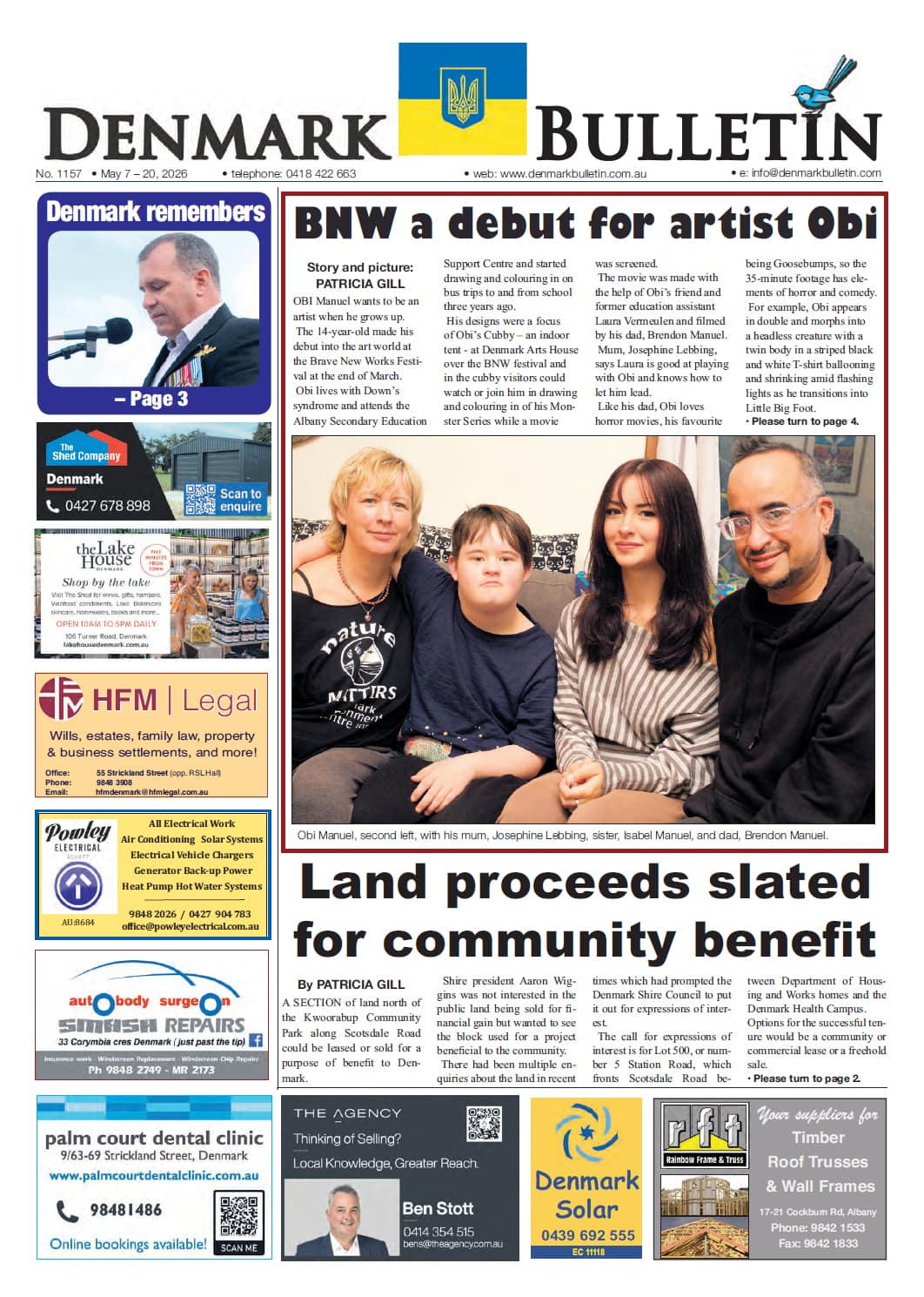
This article appeared in the Denmark Bulletin, 7 May 2026.

