Patricia Gill, Denmark Bulletin
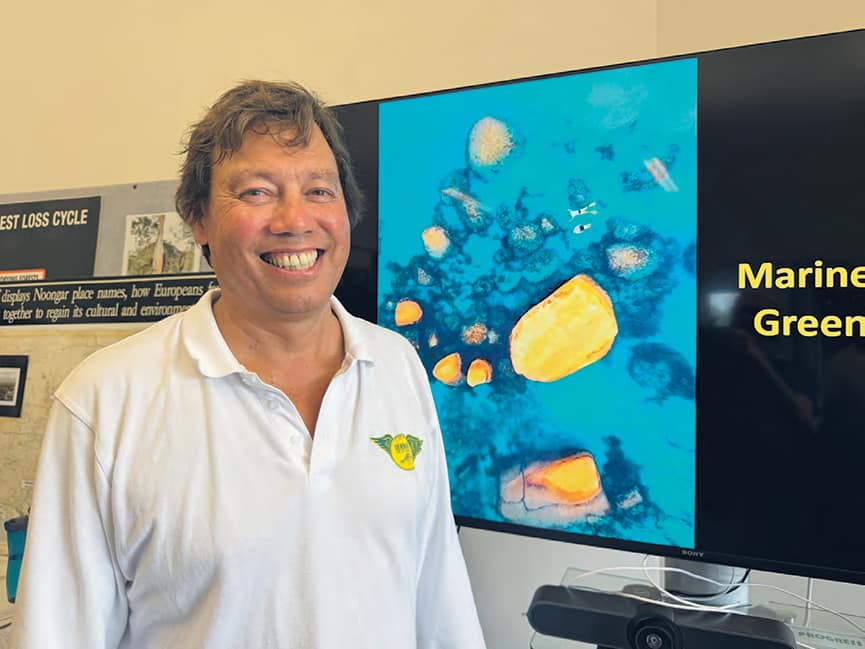
Bernard Wong hopes to inspire a shared custodial ownership of the submarine world at Greens Pool.
“When people have a strong, intimate connection with a place, they will work hard to look after it,” he says.
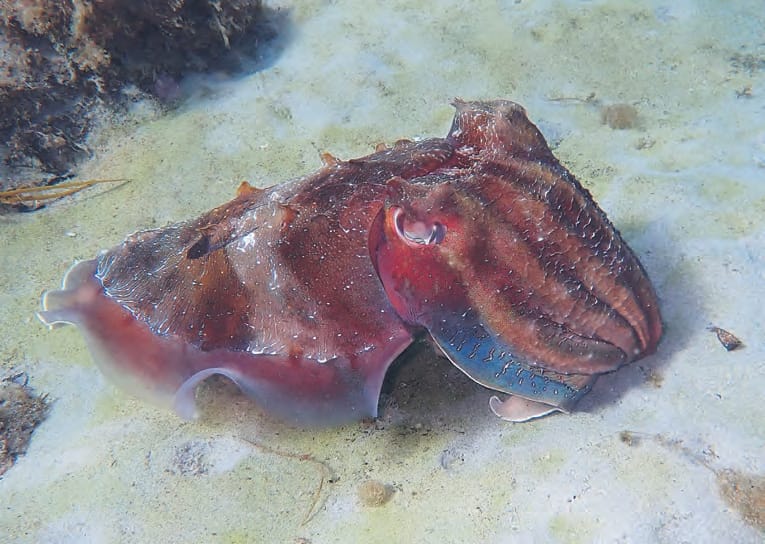
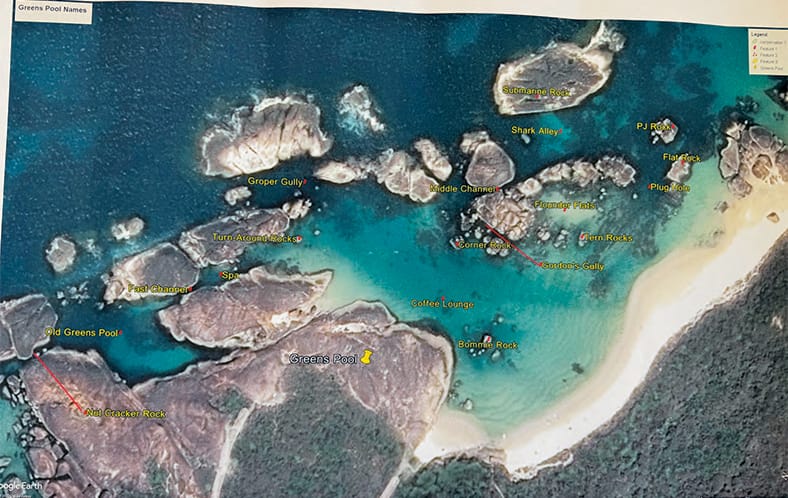
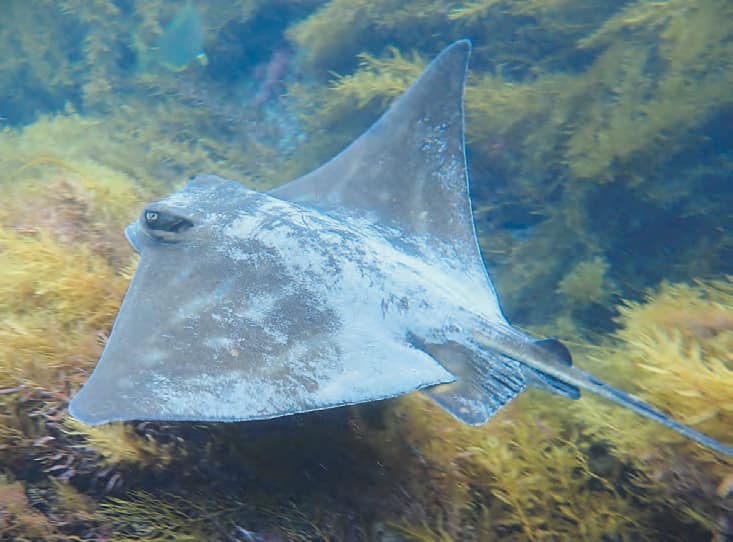
Since 1990 he has observed the movement of rays and their flotilla of cleaner fish, giant blue groper, camouflaged wobbegongs, conspiring old wives and much more submerged among the granite pillars.
This world has enchanted the citizen scientist, swimmer and lobbyist for the ‘No Take Zone’ which was declared in December 2018.
Since then, an informal survey of marine life in Greens Pool and surrounds has shown an up-tick in abundancy and variety since the declaration of the No Take Zone.
Bernie spoke recently about his discoveries at the Denmark Environment Centre dedicating his presentation to the late John Piercey, a ‘swim buddy’ and marine life enthusiast with whom Bernie had shared many discoveries.
A count up to last month over 10 years revealed 107 species of fish, eight crustaceans, four worms and cucumbers, three urchins, 19 sea stars, five cephalopods, 17 nudibranchs and the list goes on.
Bernie said John had recalled how in the 1980s there was an abundance of fish and abalone, in a time of far fewer visitors and even fewer swimmers at Greens Pool.
By the late 1990s to mid 2000s there were plenty of green lip abalone to fish for outside Greens Pool but none within because these stocks had been plundered.
After stocks had been depleted and bans imposed on the West Coast (2010 onwards), the whole of William Bay area was effectively fished out of abalone near the shoreline.
Now the situation has reversed, Greens Pool has abalone but beyond the No Fish Zone they are much harder to find.
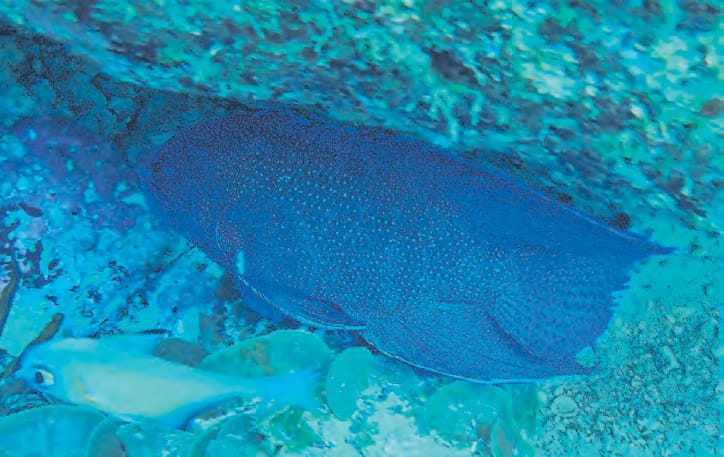
Based on these informal observations, the fishing ban at Greens Pool has, in addition to green lip abalone, resulted in an increase in resident red lip morwong, senator wrasse, brown spotted wrasse and wobbegong sharks.
“I am sure that the diversity and abundance of marine life will continue to grow,” Bernie said.
In 2009, Bernie was among a group of people who made a submission to then Fisheries Minister Norman Moore calling for a ban on fishing in Greens Pool.
Though 17 submissions supported the ban and only one opposed, the Minister rejected the proposal.
Bernie and wife, Caroline Blumer, have swum at the pool since their 1990 arrival and became interested in underwater photography, moving from banksias, orchids and fungi into marine photography. Bernie’s photographs and those of other contributors formed a species catalogue which was shown at the environment centre presentation.
By 2016, Greens Pool was showing the effects of being over-loved by tourists and swimmer safety among fishing lines and spearguns was a major concern.
So much so, musician David Rastrick, artistic director Peter Keelan and Great Southern Music produced the community-driven production, Greens Pool the Musical, advocating a more low-key approach to Denmark’s jewel.
Greens Pool fishing ban helps marine life thrive
The next year, the Department of Fisheries asked if there were interest in banning fishing in Green Pool, prompting the establishment of the Greens Pool Working Group.
The GPWG set about exploring how a Fish Habitat Protection Area could be declared, which is the only formal and rigorous process short of a marine park.
But the group was concerned that banning fishing would send a negative message so talks were held so fishers could be redirected to other locations where they could also take their dogs.
It was found that a ban on fishing on safety grounds would not involve Recfish-West’s arduous surveys to establish depletion of fish populations.
At this stage about three swimmers had reported been entangled in fishing hooks while swimming.
Also, among distinct snorkel trails, such as, Coogee maritime trail and Jurien Bay snorkel trail, fishing had been banned.
Community support in favour of the fishing ban produced a petition of about 1000 signatories.
The petition helped sway the then Minister, David Kelly, to grant the ban in a process which took the Denmark community nearly two years.
In recent years, anecdotally, the number of snorkelers and swimmers has grown exponentially and the water is busy from
November until May with car parks equally over-flowing.
Sunscreen leaching into the water is likely to have had an adverse impact on marine life just as it does in tropical waters.
Swimmers and snorkelers should apply fish-friendly sunscreen.
An obvious example of the impact of over tourism on residential fish was Port Jackson shark.
“A regular site for these sharks is now empty due to over visitation; they have since sought quieter refuges,” Bernie said.
At the presentation, Bernie showed a video taken by fellow marine life enthusiast Blue Boaden of a blue groper in the surrounding area to Greens Pool.
“They are trophy fish and they taste great and spear fishers are only interested in knocking off something that size,” he said.
In New South Wales in 1969, spear fishing of eastern blue groper was banned.
Bernie said the blue groper which was videoed lives to about 70 years but would only range over about 800m by 40m to 20m deep, making them easy prey.
They start out as green females, reaching sexual maturity at 17-20 years and changing sex and to blue about 30-35 year.
Once too afraid to swim beyond Bombie Rock, Bernie swims year-round in Speedos and recommends the use of a wetsuit-style swim cap . Also, using ear plugs to prevent ear canal hardening due to exposure to cold water, medically known as external auditory exostoses, commonly called surfers’ ear.
The ear canal develops bony growths and, eventually, needs surgery to rectify.
A mask and snorkel will increase underwater vision and if venturing far always swim with a buddy.
This article appeared in Denmark Bulletin, 9 April 2026.