


In light of the pending decision on paraquat by the Australian Pesticides and Veterinary Medicines Authority (APVMA) and recent media drawing a connection between paraquat and Parkinson’s disease, Australian Rural & Regional News has sought responses from industry bodies.
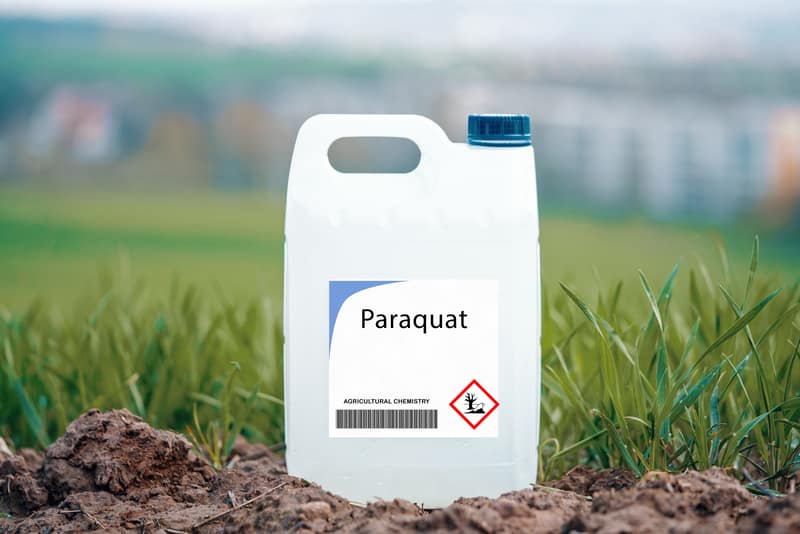
In particular, ARR.News has sought answers to these questions:
- What precautions are required now when using paraquat, and how long is it since stronger precautions have been required?
- How does paraquat compare with its alternatives, in terms of cost (time, money and yield), effectiveness, safety, environmental impacts?
- If paraquat is banned in Australia, what will be needed to maintain or improve yield here, at a comparable cost?
- How have countries where paraquat has been banned coped?
ARR.News invites readers to consider the responses below from Grain Producers Australia, from one of the manufacturers of paraquat, Syngenta, who was passed our enquiry by CropLife, and the general media release from National Farmers’ Federation.
Grain Producers Australia responds on paraquat
Andrew Weidemann, Grain Producers Australia Research, Development and Extension spokesperson, 5 June 2026
Glyphosate is the backbone of the modern production systems that grow our grain crops, with no-till or minimum till practices having been employed across the country in recent decades.
This has brought about significant productivity gains and environmental benefits, including reduced erosion and soil disturbance, and increased water efficiency as many farmers have concurrently seen their annual rainfall decreasing.
Glyphosate-resistant weeds are a major problem on many thousands of Australian farms.
To control these hard-to-control weeds, or prevent the evolution of weed resistance, Australian farmers depend on paraquat and diquat herbicides to complement their weed control practices.
APVMA’s proposed restrictions on these key herbicides will render them useless on most Australian farms, and will consequently speed up the development of herbicide resistance and undermine sustainable production.
The proposal to ban most in-crop uses will also make it very challenging to harvest certain crops such as pulses, where growers rely on desiccating pulses with a timed application of paraquat or diquat to allow ripening and harvesting to be managed and avoid heat and wind risking yield outcomes.
These pulse crops provide soil nutrition and break crop benefits in the rotation and reduce reliance on expensive artificial inputs.
This will leave some farmers with no viable options and leave many others reverting to past practices, some of which would be a step backward in terms of environmental impact and food exports.
There is no currently tested alternative to replace paraquat in the system and allow farmers to continue with their current modern cropping practices.
Where paraquat and diquat have been banned in a global context, these countries are largely third-world countries where there has historically been little use of these products.
Most countries around the world who produce large scale broadacre crops still have access to this product.
Australia’s chemical assessment models and the regulator need to consider all chemical reviews in terms of the Australian research package developed by leading environmental safety researcher Chris Lee-Steere.
Australia’s unique mediterranean conditions are crucial context needed to inform a key part of chemical assessments conducted for our country.
Statement on paraquat use in agriculture:
National Farmers Federation
Hamish McIntyre, NFF President, National Farmers’ Federation (NFF), Media Release, 4 June 2026. See also the later response to the questions from ARR.News from Hamish McIntyre: National Farmers Federation responds on paraquat
Farmers take their responsibility to protect people and the environment seriously. This is not just a principle, it’s fundamental to running a viable farm business. Without healthy people and a healthy environment, there is no food and fibre production.
We acknowledge the recent reports in the media about paraquat. It is absolutely critical the products farmers use are safe for both people and the environment.
It’s important to recognise how much has changed over time. Modern agriculture operates under stringent regulations, including strict restrictions on chemical application systems, mandatory PPE, and certification or training requirements to use chemicals like paraquat. These science-based safety regulations protect farmers, others, and the environment.
In Australia, decisions about agricultural chemicals are made by the independent, science-based regulator, the Australian Pesticides and Veterinary Medicines Authority (APVMA).
The APVMA continuously reviews the latest scientific evidence from Australia and around the world against our unique Australian conditions. This determines what products can be used and under what conditions.
The NFF unequivocally supports the role of the APVMA as Australia’s independent regulator. Farmers rely on that independent process, just like pet owners rely on the APVMA to decide which medicines are safe for their animals. We are not scientists, but we have a responsibility to follow the rules, use products correctly, and continually improve practices as new information becomes available.
Products like paraquat are an important tool for managing weeds, supporting efficient food and fibre production, and enabling environmentally friendly practices like no-till farming that protect soil health, reduce erosion and retain moisture.
This is particularly important in allowing farmers to sustainably grow the food we need in the face of increasingly variable seasons.
We don’t want to see farmers put at risk, so it is critical that regulatory decisions continue to be guided by robust scientific evidence, and that safety requirements are clear, practical and enforced.
The NFF will continue to support our members and the broader industry with clear, evidence-based information on what is a complex and sensitive issue, and reinforce the importance of trust in our independent regulatory system.
The APVMA’s decision following its review of paraquat will be handed down mid-year. Its most recent statement on paraquat is available here. The NFF’s submission to the review is available here.
Syngenta’s position on paraquat
Syngenta, 2026
Following a review of our global production footprint, Syngenta has taken the decision to cease paraquat production at our Huddersfield, United Kingdom facility by end June 2026. This decision follows a comprehensive strategic review of our global manufacturing footprint and is driven by commercial considerations, specifically the cost competitiveness of producing paraquat at Huddersfield.
This change affects only paraquat manufacturing at Huddersfield. It does not impact our ability to supply paraquat to the Australian market. We have established a global strategic partnership with a qualified manufacturer who meets our rigorous quality standards and specifications. This ensures continuity of supply while maintaining the high-quality standards customers expect from Syngenta products.
These decisions have been made based on relevant market dynamics. There are no plans at this point for Syngenta to cease supply of paraquat in the Australian market. We will continue to engage with the Australian Pesticides and Veterinary Medicines Authority review of this product – a final decision on which is scheduled for June 2026.
Paraquat contributes about 1 per cent of Syngenta Crop Protection’s global sales. In Australia, the patent protection for paraquat expired in 1976 and a large number of generic suppliers have since entered the market.
Syngenta is one of 750 companies worldwide that has registered paraquat herbicide for sale. Today, Syngenta only sells paraquat-based formulations in five countries – U.S., Australia, New Zealand, Japan and Indonesia – with some of the most demanding regulatory requirements worldwide.
See further: Syngenta’s position on paraquat
Related stories: When journalism picks a side; paraquat.

