

When two retired farmers founded the Jeparit Waterwatch Group in 1995, they wanted to track the Wimmera River’s water quality and health for the benefit of the whole community.
The impact of the Millennium Drought, 2010 floods, water for the environment releases and everything in between is part of a 28-year data set that builds a fascinating picture of Victoria’s only inland waterway that doesn’t flow into the sea.
The monthly monitoring of up to 12 sites from Antwerp to Lake Hindmarsh is now a unique teaching resource for the schools-based Wimmera River Detectives program. It is also on open access on Waterwatch Victoria’s website.
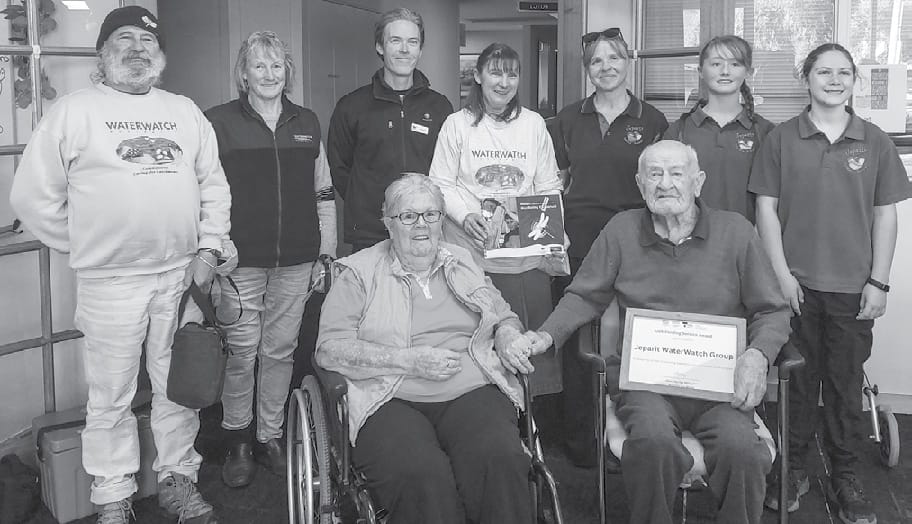
Wimmera CMA’s Joel Boyd presented an award to group members and supporters aged from 12 to 96 years at a special ceremony at the West Wimmera Health Service Jeparit Campus.
Joel said when presenting the Waterwatch Victoria ‘outstanding service’ award, it was an honour to help recognise the group’s long-term commitment to the community and the local natural environment.
“Retired farmers Alan McKenzie and David Livingston enlisted the support of Jeparit Primary School and coordinator Jeanie Clark to help track salinity levels in the Wimmera River in 1995.
“What started as their interest in what was happening to the quality of their river water has developed into an incredible legacy of over 28 years of monitoring and counting.”
In the volunteer group’s history, they haven’t missed a month of monitoring. During Covid, group member Martin Stone navigated restrictions and performed solo tasks to continue their continuous monitoring record.
“These inspiring volunteers have raised awareness of the importance and value of the lower reaches of the river while creating a picture of how various climatic events have impacted river health,” Joel said.
For example, at the peak of the Millenium Drought in June 2016, the small amount of remaining water in the river peaked at salinity levels of above 200,000 EC. Sea water is around 50,000 EC. The group has also recorded riparian and ecological changes, such as increasing phragmites and mistletoe.
This article appeared in the Nhill Free Press & Kaniva Times, 21 June 2023.

