

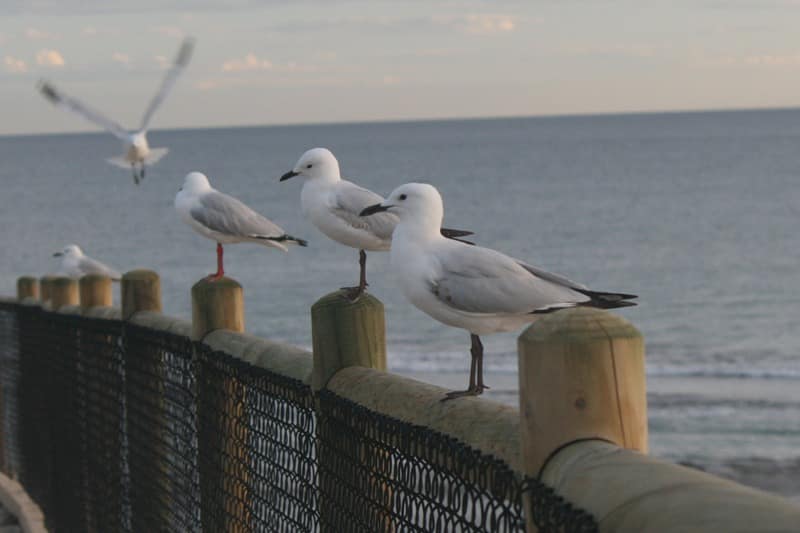
As H5 bird flu has spread around the world the wild birds most affected have included waterfowl, shorebirds, seabirds and birds of prey or scavengers.
H5 bird flu has also been detected in domestic pets including cats and dogs, farm animals including dairy cows and sporadically pigs, sheep and goats, marine mammals including dolphins and seals and wild animals including foxes and polar bears.
Yesterday the Cook Government said surveillance for H5 bird flu would be enhanced due to the first Australian case of the highly infectious virus confirmed in WA
The federal Department of Agriculture, Fisheries and Forestry (DAFF) said infected birds could spread the virus through body fluids, droppings and feathers and in the right conditions, the virus could survive in the environment for months.
“The virus can spread through contaminated clothing and shoes (and) it can also spread through animals, vehicles and equipment and items like egg cartons.
“People can sometimes get bird flu through close contact with infected birds or contaminated areas (but) most bird flu strains do not spread easily from animals to people.
“There is no evidence that the current H5 bird flu strain spreads between people.’’
Preparing for highly contagious H5 bird flu, August 2025 said bird flu preparedness activities had been a national focus in Australia for many years as H5 bird flu had spread quickly across the world through the movement of wild birds.
The Australian Government fact sheet said the overseas outbreaks had infected more than 560 bird species and more than 90 mammalian species.
The Department of Climate Change, Energy, the Environment and Water’s (DCCEEW) H5 avian influenza page said the overseas outbreaks showed that H5 bird flu could have significant impacts on wildlife and the agricultural industry, especially poultry and also communities in Australia.
“First Nations communities may be uniquely impacted, particularly in relation to traditional hunting practices, culturally significant species and land use,’’ the post said.”
The Australian Centre for Disease Control (ACDC) said bird flu in people was rare and often mild but it could cause severe disease or death.
ACDC said the people most at risk were those who worked with poultry or poultry products, bird flu outbreak responders, bird handlers, wildlife workers and carers as well as hobby farmers and backyard poultry owners.
Bird flu viruses can however mutate quickly, including during outbreaks.
“In the right conditions, some mutations result in the virus infecting people more easily,’’ an ACDC page said.
“It might cause a localised outbreak, which can become more widespread in certain circumstances and settings.
“The possibility of a pandemic remains a concern to public health experts.”
Bird flu can only be confirmed through laboratory testing.
Samples must be collected by a veterinarian or government animal health officer.
The community can assist by reporting any dead or sick birds or marine mammals to the Emergency Animal Disease Hotline on 1800 675 888.
More information about H5 bird flu is available at birdflu.gov.au.
This article appeared on Yanchep News Online on 21 June 2026.

