


Fuel excise halved for three months:
Albanese, Chalmers, Bowen, King
The Hon. Anthony Albanese, Prime Minister of Australia; The Hon. Jim Chalmers, Treasurer of Australia; The Hon. Chris Bowen, Minister for Climate Change and Energy; The Hon. Catherine King, Minister for Infrastructure, Transport, Regional Development and Local Government, Joint Media Release, 30 March 2026
Following a meeting of the National Cabinet today convened by the Prime Minister, the Australian Government will halve the fuel excise on petrol and diesel for three months.
The halving of the fuel excise will reduce the cost of fuel by 26.3 cents per litre. This will reduce the cost of a 65L tank of fuel by nearly $19.
The spike in fuel prices as a result of the war in the Middle East is hurting Australians and causing financial stress. This will help to provide some relief.
The halving of the fuel excise will commence from April 1 and run to 30 June.
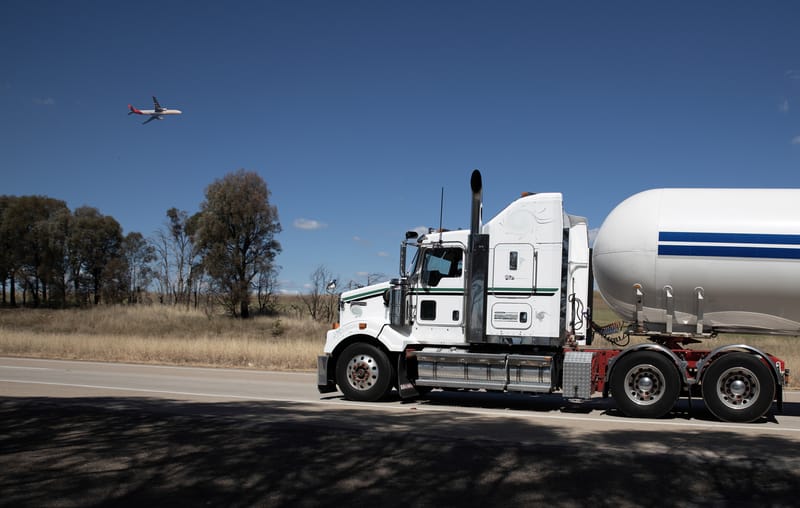
Further, the Albanese Government will reduce the Heavy Vehicle Road User Charge to zero for three months to help truckies continue their vital work for our nation. The Government will also defer the next scheduled increase in the Heavy Vehicle Road User Charge by six months
Australians are encouraged to use public transport wherever possible to help conserve fuel for the regions, and we welcome existing moves to cut the costs of public transport.
The Australian Competition and Consumer Commission (ACCC) will continue to monitor fuel prices to help ensure that the lower excise rate is fully passed on at the bowser.
While Australia’s fuel supply outlook remains secure in the near term because of the actions the Albanese Government has taken, the longer this war goes the worse the impacts will be.
We are acting now to prepare and shield Australians.
Since the conflict commenced four weeks ago the Albanese Government has taken swift action on fuel. We have:
- Passed new laws to double penalties for petrol companies for price gouging
- Appointed a national Fuel Supply Taskforce Coordinator and Taskforce
- Released 20 per cent of Australia’s petrol and diesel fuel reserves, targeted at regional areas
- Changed fuel standards to get more fuel flowing
- Changed diesel standards so Australia’s refineries can supply more diesel
- Tasked the ACCC to ramp up fuel price monitoring and issue on-the-spot fines.
- Engaged with international partners to keep supply flowing, including securing a supply agreement with Singapore
- Introduced laws to make sure companies pay truckies fairly when fuel prices spike
- And introduced legislation to underwrite the purchase of fuel by the private sector.
Today National Leaders also agreed and released a National Fuel Security Plan.
The Prime Minister, the Minister for Foreign Affairs and Minister Bowen continue to engage key international counterparts to help ensure the continued flow of fuel and diesel shipments to Australia from our trade partners. We will continue to keep Australians updated on these discussions and developments.
The Australian Government will be announcing more measures to prepare the nation for supply chain challenges over coming days and weeks.
Fuel security powers to support fuel supply:
Albanese, Farrell, Bowen
The Hon. Anthony Albanese, Prime Minister of Australia; Senator The Hon. Don Farrell, Minister for Tourism & Trade; The Hon. Chris Bowen, Minister for Climate Change and Energy, Joint Media Release, 28 March 2026
The Albanese Government is acting to shield Australia against any future fuel supply chain disruptions, by establishing new fuel security powers, enabling government to work with fuel suppliers to keep fuel flowing to Australia.
Next week the Government will introduce amendments to the Export Finance and Insurance Corporation Act, formalising the Commonwealth’s ability to underwrite additional cargoes and other vital strategic reserves as needed.
We are already in discussions with local and international fuel suppliers to help them source additional cargoes as needed to keep our nation and our people moving.
Our focus will be on ensuring additional supply helps address regional shortages and critical supply gaps.
The deal making expertise of Export Finance Australia will allow them to enter contracts of insurance or indemnity, give guarantees, make loans, or enter arrangements needed to help secure fuel supply from international markets.
Commonwealth powers will only be used to help acquire additional supply that is valuable for Australia’s fuel security and where would be cost prohibitive for private suppliers to source on commercial terms without government support.
Support will not replace or subsidise fuel that importers are already contracted to supply.
While Australia’s fuel supply outlook remains secure over the near term due to the actions the Government has taken to date, the Government has been clear – the longer this war goes the worse the impacts will be.
We are acting now to prepare and shield Australians from the worst of it.
Despite stable national supply, global price pressures and a doubling in demand has seen parts of Australia’s regional fuel market come under significant strain. This has had an unacceptable impact on regional customers who source their fuel this way, including farmers.
The Fuel Security powers help to address this by giving suppliers confidence to secure additional and discretionary cargoes – which will be used to service uncontracted demand, including regional and independent fuel suppliers.
Eligibility for underwriting support will be structured to ensure additional supply can be delivered quickly through trusted operators with the capability and networks to get fuel where it needs to go.
Our Government is undertaking every practical measure required to shield our nation from the worst of this global uncertainty.
Ensuring our farmers, our regional communities and the services all Australians rely on can continue to access the fuel they need.
Across the board, the Albanese Government has been working through and planning for the impacts of this crisis and protecting Australians from the worst of this global challenge.

