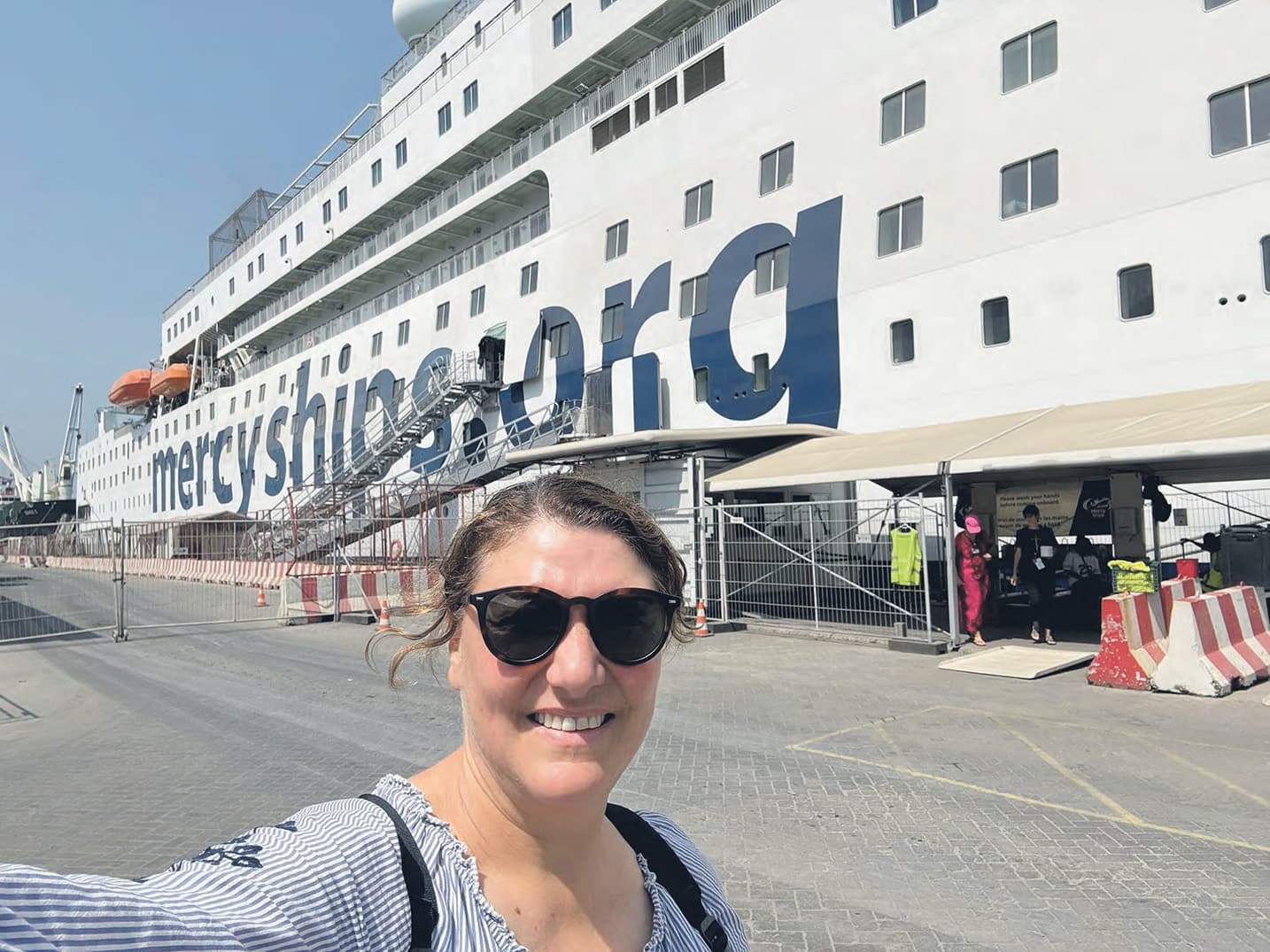
Photo courtesy Denmark Bulletin.
Patricia Gill, Denmark Bulletin
Registered nurse Yvette Caruso found joy in two, month-long stints aboard Mercy hospital ships offering African people life-changing surgery and medicine.
“I had questioned how we’d come to an African nation, do our thing for nine or 10 months (the duration of the ship’s berthing) of the year and then leave,” Yvette said.
But she changed her mind after looking into the statistics: the burden of surgical disease is 1.5 million deaths a year worldwide.
“That is more than TB (tuberculosis), malaria and HIV combined which people die from,” Yvette said.
“Things like hare lip and cleft palate can be repaired in a relatively simple operation and if it’s not managed can lead to speech delays, eating disorders and social ostracisation.”
Over January, Yvette joined the surgical team aboard the Global Mercy berthed at Freetown in the west African nation, Sierra Leone.
Earlier, in August-September 2024, she joined the smaller African Mercy at Antananarivo, in cyclone-pummelled Madagascar, an even poorer country than Sierra Leone.
Madagascar, with 51 per cent of the population under 14 and only 2.4 per cent living beyond 65, relies on subsistence farming and has no mineral resources.
The country’s 14,883 endemic plant species intrigued the former Shire of Denmark sustainability officer.
In Sierra Leone, though diamonds, titanium, bauxite and gold are mined, 60 per cent of the population is younger than 25.
The government does not provide education and health care but puts money into tourism even creating a resort compound, ‘Miami’, with clean beaches, fountains, pizzerias and gelato stalls.
The 1978-founded Mercy Ships partner with African countries and health ministries with international professional volunteers offering on-board surgeries and bolstering local surgical and anaesthetic systems through teaching.
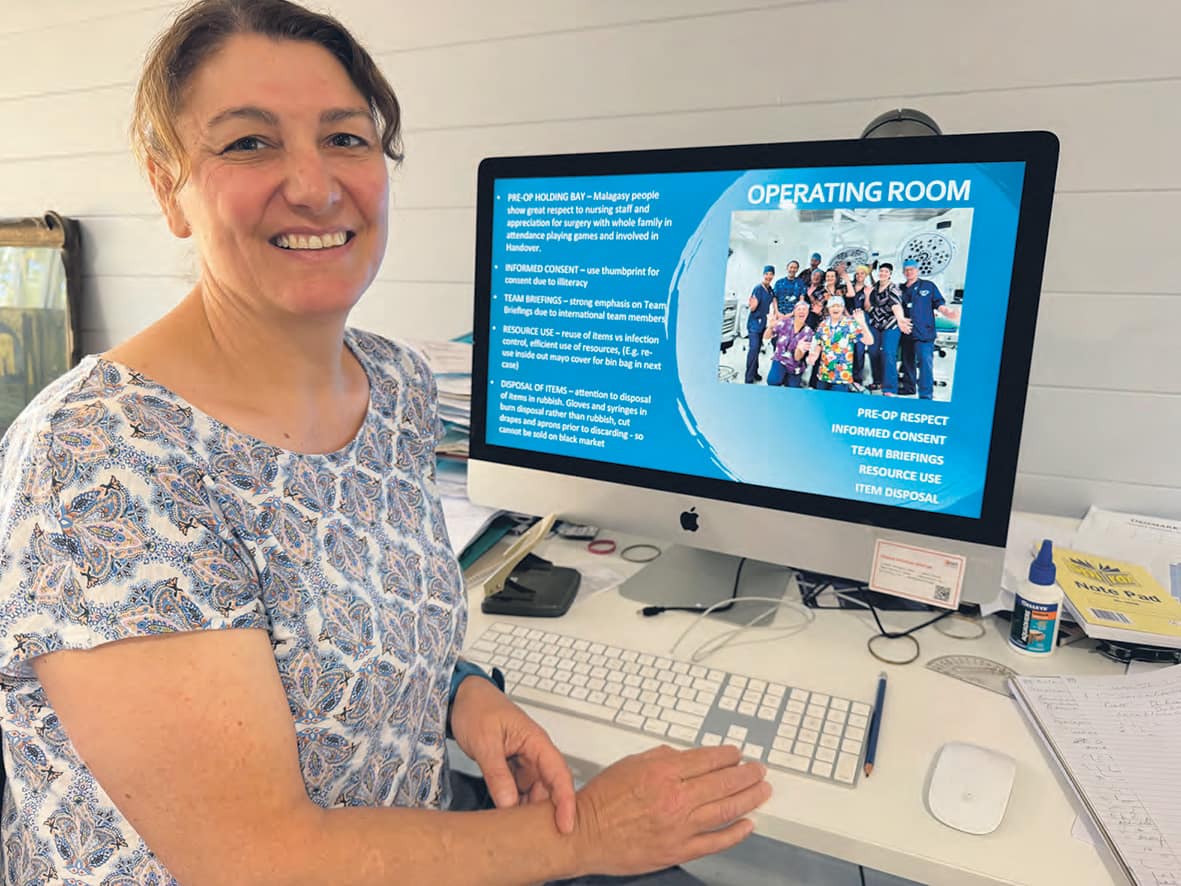
Figures from 2021 indicate that two billion people worldwide have no access to surgery or anaesthesia, and surgery is often the only therapy that can alleviate disabilities and reduce the risk of death from common conditions.
Yvette switched careers from sustainability to nursing after her two sons were born in Denmark, her focus moving from serving the planet to serving people.
A non-Christian, Yvette’s values align with the humanitarian and Christian values of the two Texas-based ships whose mission is bringing hope and healing to people.
Surgeries begin with a prayer and regular Bible-sessions are held aboard.
“It’s a lovely thing taking the time out to pray for that patient and their family,” she said.
Destinations of the Mercy Ships in recent times include Cameroon, Benin, Gambia, Senegal and Congo with the next countries being Ghana and Togo.
Patients have already been screened as appropriate for treatment.
At one stage the ships were mobbed with people clambering for assistance or there was suspicion in the villages with tales that the hospital ships might be organ traders.
Aboard African Mercy off Madagascar living on the third floor in a six-berth cabin, shifts were up to 10-11 hours, with the vacuum toilet regularly blocking but facilities were available such as a gym, library, cafe and shop.
A ‘very social’ mini village atmosphere prevails in the community of volunteers.
Yvette says day times when not working are spent out of the cabin in the library so others on night shift can sleep.
“We didn’t do overly complicated surgeries (in Madagascar) though some were pretty amazing,” Yvette said.
“In Madagascar, particularly, a 65kg patient would be big because the people are often malnourished, whereas for us 65kg is nothing.
“There’s a lot of anaesthesia planning because of difficult airways and the size of tumours.
“A big consideration in Sierra Leone is a landfill that’s been burning for 100 years.
“Patients have been around fires, and cooking fires, all their lives so there’s a lot of respiratory issues.”
Despite western medicine moving to intravenous anaesthetics, these are too expensive and in Sierra Leone remifentanil, a synthetic opioid analgesic, is banned. Some intubation occurs while the patient is awake causing discomfort for them.
Another limitation to the Mercy Ships’ work is the absence of pathology and not knowing if a mass is malignant and limited follow up treatment.
More complex surgeries were performed on the Global Mercy with more straight forward work on African Mercy.
These included hernias, lipomas, goitres, haemangiomas (tumours based on a dense collection of blood vessels, maxillofacial procedures and paediatric orthopedics.
A man with a giant haemangioma distorting his lip could not be treated but the wound was debrided and made comfortable.
Originating in strawberry red birthmarks, in western cultures these can be treated with laser or surgical removal early in the child’s life.
Common remedial procedures on African Mercy were for genu varum (bowlegs) and genu valgum (knock knees) often caused by nutritional deficiencies.
Osteotomies were performed in the absence of external fixation devices and follow up treatment.
Wedges of bone were excised to correct the legs, the bones rotated and iliac crest bone grafts used to help with bone healing.
Studies of single-stage tibial osteotomies of 200 Mercy Ships’ youngsters indicate a 30-80 per cent functionality and improvement over three years.
“I remember at the end (of a surgery) we were plastering and looking down at this kid and the surgeon and I just hugged each other, saying ‘isn’t this beautiful?’ (the straightened legs),” Yvette said.
An 11-hour surgery on Global Mercy removed a cricket ball size tumour from a woman’s face which left a huge cavity and involved an iliac crest bone graft to recreate her cheekbone.
Muscle from the side of her skull was pulled through to become the roof of the palette and the floor of the eye socket. Elsewhere, this would be fixed with a prosthetic and a grafted free-flap of muscle.
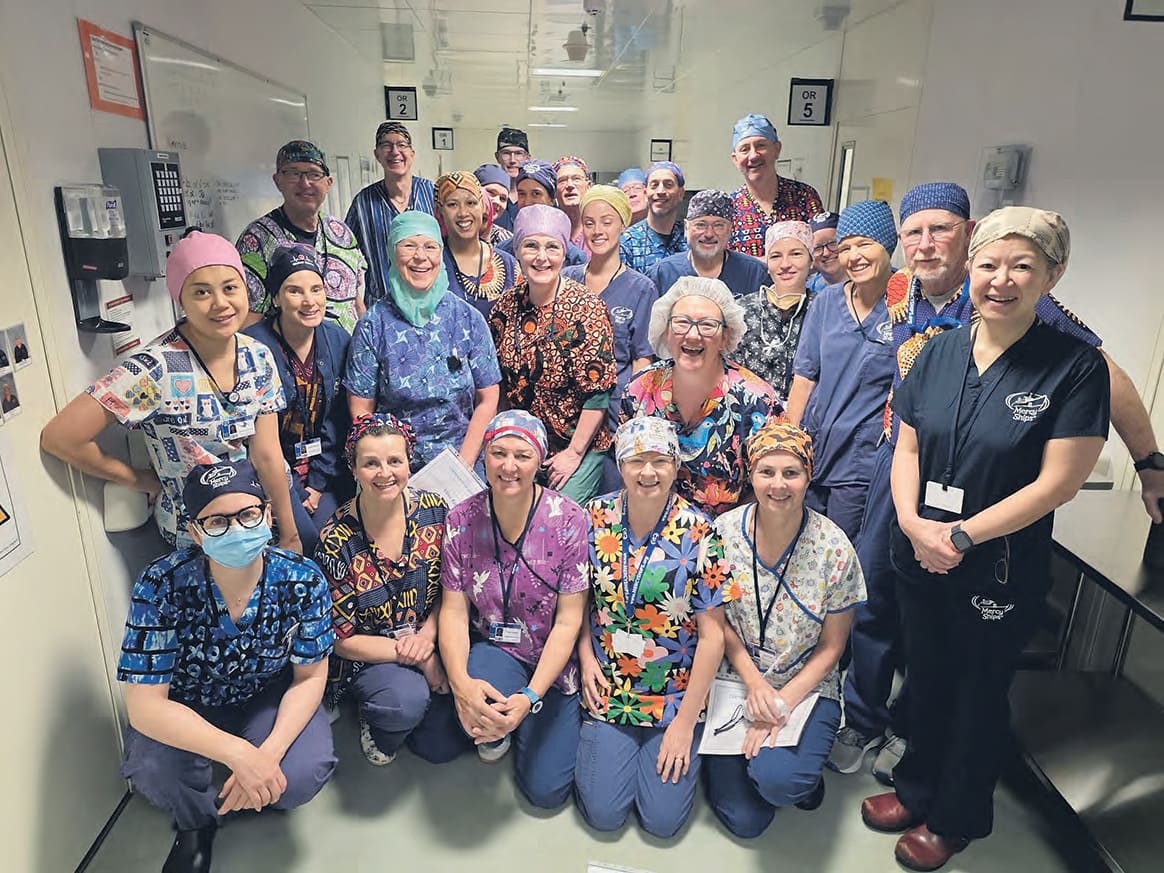
“It was an all-female team – a surgeon from Philadelphia, another from Germany and an anaesthetist from Ireland,” Yvette said.
Knowledge is passed on to other nurses and surgeons and training offered in affiliation with local educational institutions.
Yvette quit her job to study a TAFE course to train to assist in anaesthetics, travelling once a week to Perth.
A similar course is now offered in Sierra Leone to locals with Mercy Ships working with the local university.
Volunteers pay all their air fares and are not paid for their services.
Bone-shuddering roads and exhausting, long flights with delays and detours are standard.
Flying from Dubai, Yvette missed a flight in Ghana and detoured to Casablanca, Morocco, to reach Sierra Leone.
“That’s like flying from Albany to Darwin to get to Perth,” she said.
Yvette found that the ‘gratitude, reverence and appreciation’ of patients and their families stuck with her despite language barriers and illiteracy.
“They often use a thumbprint for informed consent,” she said.
Relaxing in a reserve in Madagascar, 70km down a canal, Yvette encountered ‘beautiful’ locals in shanty fishing villages with naked children bathing in the water, waving and smiling.
“I think of the white privilege we have and there they are,” she said.
Yvette urges anyone interested in the Mercy Ships’ experience to consider volunteering.
Jobs are available not just in the medical field but in support work on the ships and range from human resources to IT, dining and laundry work.
This article appeared in Denmark Bulletin, February 26, 2026.