


Murray Darling Basin Authority (MDBA), Media Release, 11 February 2026
The Murray–Darling Basin Authority (MDBA) and joint River Murray governments have initiated a detailed review of the Menindee Lakes System to address long running operational and water management challenges.
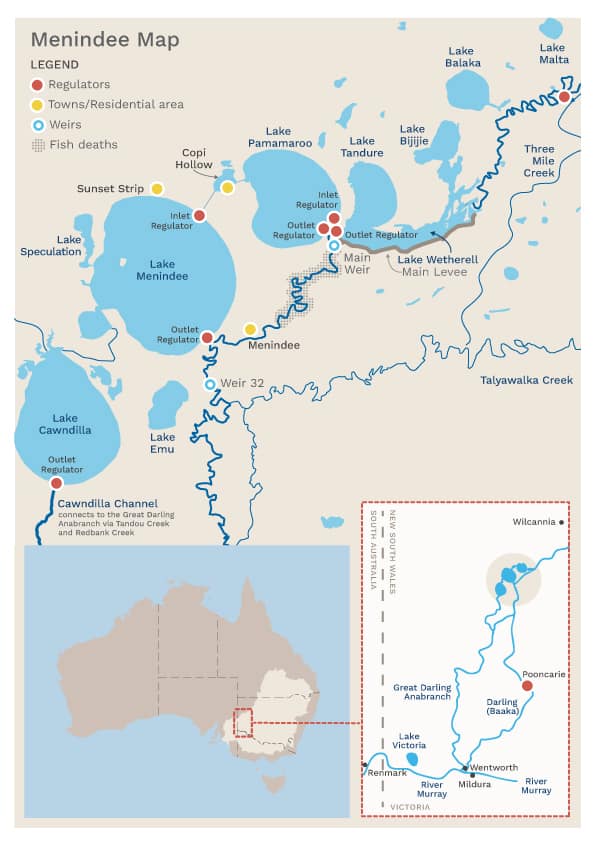
MDBA Chief Executive Andrew McConville said that all governments involved had committed and were invested in finding a viable way forward that responds to concerns and prepares for the future.
“The Menindee Review is about examining the information we have, strengthening what is working and coming together to develop practical solutions to ensure the long-term health and resilience of Basin communities, industries and the environment,” said Mr McConville.
“So much has been done over the last few years to get to this point of understanding and now we want communities who have a strong interest in the Menindee Lakes to get involved and share their ideas.
“As part of the review we have released a technical report which explains the history of the lakes and why they operate the way they do and identifies the risks and opportunities that come with change.”
MDBA Senior Director River Modernisation Joe Davis said that current water management arrangements date back to the 1960s and have not kept pace with today’s climate, environmental goals or community expectations.
“While substantial progress has been made over the years by governments to improve water security, water quality and native fish movement within the River Murray System, further coordinated action and reform is needed at Menindee and the Lower Darling,” said Mr Davis.
Last week the MDBA opened public submissions on the Discussion Paper for the 2026 Basin Plan Review and now the public can also make a submission specifically on Menindee Lakes.
“This is an opportunity to bring Basin policy, local water management rules and infrastructure together in a way that works for the long-term health and resilience of this important part of the Basin,” said Mr McConville.
“The Basin Plan Review focuses on the entire Murray–Darling Basin. It looks at big picture issues like climate change, water quality and connectivity between the north and south.
“It assesses how much water can be sustainably taken from the Basin and enhances First Nations peoples’ involvement in water management.
“Our work here with the Menindee Review will look to more specifically address the unique issues facing the Menindee Lakes such as current operational rules and procedures, the suitability of water management arrangements, and opportunities for new and improved infrastructure.”
The lakes play a crucial role in the Murray–Darling Basin in relation to both local and River Murray water supply, the environment, First Nations culture, local communities, and the broader health of the Murray–Darling river system.
View the Consultation Paper, Issues Paper and Technical reports here www.mdba.gov.au/menindee-review.
Public submissions can be made at getinvolved.mdba.gov.au/menindee-review.

