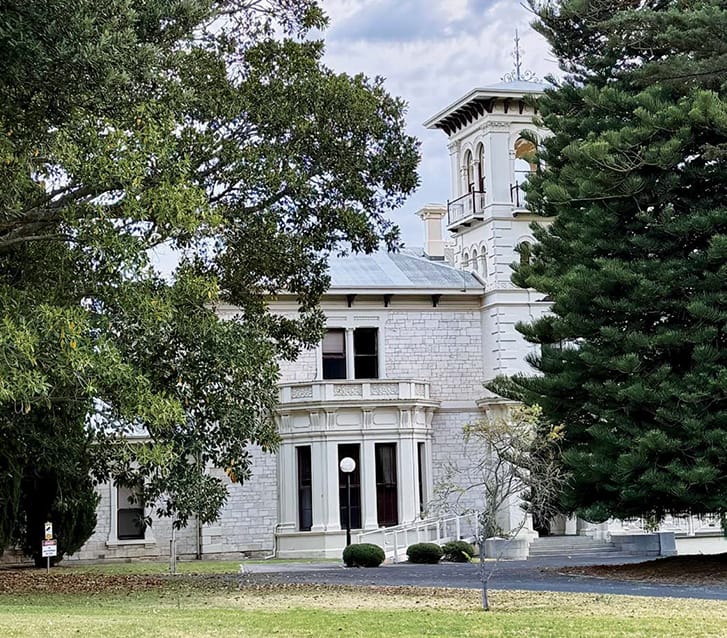
Is the slow decay of the iconic Struan House south of Naracoorte a case of “demolition by neglect” — and has South Australia squandered a once-in-a-generation chance to anchor cutting-edge agricultural research in the Limestone Coast?
Those questions are now being asked with renewed urgency as the future of the former regional headquarters of Primary Industries and Regions SA (PIRSA) remains unresolved, years after the historic property south of Naracoorte fell into visible decline.
Community members argue the deterioration of the grand homestead and its surrounds reflects a failure by the South Australian government to protect an asset that once underpinned world-class, publicly accessible research for primary producers — research they say could again deliver productivity gains and innovation across the region.
The [Naracoorte] News put a series of direct questions to Clare Scriven, minister for Primary Industries and Regional Development, seeking clarity on whether Struan House will be retained, renovated, sold or demolished; when a final decision will be made; and whether the government accepted community claims that the site’s decline amounts to “demolition by neglect”.
In response, a state government spokesperson said, “the state government is currently working on a plan for the future of Struan House and investigating options for the historic house and the surrounding property”.
The spokesperson confirmed the government received “a structural and civil engineering report in July 2024” and said Struan House, “remains to be in a structurally sound condition”.
“The state government will continue to carry out any essential maintenance and safety inspections as required,” the spokesperson said.
However, the response stopped short of outlining a definitive plan or timeline for the historic building itself, fuelling local concern that delay is compounding deterioration.
Naracoorte Lucindale Council mayor Patrick Ross said Struan House and the broader Struan precinct were inseparable from the region’s agricultural identity.
“Struan and the Grand House are synonymous with our district and agriculture here in the South East and further afield,” Mr Ross told this newspaper.
“Primary industries and in particular agriculture have been the backbone of this region since the very beginning and given that Struan House sits within the research farm and managed the Kybybolite farm, as well being the centre for all things agriculture.”
Mr Ross said the department’s (Primary Industries) historic presence across the South East had once delivered “cutting edge research happening right here on the ground”, directly benefiting producers and communities.
“Over the years the department has stepped away from investing in the future of agriculture in partnership with the industry, to a more regulatory role,” he said.
“The real research-based science has been downplayed, where once the department was leading science and development which in turn, when proven, would be taken on by producers and productivity gains would flow through the economy and communities would prosper.”
He said the shift towards commercially driven private research risked excluding producers without the capacity to pay.
“At a time when there is so much change and the need to be at the ‘cutting edge’ in all areas of primary industry, the opportunity for Struan to be the centre of excellence in research in agriculture is now needed more than ever,” Mr Ross said, adding that anchoring such work around the historic building would be “fitting in acknowledging the importance of agriculture to our region and the state”.
The state government has confirmed progress on the separate Struan Research Centre Rebuild Project, with construction expected to start this year within the existing research farm landholding.
Funding for that project has been allocated by the state government and through insurance proceeds following the destruction of the original research facility by fire.
The government spokesperson also said PIRSA “will continue to have a physical presence in the Naracoorte district as it has for many decades to service primary producers across the Limestone Coast”, with a focus on agricultural technology, crop agronomy, revegetation, cattle and sheep genetics, grazing management, and meat production.
But opposition figures say delays have already come at a cost.
Shadow minister for Primary Industries and Regional Development Nicola Centofanti said Struan was “not just a collection of buildings, it is critical infrastructure for research, innovation, and productivity in our livestock and pasture industries”.
“Yet under this Labor government, years have been wasted and opportunities lost, leaving South Australia falling behind its competitors,” Dr Centofanti said.
“Producers across the South East and right across the state depend on Struan for trials, extension, and industry-driven research.
“But Labor’s ongoing delays are undermining confidence, holding back productivity and eroding South Australia’s competitive edge in agriculture.
“Rebuilding Struan should have been treated as an urgent priority from day one.
“Instead, this Labor government has let the project drift for years, with the consequences now being felt across our livestock sector, our research capability, and ultimately the state’s economy,” she said.

This article appeared in The Naracoorte News, 4 February 2026.