Patricia Gill, Denmark Bulletin
You hear the air raid siren, see the window shudder and rumble and it (the sound) hits you in the chest, then all of a sudden there’s this smoke coming up.”
While serving as a media security adviser in Ukraine, Jesse McNeilly watched through his hotel window as a rocket hit in the city of Kharkiv.
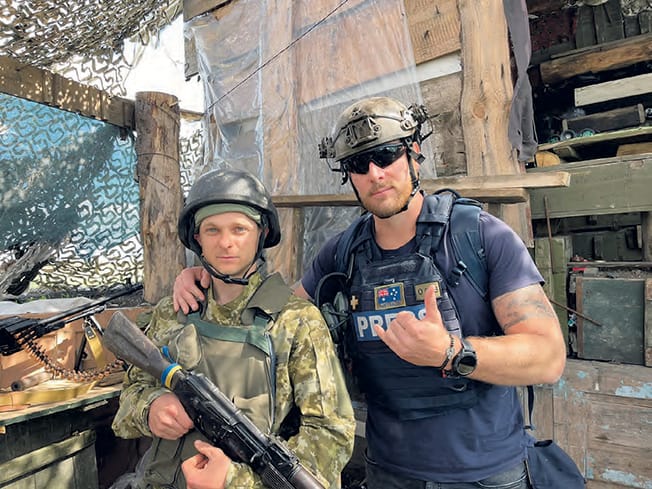
He reflects how after travelling to every major city in Ukraine and traversing the country three or four times, the people are overwhelmed.
The constant bombardment and war crimes amid old European history and culture are juxtaposed to the distant sounds of heavy explosions.
“People are getting married, driving their cars, and restaurants are serving delicious food with the air raid siren going off,” Jesse says.
“Everyone goes, whatever, but (the instance of) something potentially hitting close by has picked up, particularly in places like Kyiv.”
Jesse, a regular visitor to Denmark, was an ‘army mad’ kid who joined the Australian Army as a 16-year-old.
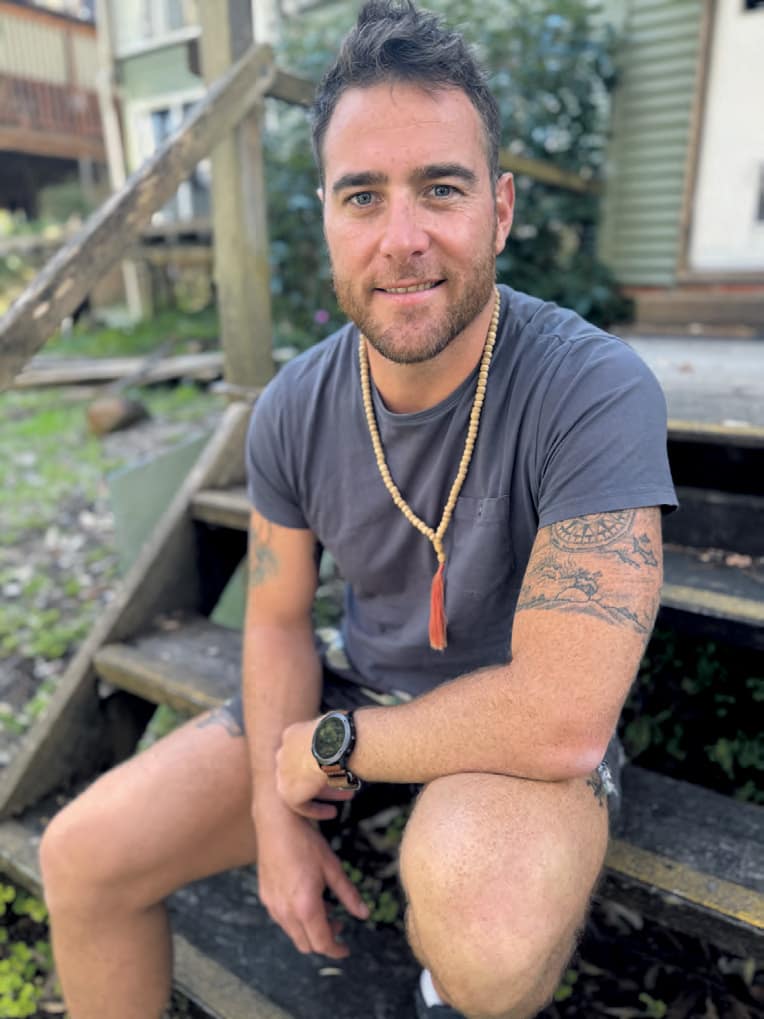
He served in the Royal Australian Regiment’s airborne unit with two deployments to East Timor and one to Afghanistan, quitting at 22 years old to work in armed security for the Lowy family who were then owners of the Westfield shopping empire.
Working in civilian life in emergency management and response for which Jesse says he is a ‘nerd’ eventually led him to Ukraine.
With a background of teaching industrial rescue techniques such as underground and surface rescue, pre-hospital care and firefighting, he was ‘four glasses of wine deep’ when he had a ‘lightbulb moment’.
“I used to be a security contractor in Afghanistan for the Australian Government at the embassy so I’d been in war and conflict zones a bit,” Jesse said.
“I thought, ‘I’m going over there to do something to help’.”
Through a contact network of former soldiers known as the Digger Network, Jesse picked up five boxes of first aid kits in Poland and while distributing those was asked if he would be interested in media security in Ukraine.
This meant returning to Poland to buy body armour and a helmet and joining a team comprising a correspondent, photojournalist, a driver, a fixer who arranges transport and translates and Jesse, the security adviser.
“The mission is obviously to keep everyone safe and to come home,” Jesse said.
Ukraine tour brings home the grim realities of war
“As the security adviser you hold the veto rights – it could be a minefield in the way or drones. I’ve got footage of us being hit with artillery. The guy (photojournalist) just happened to be filming.”
Jesse says ‘things really transitioned’ after he met a former US Marine who through wealthy Ukrainians arranged funding to run medical training.
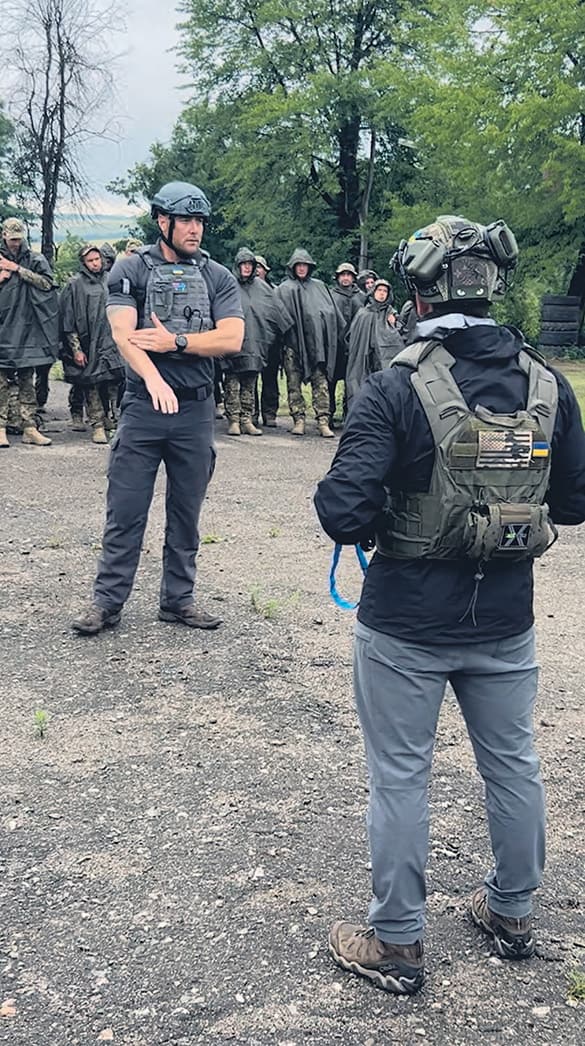
About 3500 Ukrainians were trained in tactical combat casualty care.
NATO forces use TCCC as a guideline for combat casualty care.
“There’s a big security element that’s part of that,” Jesse said.
“You can’t care for someone if you’re not winning the gunfight.”
He points out how everyone knows someone who has been killed on the frontline.
Before Russia’s full-scale invasion in 2022, Ukraine’s population dropped from 44-40 million to about 36 million now, many fleeing the country with tens of thousands of civilian and military deaths and casualties. At the start of the war men aged from 40-60 were conscripted leaving younger men to help support Ukraine after the war.
“That’s changed; now they are grabbing anyone,” Jesse said.
The proximity of the war was revealed to Jesse in an underground bunker – a former piggery and abattoir – where he met soldiers looking through a periscope behind a sandbag bunker.
An instant rapport occurs between a soldier and a former soldier Jesse asked where the Russians were to be told 300m away.
He was invited to look through the periscope momentarily leaving the side of his head exposed to snipers.
In the bunker a ‘babushka’ (grandmother) in Ukrainian uniform served borsch, a beef and vegetable soup.
“You never refuse hospitality with the Ukrainians,” Jesse said.
“We were staying in a five-star hotel in Odessa so we were good.
You feel bad, though, because you’re eating the rations of soldiers.”
Back at ‘home’ on a 52-ft ketch travelling around Australia, Jesse looks at an app on his phone and a map tells him the area where he worked is now overtaken by Russians and the people he has trained are most likely dead.
Looking at pictures of Ukrainians going about their everyday lives through tank tracks, burnt out cars and spent rocket shells, he feels privileged.
“I’ve been able to go to these places and see the reality,” he said.
“Near an apartment block in Kharkiv you can see where rockets and bombs have hit and kids would be playing there and there’d be a convenience store, better than what we’d have in Australia.
“One guy got hit in the leg with shrapnel and I put a tourniquet on. He said, ‘you’ve saved my life’.
“He had two daughters.
“These people are truly thankful for what you are doing which is never enough.”
This article appeared in Denmark Bulletin, 16 October 2025.