


The Hon. David Michael, Minister for Mines and Petroleum; Finance, Electoral Affairs; Goldfields-Esperance (WA), Media Release, 3 July 2025
Funding from the Cook Labor Government has led to a breakthrough by Western Australian geologists that could lead to the next wave of major gold discoveries across the State – potentially unlocking a modern-day gold rush.
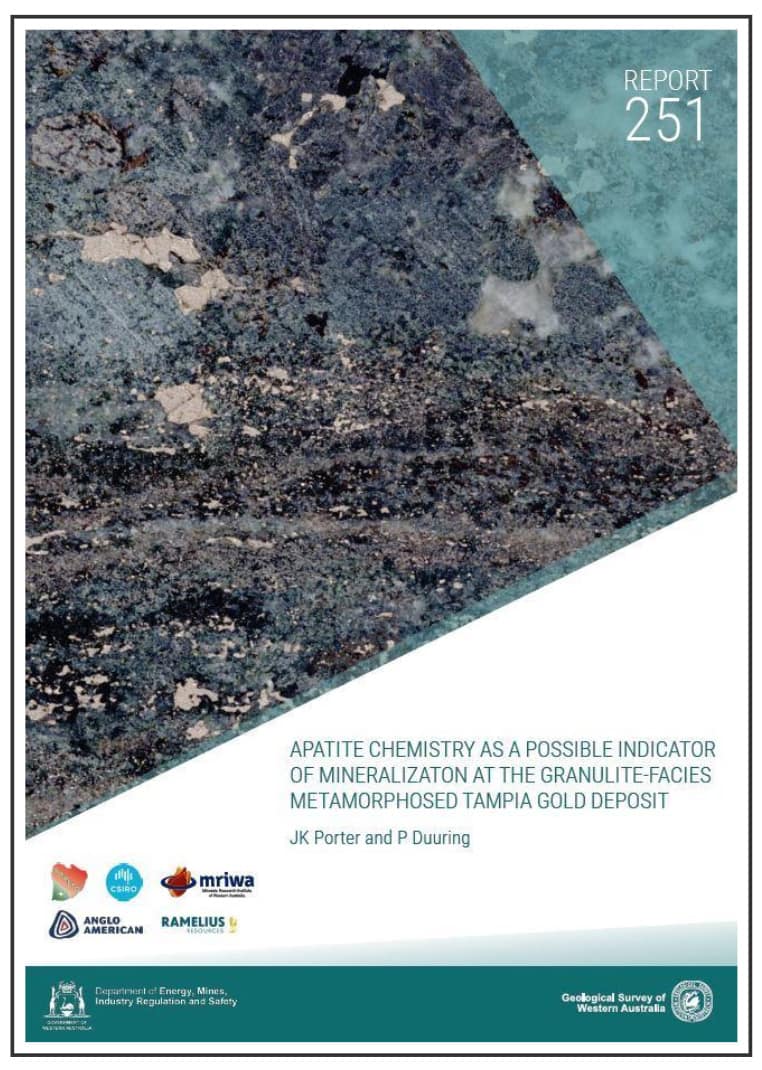
Experts from the Geological Survey of Western Australia (GSWA), part of the newly formed Department of Mines, Petroleum and Exploration, have identified a distinctive chemical fingerprint that signals where gold is most likely to be found.
This discovery builds on years of detailed geochemical analysis funded through the State’s highly successful Exploration Incentive Scheme.
By analysing thousands of geological samples, GSWA has identified the chemical signature most closely linked to the formation of gold-rich mineral systems – particularly those formed by ancient intrusions of molten rock deep beneath the Earth’s surface.
This is a major step forward for mineral exploration on a global scale. Rather than relying on broad assumptions or historical data alone, companies can now use this fingerprint to zero in on highly prospective ground, reducing costs, lowering risk and increasing the likelihood of discovery.
Many of the world’s largest and most productive gold deposits are found within intrusion-related gold systems. These form when mineral-rich fluids, released from cooling magma deep underground, concentrate and deposit gold over time. Identifying the subtle chemical signals of these systems has long been a challenge – until now.
Using this new fingerprint, GSWA has already pinpointed high-potential targets within the Yilgarn Craton, one of the oldest and most mineral-rich geological provinces on Earth.
By comparing industry drillhole data with its enhanced geochemical model, GSWA is helping reframe how explorers assess known areas – potentially revealing untapped deposits hiding in plain sight.
These intrusions can also host a variety of mineralisation styles, meaning a single region may hold multiple types of deposits.
In addition to gold, they often contain elevated levels of pathfinder elements – trace minerals that signal the presence of gold – as well as critical minerals like tellurium and bismuth, essential for the technologies driving the global energy transition.
This discovery underscores the Cook Government’s investment in smarter exploration – supporting innovation that drives real-world results.
This includes ongoing investment in the Exploration Incentive Scheme, which underpins much of the data and research behind breakthroughs like the chemical fingerprint discovery.
Other initiatives such as the purchase of a Tescan Integrated Mineral Analyser are helping GSWA scientists work faster and smarter. This next-generation tool improves mineral identification and enhances our understanding of ore systems, while supporting cleaner, more efficient processing methods.
Major geoscience programs such as the WA Array and magnetotelluric mapping continue to generate the critical data that helps map deep crustal structures – the ancient geological pathways that control mineral movement – providing a roadmap for future exploration.
GSWA’s Geoscience Data Transformation Program has already made more than 10 terabytes of new exploration data publicly available, with more than 30 terabytes to come in 2026.
This open-access data gives explorers a powerful edge and supports industry-wide innovation.
For more geoscientific information, email gsd.dda@dmpe.wa.gov.au
Comments attributed to Mines and Petroleum Minister David Michael:
“The Cook Government created the new Department of Mines, Petroleum and Exploration to boost WA’s resources sector, sharpen its focus on exploration and to secure future mineral discoveries.
“GSWA’s identification of these chemical fingerprints will undoubtedly have global impacts for geochemical data usage, reinforcing WA’s position at the forefront of geoscientific research.
“Our ongoing investment in mineral exploration is creating jobs and delivering lasting benefits to regional communities across the State.
“The Cook Government’s actions add up to smarter exploration, new opportunities and a stronger resources sector – a future we are working hard to deliver.”

