

Patricia Gill, Denmark Bulletin
A changemakers Innovation Lab run in Denmark through Curtin University last month has developed an invitation-based model designed to reshape local tourism.
This would shift tourism from a ‘transactional industry’ to a reciprocal exchange where visitors became part of an evolving story rather than passive consumers.
The aim would be to support not burden the local community, with events and experiences aligning with the region’s natural rhythms to create a more sustainable tourism economy.
A draft report, Koorabup Collective, has been released outlining a seasonal flow management strategy to ensure that tourism benefits are distributed throughout the year rather than concentrated in short bursts.
Over two weeks in February, students considered solutions to the ‘sustainability challenge’ of tourism in the South West and Great Southern.
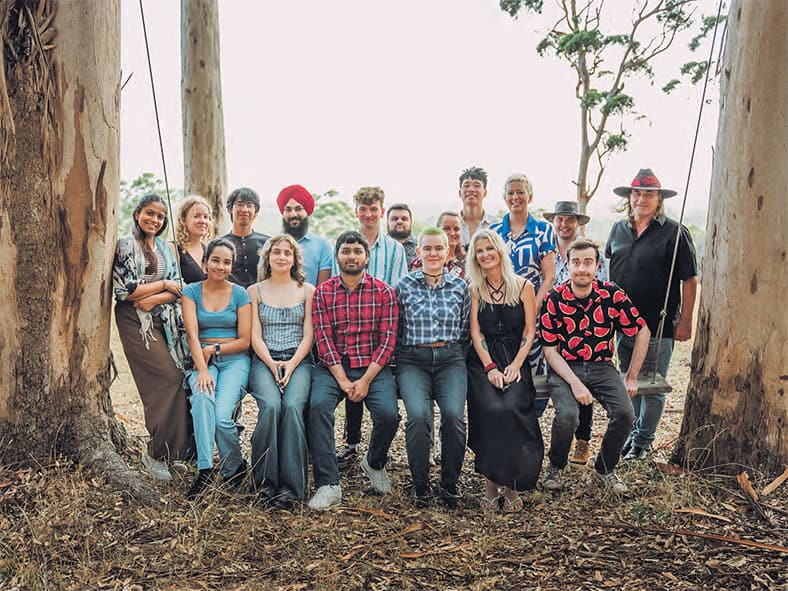
This was in partnership with the Great Southern Universities Centre and the local community.
In conclusion, an Invitation To Travel Differently was developed and is touted as a ‘more than rebranding’ strategy.
Tourism would become an ongoing dialogue where, rather than passing through, visitors contributed to the social, cultural and economic wellbeing of the region.
Tourism model puts values before volume
Focus would move from a volume-driven industry to a values’ driven one. Since the Innovation Lab concluded, the Regional Changemakers team has received positive feedback, including an endorsement from the Denmark Shire town planner, who praised the work as an initiative Denmark/Koorabup needed.
The town planner shared the updated Shire Tourism Strategy, which aligns closely with the vision and recommendations co-created during the lab.
Both the Great Southern Regional University Centre and the Community Resource Centre have expressed support for a Mobile Makerspace for future workshops.
Community members, not just students, could participate in workshops and hands-on making.
This was a mini version of Curtin University’s library Makerspace comprising a 3D printer, laser cutter, laminator, 3D doodle pens, a sewing machine and overlocker, badge maker and more.
For the second week of the program, Makerspace officer Kylee Silman facilitated sessions with the group for the hands-on components of the lab using the Mobile Makerspace.
It enabled students to bring their ideas to life and transform abstract concepts into tangible solutions. Participants were guided through experimentation, helping them and the community to visualise and test their ideas
This article appeared in the Denmark Bulletin, 6 March, 2025.

