

GME, Media Release, 18 November 2024
Tackling a worrying gap in the nation’s emergency rescue education, Australia’s leading communications and safety brand, GME has partnered with leading survival expert and instructor, Outback Mike to launch the inaugural National Rescue Awareness Week.
Raising awareness of the importance of proper safety and communication in the great outdoors, National Rescue Awareness Week brings together 65 years of expertise in helping Australians explore our beautiful backyard with simple advice to prepare Aussies better and keep them safe on land and out at sea.
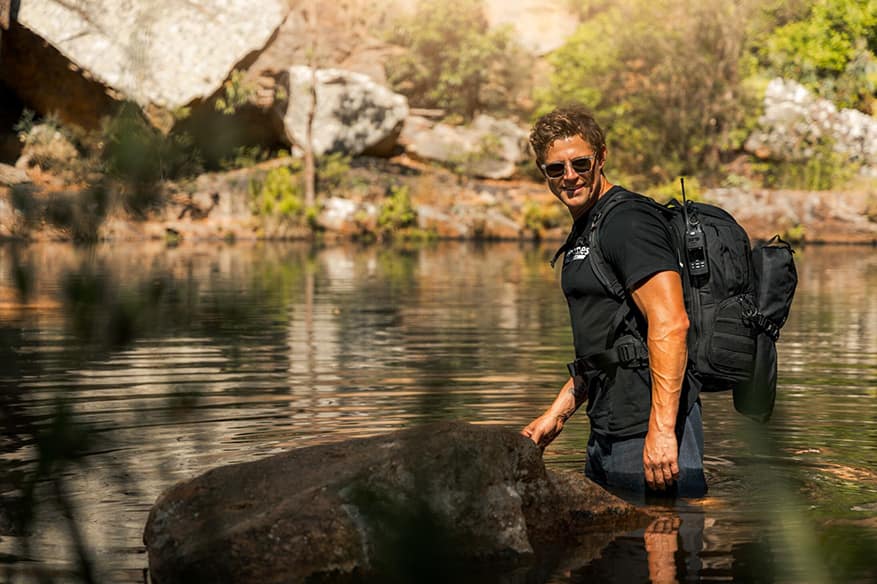
The initiative follows the release of new research revealing the country’s knowledge of proper travel safety is dangerously low. The data from GME shows that less than half of the nation (only 41 per cent) would know what to do if they found themselves lost while travelling the great outdoors.
With eight out of 10 Aussies looking to tap into their sense of adventure and explore our beautiful landscape, less than half of the nation (49 per cent) would know how to contact someone without phone service – leaving us at risk in the thousands of mobile phone blackspots across Australia.
What’s more, Aussies lack knowledge of basic survival tactics. Just 36 per cent of Australians know how to find north without a compass, less than a third (31 per cent) can find a drinkable water source and only a quarter (25 per cent) can build a fire without matches or a lighter.
According to solo adventurist, survival expert and filmmaker, Michael Atkinson (aka Outback Mike) having the right gear and know-how is crucial when it comes to exploring the Aussie outback or coastline.
“Australians have a strong sense of adventure. We love to explore but there’s a common misconception that as long as we’re exploring close to home, we’re safe.
“Understanding basic survival principles is vital whether you’re exploring on land or sea. Planning your route, carrying the right gear – like a GME personal locator beacon (PLB) or Emergency Position-Indicating Radio Beacon (EPIRB) and staying calm in an emergency, can be the difference between making it home or not.”
“Having an emergency beacon takes the SEARCH out of SEARCH AND RESCUE. They allow rescue authorities to send assets to your exact location with minimal delay. This greatly improves your chance of survival and quick rescue”
“Technology has made outback travel much safer. In an emergency, you can literally be saved from anywhere at the press of a button. But, you must have the right equipment with you.”
Giving Aussies the tools they need to explore safely, GME and Mike have come together to create a survival preparation guide featuring four key steps to safe travel.
Tony Crooke, Safety Expert at GME comments:
“We regularly hear stories of people who find themselves in emergencies simply because they failed to prepare adequately. Whether venturing off-road or heading out to sea, having the correct safety equipment and understanding basic survival techniques are crucial.
“When it comes to survival skills, there’s no one more experienced than Mike. From his time in the Airforce to his solo journey up the Great Barrier Reef in a dugout canoe, his love for the outdoors aligns perfectly with ours, making him the ideal partner for this campaign.”
“Through National Rescue Awareness Week, we aim to equip Australians with the essential skills and knowledge needed to handle emergencies effectively and safely.”
For the full outdoor survival guide, please see below or click the link here to download. For more information on GME’s full range of safety technology, click the link here.

Survival and rescue essentials guide
Whether you’re trekking through rugged terrain or navigating open waters, being prepared can make all the difference.
Ahead of Australia’s first National Rescue Awareness Week, GME has partnered with survival expert Michael Atkinson (aka Outback Mike) to build a guide with crucial survival tips to help Aussies prep for, and travel safely on their next adventure.
1. Pack the right equipment
Every journey should start off the same way, and that’s making sure you have all of the gear you need.
To start, always ensure you have enough drinking water – at least 4 litres per person per day, with more needed for strenuous activities in hot conditions. Depending on the duration and conditions of your trip, consider bringing a portable water filter or purification tablets to treat local water sources in an emergency.
Staying connected is also key. If you’re heading beyond phone coverage, consider bringing a backup communication device, such as a sat-phone or UHF CB Radio.
A device such as a GME Personal Locator Beacon (PLB)—or an Emergency Position-Indicating Radio Beacon (EPIRB) for marine travel, is also a fantastic option. A PLB is a compact device that sends a distress signal and your location to rescue services via satellite when activated, meaning it is a lifesaver in emergencies when phones are out of range. An EPIRB serves a similar purpose for sailors and boaters.
If you can’t afford your own PLB, check the local National Park visitor centre to see if they have them available for hire.
Pack other essentials tailored to your journey, such as a first aid kit, waterproof fire-lighting tools, weather-appropriate clothing, and navigation gear. Proper preparation helps you handle unforeseen circumstances, ensuring your trip is both safe and enjoyable.
For a checklist of items to pack, see below.
2. Plan your route
Map out paths and trails you intend to follow, and study potential hazards that could pop up along the way. This includes understanding the terrain, weather conditions, and any other environmental factors that might impact your trip.
Consider the most likely problems you may encounter and how you’d handle them, adjusting your plan and packing list as needed. Seek local knowledge on track conditions, alternative routes, and nearby support facilities.
Check mobile phone coverage in the area you’ll be travelling. Coverage can vary significantly depending on your location, so knowing where you can expect to have service (or won’t) will help you plan accordingly.
3. Communicate your plans
It’s critical to communicate your plans before embarking on any journey, especially if you’re headed into remote areas. Inform a friend or family member about your trip details, including your planned route and expected return time. Ensure they clearly understand your route and key checkpoints along the way.
Provide them with detailed information, including start and end points, duration, planned stops, and check-ins. This helps them monitor your progress and alert authorities if needed.
Most National Parks offer trip intention forms (e.g. NSW National Parks Trip Intention Form), which can be shared with your emergency contact.
If you have an EPIRB or PLB, log your trip details with AMSA (Australian Maritime Safety Authority) on their beacon registration page.
Instruct your contact to call 000 if you fail to check in by the expected time. For water travel (particularly open water), register your trip with local marine rescue services. Many offer apps to track your journey and will follow up if you don’t report your safe return.
4. Keep calm in an emergency
If you find yourself in danger and require assistance, it’s important to remain calm. Panic can cloud your judgement and impair decision-making. Take a few deep breaths and assess your situation. Prioritise your immediate safety by addressing any imminent danger.
Try calling for help on 000 (or other two-way communication methods if available).
If you have a GME Personal Locator Beacon (PLB) or EPIRB, activate it carefully, ensuring the antenna and GPS components are unobstructed. These devices send your location to rescue authorities via satellite, emit a homing signal, and feature a strobe light for visual identification.
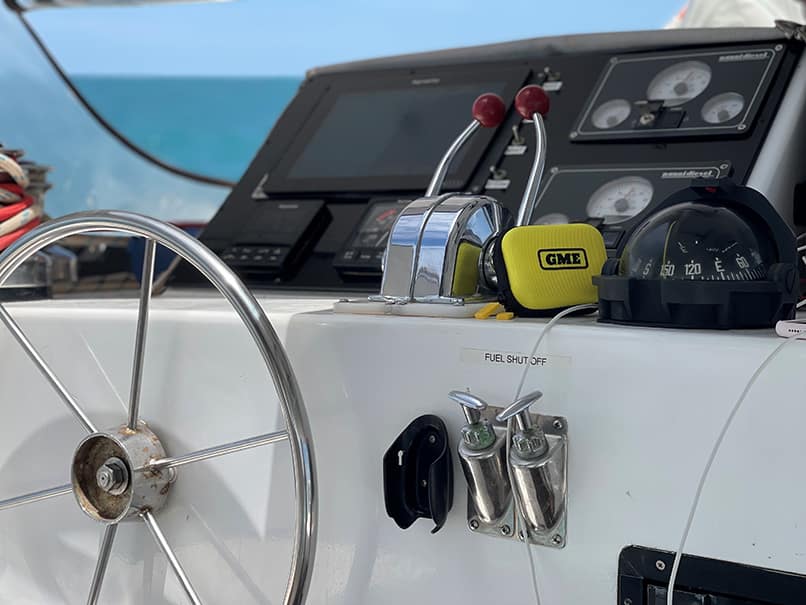
Assess the equipment you have on hand to support you and prioritise your survival needs across four key categories: protection, location, water, and food. The order of importance may shift based on your situation.
Protection:
- Seek shelter from the elements, maximise clothing use, and, if possible, stay in or under your vehicle, set up a tent, or create an improvised shelter.
- Administer first aid and, if conditions allow, build a fire for warmth.
Location:
- Maximise visibility for rescuers by moving to open areas or staying near your vehicle, as it is easily spotted from the air. Use bright items like tents, tarps, or space blankets.
- During the day, use reflective devices such as mirrors or a mobile screen (even if flat) for signalling.
- Consider a signal fire – a pile of green foliage thrown onto a fire creates an effective short-term visual signal. Keep the materials ready to quickly ignite when rescue assets are nearby.
- For night signalling, use light sources or fires. If possible, set up three fires spaced in a triangle, a recognised distress signal.
- If you’re on the water, always wear your life jacket. Be prepared to use signalling devices like flares or sea dye when rescuers are nearby. If possible, try to stay in one location to make it easier for rescuers to spot you.
Water:
- If water is scarce, seek natural sources to filter or purify with tablets or by boiling.
- Minimise sweat loss by reducing physical activity to conserve water.
Food:
- Although rescues can be quick, delays due to weather or distance may occur, so ration the remaining food carefully. If foraging, only eat foods you know are safe.
Equipment checklist
- GME Personal Locator Beacon (PLB) or Emergency Position-Indicating Radio Beacon (EPIRB) for marine travel
- Satellite phone or communicator / UHF Radio for long-distance communication
- First aid kit Adequate water supply (minimum 4 litres per person per day)
- Portable water filters or purification tablets for treating water sources
- Clear plastic bags (for water collection via transpiration)
- Fire-lighting equipment (preferably waterproof)
- Navigation tools (map, compass, GPS device)
- Weather-appropriate clothing
- Sea dye for water-based signalling
- Bright materials (tents, tarps, space blankets, reflective devices) for enhancing visibility
- Light sources for night-time signalling (such as flares or flashlights)
- Food supplies and emergency rations (if relevant to the journey)