

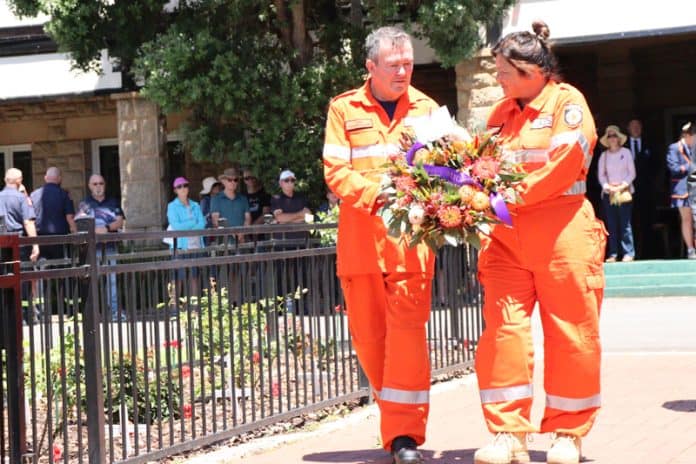
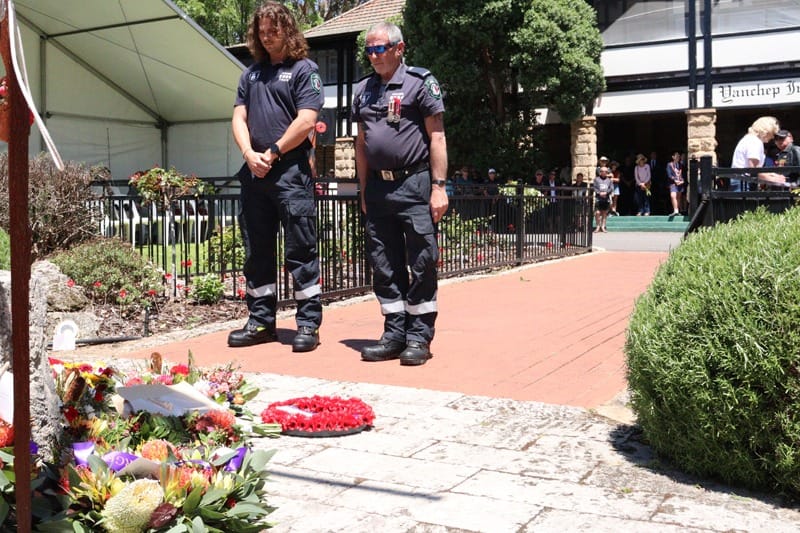
At the annual Remembrance Day service held at Yanchep National Park today, Yanchep Two Rocks RSL president Bill Jones said November 11 marked the end of fighting in the most horrific war of the modern era.
Mr Jones said none of those who took part in that war were still living, very few from World War II – 1939 through 1945 – still survived and even those from the next two major conflicts – Korea and Vietnam – were seeing their ranks thin by the day.
“Nowadays we pause to remember not just the military personnel from both sides involved in war but also the civilian casualties who are always collateral damage in times of conflict and not forgetting the animals in earlier conflicts before war was modernised and industrialised in the way of transport and weapons especially,’’ he said.
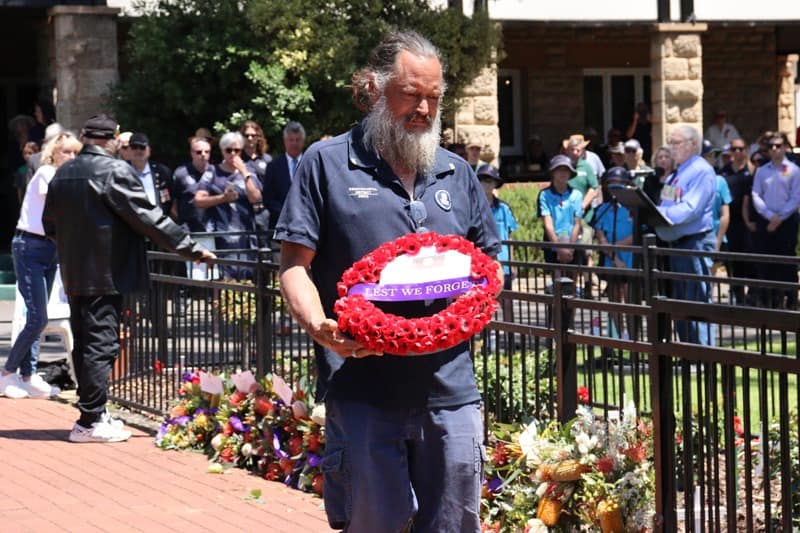
“A little known fact is that almost more animals took part in World War I than people with about three million horses involved on both sides, along with the use of dogs, donkeys and mules, pigeons, camels and other animals required for specialty assignments.
“Today however, rather than dwell on such facts and figures as usual in the numbers of deaths, wounded, prisoners and other casualties, I thought we should cover a couple of lesser known facts that have become part of today’s service.
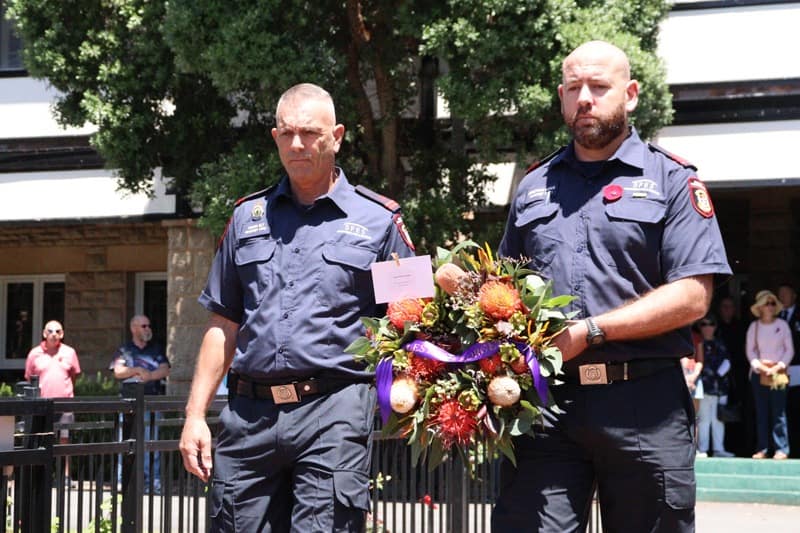
“Firstly, why do we observe the last post prior to a minute of silent reflection during a commemorative service?
“It dates back to when English troops fought in Europe back in the distant past.
“A retreat was sounded as it became too dark to continue fighting.
“The soldiers then retired to the closest town or village to spend the night with sentries placed at the entrance of their camp.
“As the duty office marched the sentries around to man their posts an accompanying bugler sounded the ‘first post’ as the first sentry took up his position.
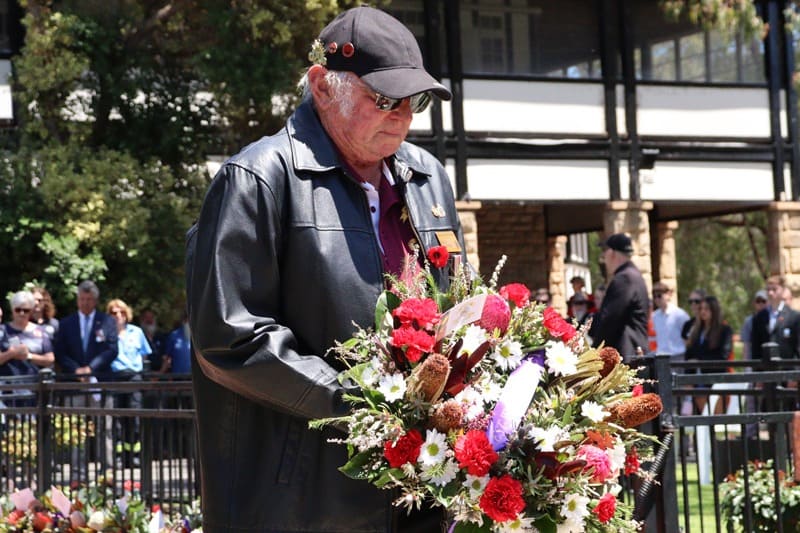
“The bugler then sounded the “last post’ as the final sentry took his position by manning the last entrance and making the area safe.’’
He said in recent times the last post sounded at a funeral or commemorative service symbolised dead soldiers having ended their journey through life.
“Why a period of silence?
“Shortly after WWI a Melbourne journalist Edward George Honey, who was in London at the time was dismayed that in the noisy celebrations marking the end of the war no real thought was given to the human sacrifice making such celebrations possible.
“He suggested that everyone should stand in silence for five minutes in memory of the fallen.
“It was decided that five minutes was too long and King George the fifth accepted two minutes in length.
“In 1997 Australia’s Governor General issued a proclamation that the silence be for one minute, which is what we observe today.
“I intend covering other such aspects of commemoration during future services”¦may all of those who have fallen in past conflict, never be forgotten”¦freedom is not free.’’
This article appeared on Yanchep News Online on 11 November 2024.

