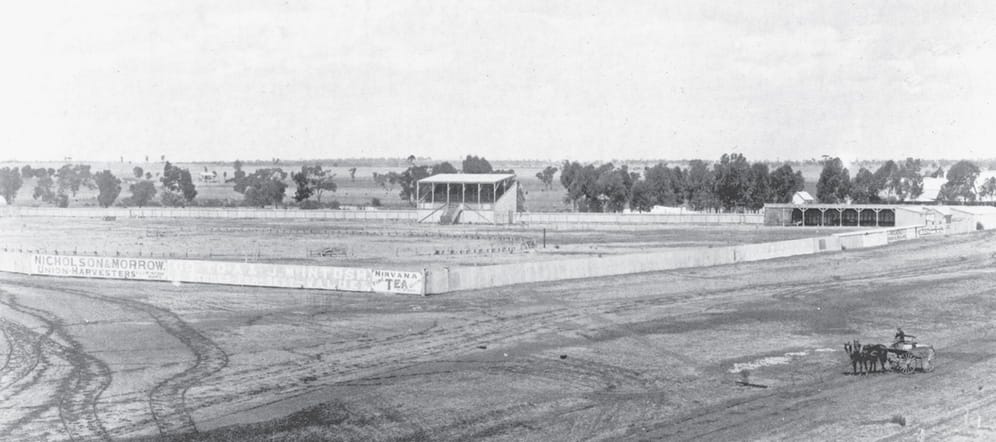
John Williams, Treasures of Nhill & District Facebook page, Nhill Free Press & Kaniva Times
“Situated on high ground on the main road, within half a mile of the town, it is both convenient and dry, and it commands one of the most picturesque views of the vicinity of Nhill.
On two sides may be seen over the top of the fence a background of foliage which presents a charming appearance on a clear bright day.
Looking towards the north of the town, backed by green pasture and crop land, and away to the west are wooded paddocks.”
Words from the Nhill Free Press written on the opening of the new showgrounds in 1888.
But it wasn’t the first show.
A dart board would be handy in picking the date of the “first” Nhill Show, but there is a reason for some confusion.
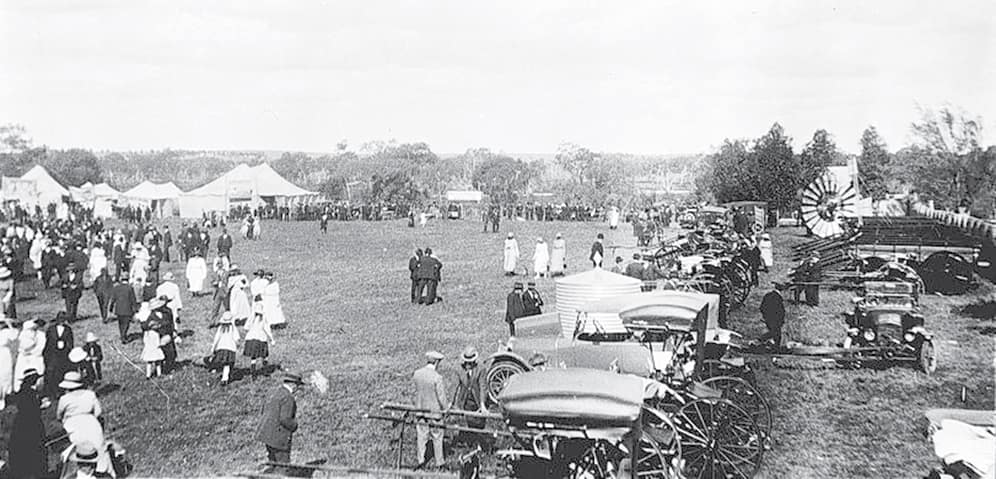
According to the paper the first show held in Nhill was in 1882 when Nhill and Dimboola were to alternate each year under the North West Wimmera Agricultural Society.
Technically 1883 was Dimboola’s turn, but for some reason Nhill has also claimed that year and on the occasion of the Golden Jubilee Show in 1933, the Agricultural and Pastoral Society said in the Free Press, the “first” Nhill Show was held in 1883”¦despite the earlier event of 1882.
In 1884 Nhill decided to go it alone, form the A&P society, ditch Dimboola and hold an independent show forever more”¦.no more sharing.
Up until 1888 the Nhill Show was held in William McDonald’s paddock on the Nhill pastoral station with the only infrastructure being a wool shed which acted as the pavilion.
The September show at the new showgrounds in 1888 attracted a hard to believe crowd of 4 thousand and one sideshow, the customary boxing tent. (The population of the rapidly growing town at that time was less than a thousand.)
The Nhill Free Press reported on the show as the 5th annual event:
“From early morning until late afternoon people streamed along the road from the town to the gates and ticket sellers had little time to spare until the closing hour. Outside the gates there were long strings of horses and vehicles of every description which had conveyed people from the country; inside was an assemblage of people such as had never been witnessed before in Nhill.”
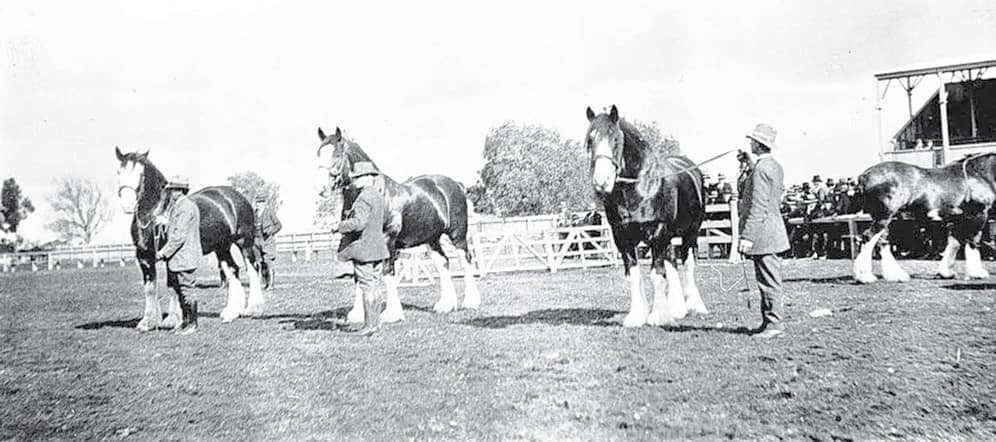
In 1984 the A&P Society, staged the Centenary Nhill Show which was 100 years since the first show in 1884 under the A&P, but there had only been 99 shows. The missing year was 1940.
During the First World War the only concession made was that in 1918 the booze booth at the show was replaced with a temperance booth. The Broughton Rechabites felt it was wrong to be drinking alcohol while local sons were dying at the front.
The dilemma came up again during the Second World War with some suggesting that the agriculture community should be concentrating on feeding Briton. Not to mention a drought and poor wheat prices. This led to the 1940 show being abandoned.
But one year later it was back on again with the counter argument winning through”¦and that was the show should be seen as a “winthe- war-rally” that could lift the community from despair.
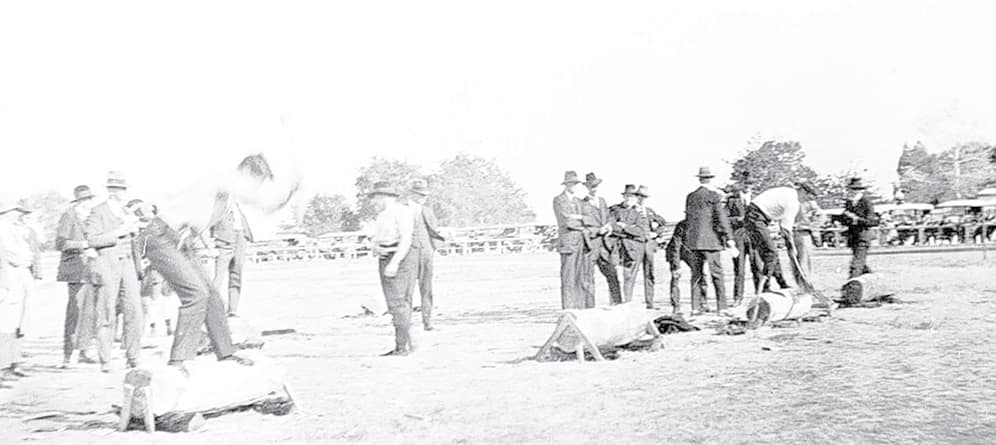
Prior to the war during the depression the showgrounds had become a camping area for poverty-stricken men and boys wandering from town to town. Damage to the sheds and concern for the safety of nurses and staff at the hospital next door led to a special shelter for the destitute being built at the swamp in 1937.
The Council agreed that it could not turn the men away as they would return to the showground sheds for comfort in winter and they didn’t fear arrest because the Police would have to feed them.
The Horsham Times of 1892 included the following report on the Nhill Show. You might choke on your Weeties!
“Some very good specimens of ladies’ needlework attracted a large number of the gentler sex who naturally looked upon that corner of the showgrounds as their own special allotment and congregated in such numbers throughout the day that very few of the Lords of Creation could approach near enough to make an inspection of the exhibits.”
Despite two World Wars and the Depression, Nhill only lost one show, but then along came Covid and 2020 and 2021 were cancelled.
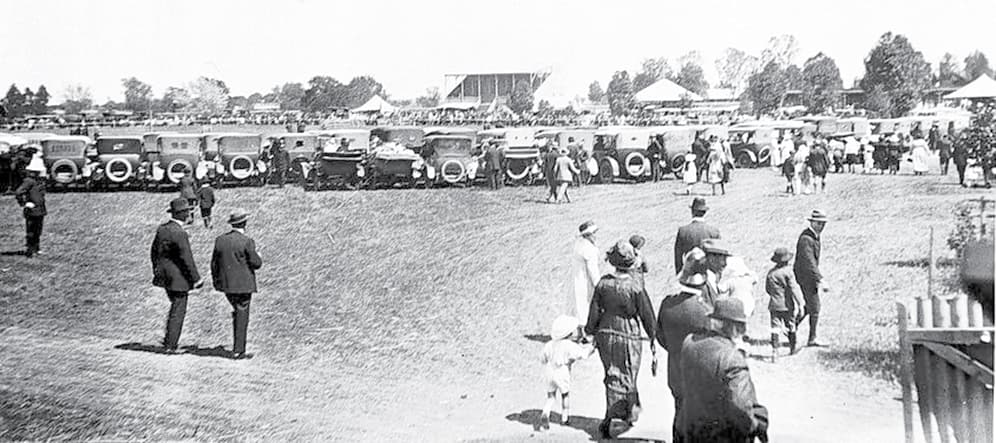
Whatever date you pick for Nhill’s first show, 1882, 1883 or 1884, this year has been deemed by the A&P as the 138th event.
In researching this story (with a calculator) I noted that my grandfather H. E Williams staged the biggest ever display of farm machinery implements in 1937. (Nanna won prizes for lamingtons and a rainbow cake in the same year.)
But of more interest is the show’s early “public address system”.
For this they used a bellman standing on a specially erected wooden stand, ringing a bell to attract attention as he announced the various events. (Attributes for the showground crier would include a loud voice.)
In 1918 the Nhill Free Press announced that the Showground Committee had appointed one E. Kelly as bellman for that year.
He was known as Ned!
Footnote: Below a crotchety Kaniva character vents his spleen in a letter to the editor of the Nhill Free Press over a monkey side show in 1918. There was a record attendance that year.
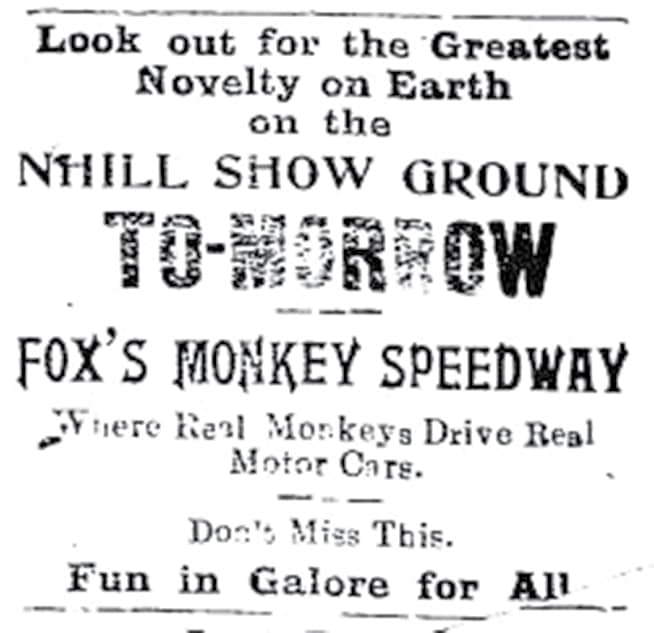
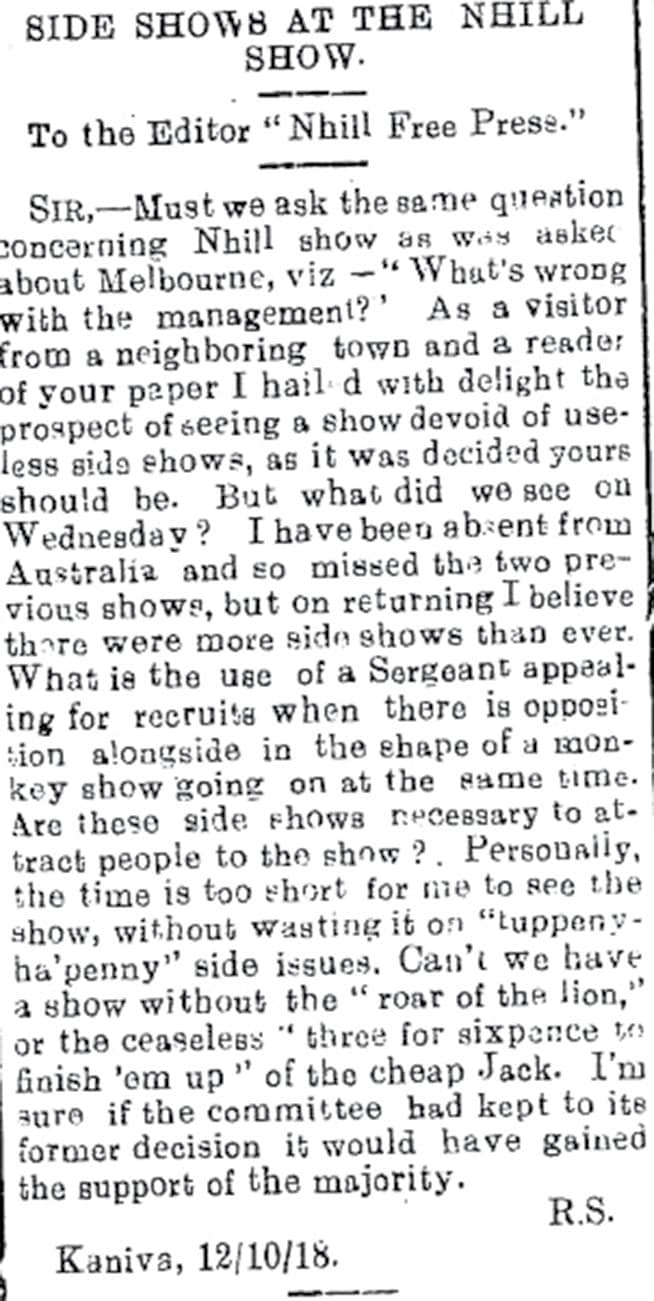
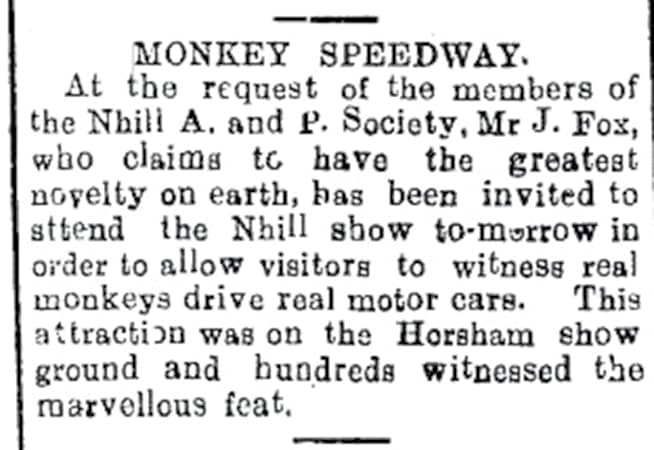
Nhill Free Press, 1918
This article appeared in the Nhill Free Press & Kaniva Times, 16 October 2024.