It doesn’t just affect those without a roof over their head.
It also affects entire communities.
As this article went to print, there are over 120,000 people experiencing homelessness across Australia.
While it was previously identified as an issue which was predominantly occurring in metropolitan areas, in recent years there has been a significant increase in homelessness throughout regional locations, including the Clarence Valley.
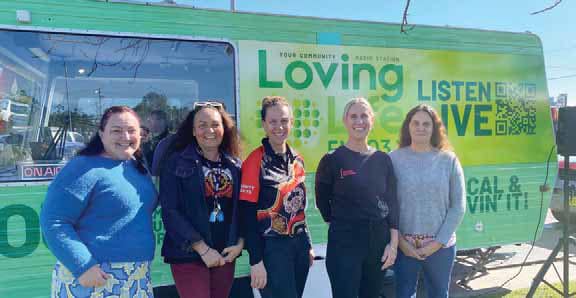
On August 7, local businesses and organisations including Loving Life FM 103.1, Anglicare, St Vincent de Paul, The Salvation Army, Gurehlgam, Social Futures, Mend and Make Do, and Homes NSW, participated in a free community breakfast and information session at the old Tourist Information Centre in South Grafton.
Aimed at engaging with residents and providing support in addressing homelessness in the region while also raising awareness of Homelessness Week 2024, representatives from local support services also spoke with attendees about the outlets which are available across the Clarence Valley.
A spokesperson for Social Futures said the event received a good turnout and provided valuable insights into the challenges faced by individuals at risk of or experiencing homelessness, and highlighted the collaborative efforts needed to tackle the issue.
“Practical strategies and resources were shared with those in attendance, and key discussions focused on the impact of rising living costs, the importance of early intervention in assisting people to maintain existing tenancies, and the types of support available more generally,” they said.
“In the 12 months to June this year, Social Futures combined Specialist Homelessness Services programs that supported a total of 2143 people.
“People experiencing homelessness represented just over 56 per cent of this figure, with the remaining 888 people receiving support while at risk of homelessness.
“The homelessness problem is much larger than rough sleeper numbers alone might indicate as that data does not take into account hidden homelessness, such as those people couch-surfing or staying with extended family, and those at risk of homelessness.
“Figures from the 2021 Census indicate that 39.1 percent of the 112494 people experiencing homelessness in Australia were living in severely crowded dwellings, 18.1 percent were living in boarding houses, and 19.8 percent were in supported accommodation.”
The spokesperson said it was important to participate in events like the one in South Grafton last week to raise awareness of and promote local support services, particularly in rural and regional areas.
“It’s important that people know support services are available within their local community,” they said.
During an interview with Loving Life FM 103.1 last week, Minister for Homelessness Rose Jackson said the NSW Government has been slow to catch up with the increase in the number of people experiencing homelessness outside of metropolitan areas, and admitted a lot of support services are still based in the city.
While she identified the significant unavailability of social and public housing, amidst the ongoing cost of living crisis and following unprecedented flooding which devastated several Northern NSW communities in 2022 as contributing factors towards the increase in homelessness figures across regional locations, the Minister said $5 billion allocated through the NSW 2024-25 Budget is going towards building more dwellings.
While the Minister did not deny the enormity of the current waiting lists for social and public housing, she spoke of her keenness to explore the option of transforming disused and vacant buildings into transitional or temporary accommodation facilities.
When asked about the possibility of utilising the old and currently dormant Grafton Gaol as emergency accommodation, she said there was no reason why that couldn’t be explored, adding she was happy to go and look at the premises.
“There are a lot of people who are experiencing homelessness,” she explained.
“We’re really committed to building and providing more (social and public houses) and moving support services where we’re seeing homelessness.”

This article appeared in the Clarence Valley Independent, 14 August 2024.