

Mark Allison, Chair of Agribusiness Australia, Editorial, July 2022. Data visualisation provided by Thomas Elder Markets.
There has been a heightened discussion in agricultural circles related to foot and mouth disease due to recent discoveries in Indonesia.
Indonesia is close on a global scale but still hundreds of kilometres from the mainland. Indonesia is distant enough that it will not arrive over the air, and we have a sea border largely protecting Australia from wild transmission. It will likely come via plane or boat if it arrives from Indonesia.
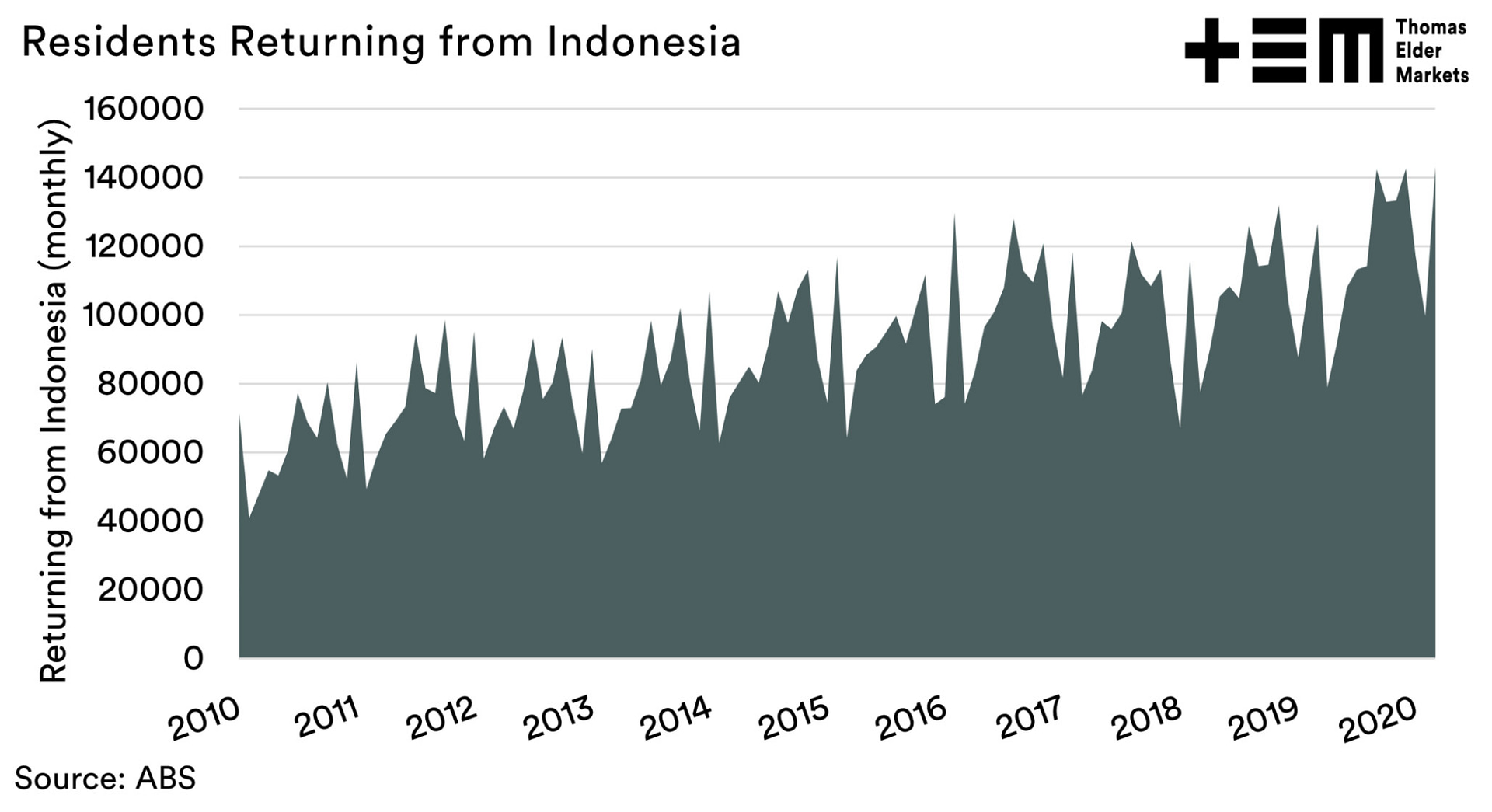
Australian tourists love Indonesia, specifically Bali. That is where the risk arises. The chart below shows the number of arrivals back into Australia from Indonesia each month.
Between 2015 and 2020, 103k travellers were arriving back from Indonesia every month or about 12% of all overseas travellers. As COVID restrictions start to relax, more travellers are returning to Indonesia.
The sheer volume of people arriving from Indonesia is a huge concern. After spending their time enjoying their rest and recuperation, tourists may not have biosecurity front of mind.
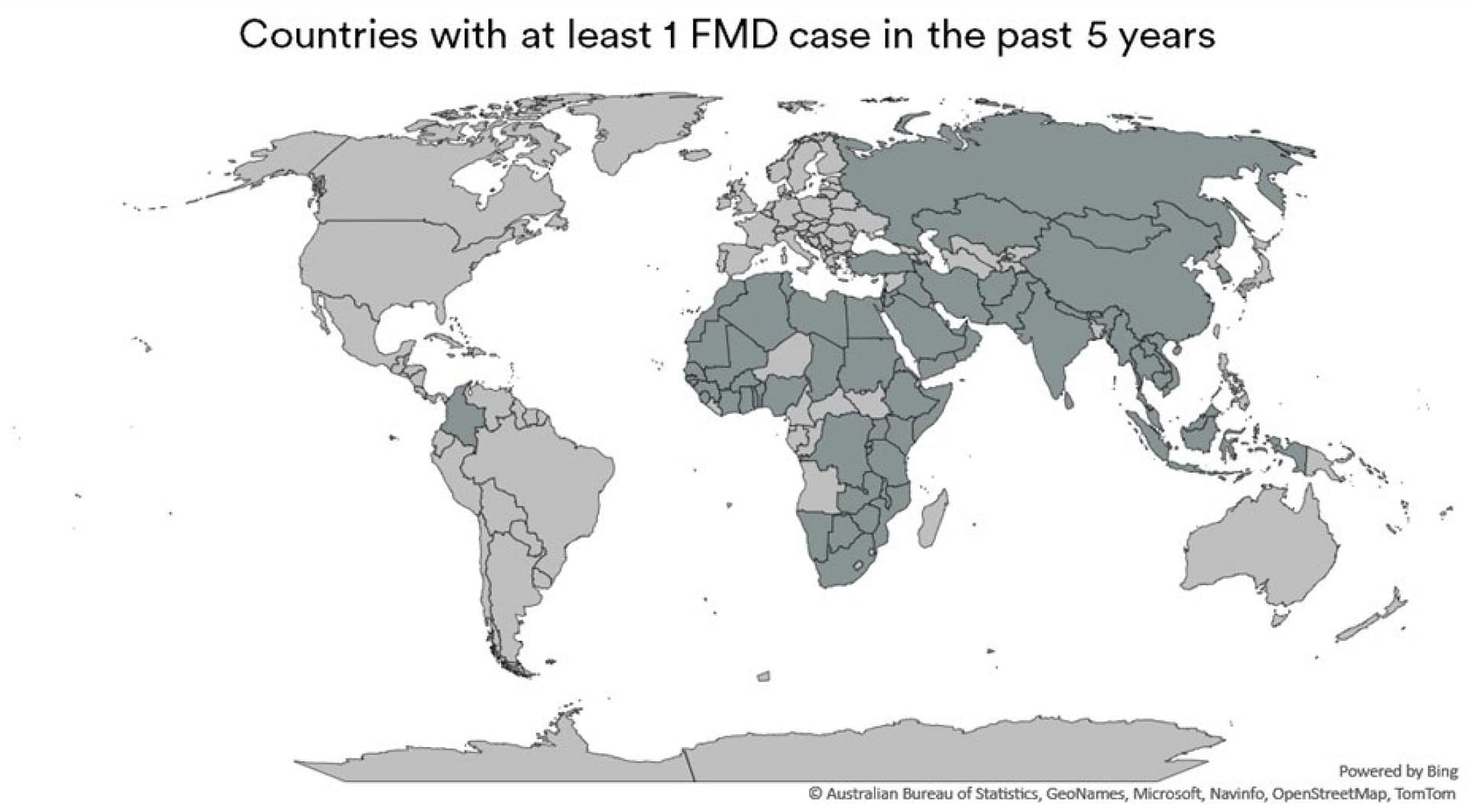
FMD has always been a significant risk; the map below shows the countries worldwide that have reported cases within the past five years. Many have travelled from these countries to Australia during this period (excluding the COVID times).
The risk of an FMD outbreak in Australia has been given a probability of 9% (1%/19%). The advent of FMD in Indonesia increases the likelihood of an incursion into Australia.
We should not have waited until FMD or any disease was close to bring attention to the risk of exotic diseases.
Luckily it has been front and centre of a number of organisations within agriculture, including Agribusiness Australia but also, but not limited to Sheep Producers Australia, Wool Producers Australia, and Australian Pork Limited.
ABARES forecast the economic impact of a large-scale impact being >A$50bn, in research conducted in 2013. It is anticipated that the cost to be higher in 2022 than the estimates produced in 2013.
The largest impact on Australian agriculture would be on curbs to our export potential through reduced access to valuable markets. The impact on export volumes during the 2001 FMD outbreak in the UK provides a good indication of the severity that an FMD outbreak can cause.
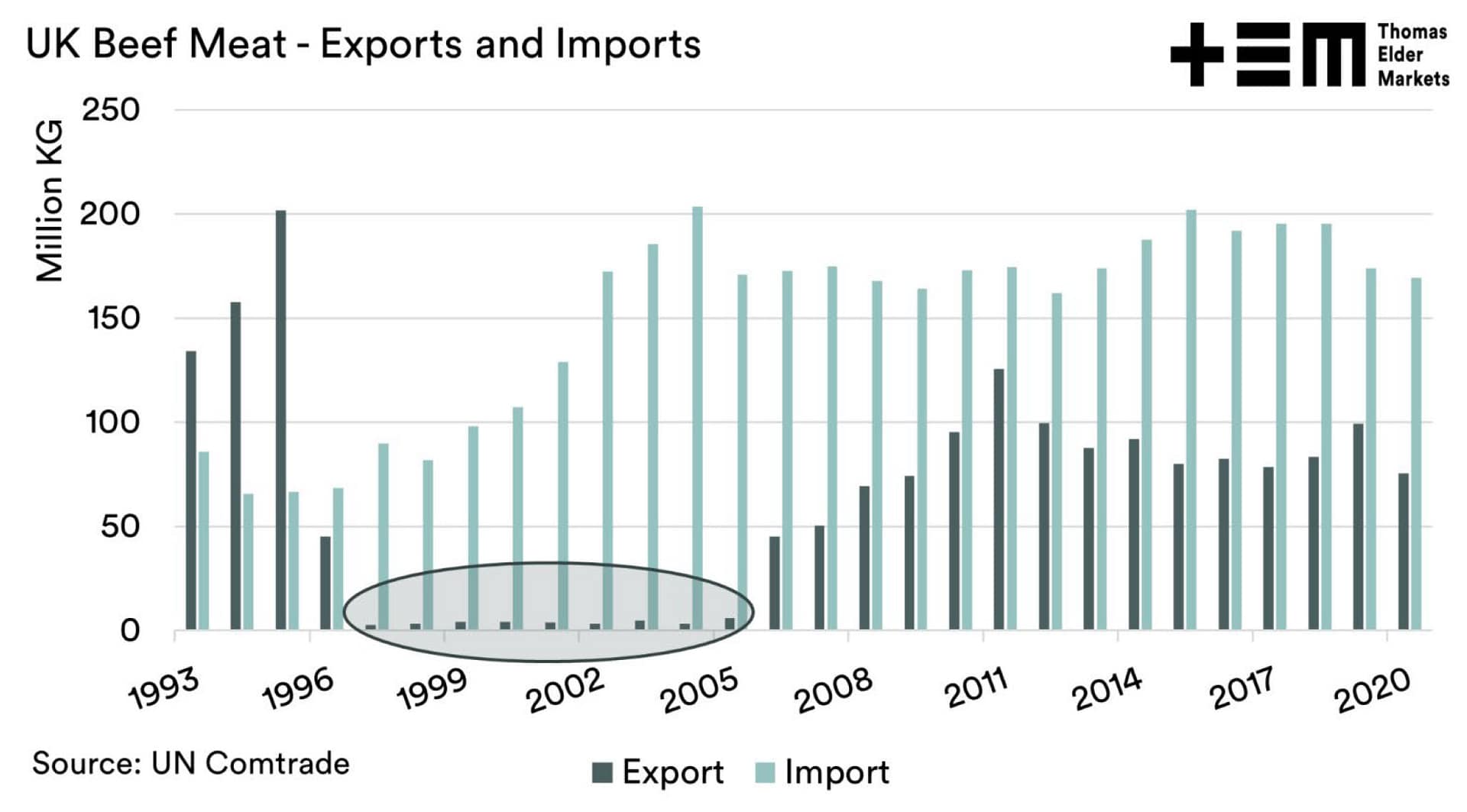
The first chart below shows the imports and exports of beef meat from 1993 to 2020. The beef industry in the UK, around the time of the 2001 FMD outbreak, was recovering from the BSE outbreak. The export of beef was effectively banned between 1996 and late 1999; the FMD outbreak caused exports to stay lower for longer.
In reality, beef exports were poor from 1996 to the late 2000s due to FMD and BSE.
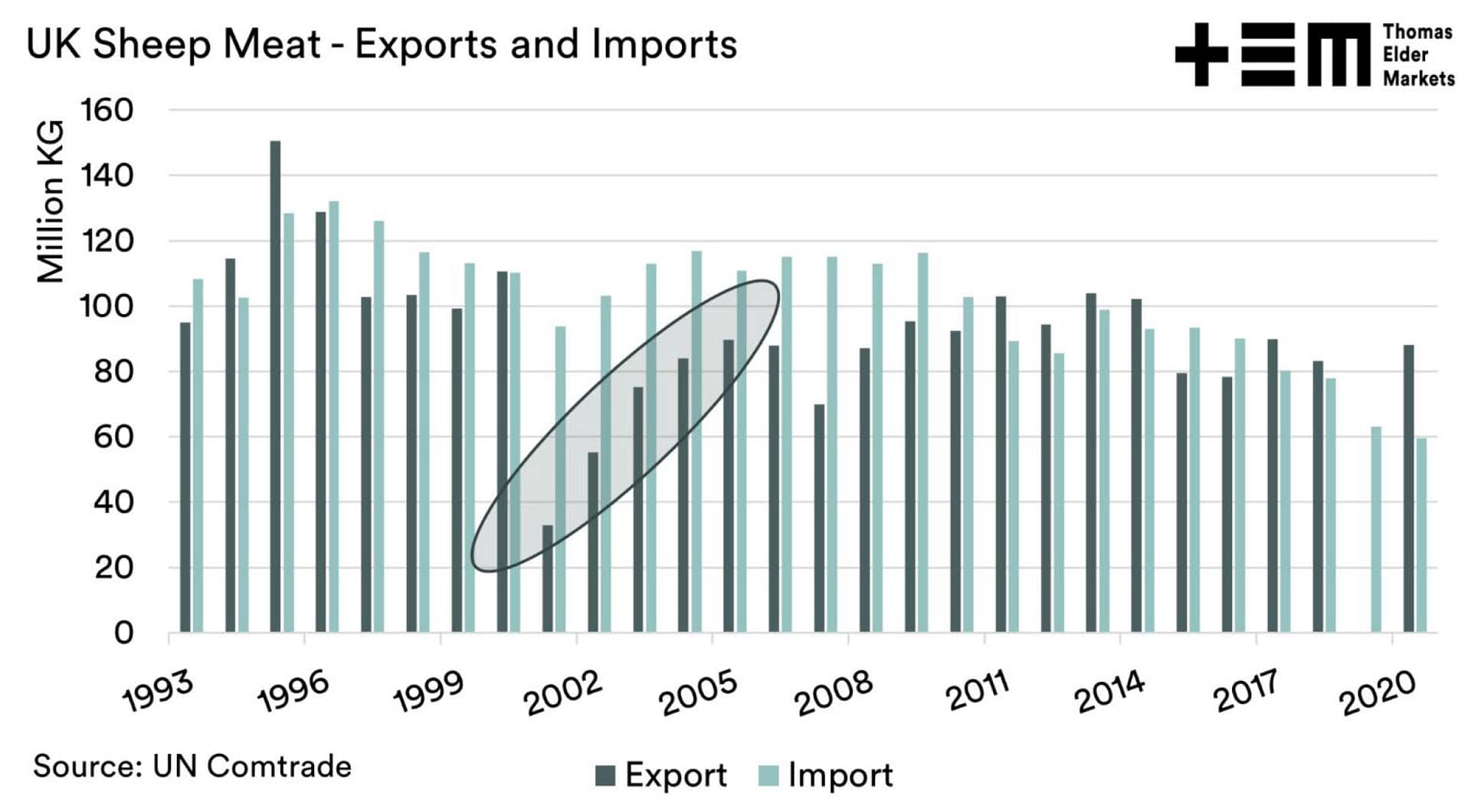
In sheep, the situation was quite distinct. Sheep weren’t affected by an existing ban. The FMD effect was, therefore, far more immediate.
During 2001 there was a 70% drop in sheepmeat exports. It took the UK another five years to get export numbers close to previous export levels.
In Australia, we rely heavily on exports for our beef and sheep meat, with only 30% and 28% consumed domestically.
We must ensure that we do not damage our reputation and standing in the meat trade world.
The impact on grains
Whilst FMD is a credible threat to the Australian livestock sector; it is not exclusively a concern for that industry. It concerns other industries, including grains.
Firstly, there is demand. In the main, Australia exports the majority of our grains. Whilst our export market dominates, a significant volume of grain is consumed domestically. The chart below shows the percentage of grain consumed locally. We can see periods where domestic consumption increases dramatically (during drought).
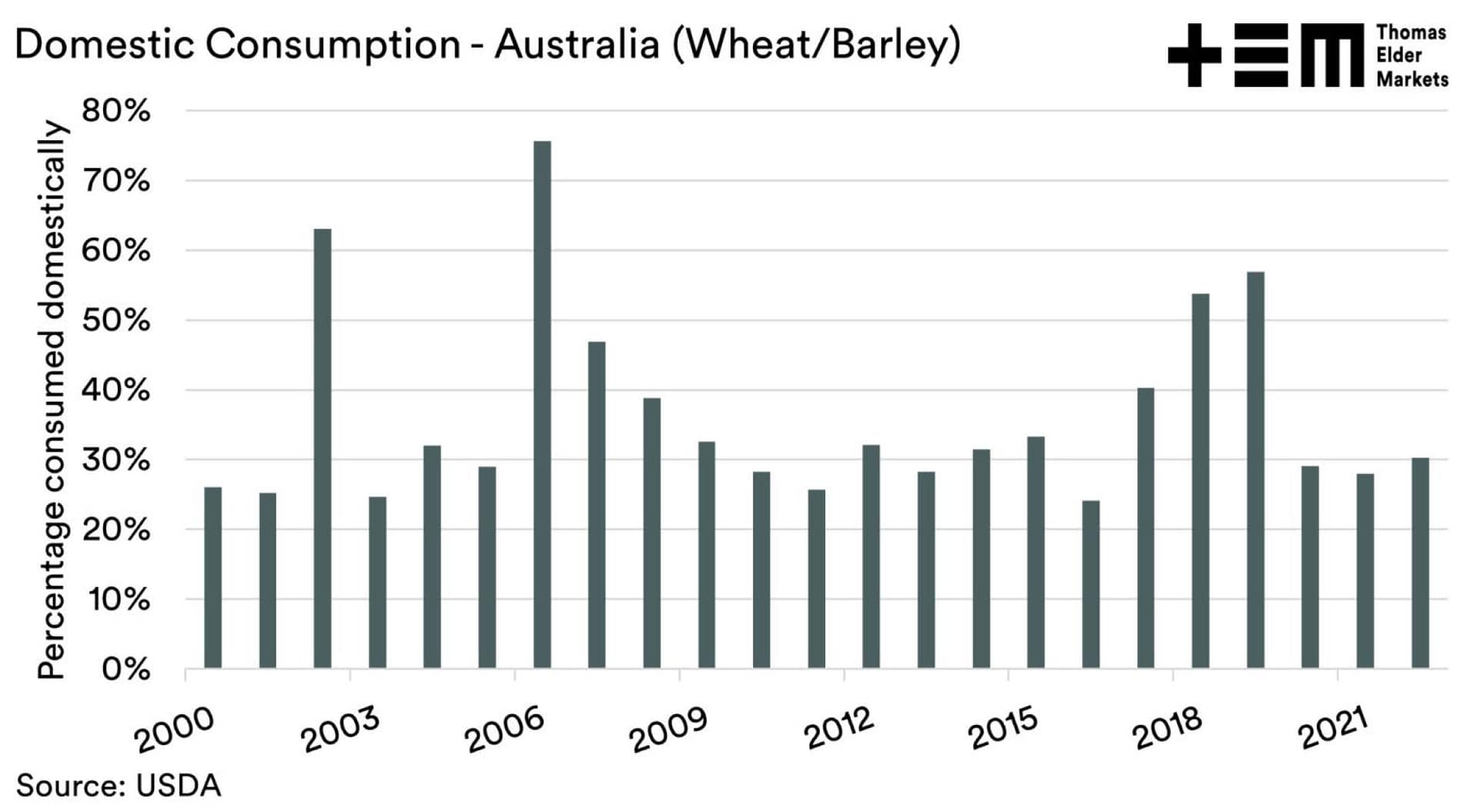
In a typical year, Australia is feeding around 10mmt of barley/wheat. A drought increases domestic demand due to the additional consumption by beasts, usually on pasture.
The majority of the inelastic demand is centred around the east coast. This is due to the large concentration of grain consumers. As an example, cattle feedlots and other intensive industries such as pig and poultry are focused mainly in NSW, VIC and QLD.
Let’s say that we had a large-scale outbreak of FMD disease, and a large-scale culling of intensive industries was to occur. The result would be a dramatic reduction in grain demand.
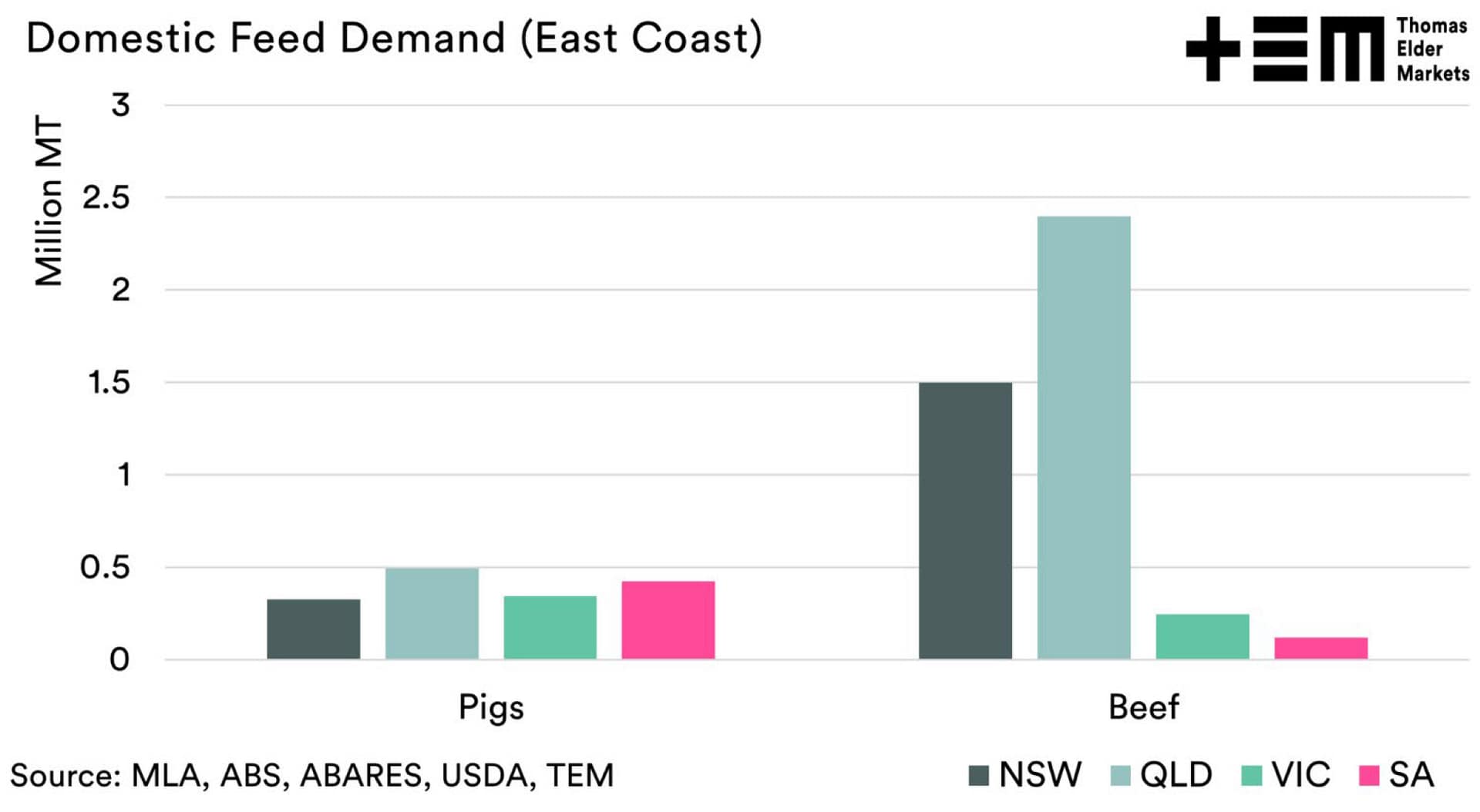
Thomas Elder Markets modelling of demand is used to show the animals which impact domestic feed demand, and could be impacted by FMD. These are beef and pigs and mainly on the east coast. Whilst there are a few sheep feedlots, they are a relatively insignificant proportion of the overall mix.
The total demand for these two industries is approx 5.5 to 5.9mmt. It is important to note that this is now all whole grains; it is also other products (soy/canola meal, palm etc).
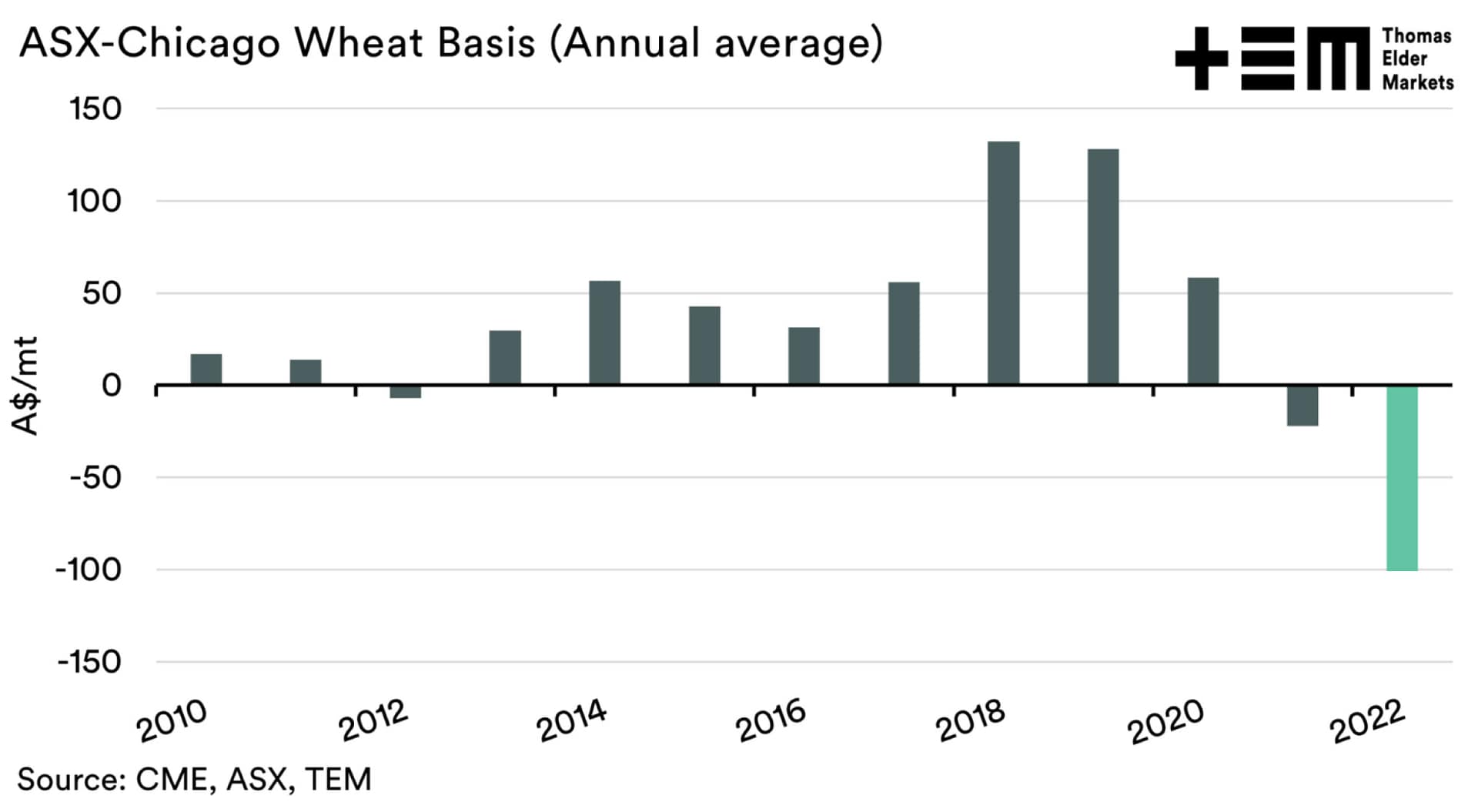
The impact of domestic demand can be seen in our basis levels. During periods of drought, we have seen domestic basis increase. I have used the ASX-Chicago spread as a representation of this.
In 2018 and 2019, our price relative to overseas values increased dramatically. This is partly due to domestic consumers paying to keep supplies in the country instead of the export market.
The worst-case scenario would be for an FMD outbreak coinciding with drought. The drought basis helps the effects of lower production through a higher price, although it never wholly offsets the yield drop. If an extended cull was to take place, then we could see our domestic basis come under pressure at a time of lower supply.
The impact of FMD on grains shouldn’t be ignored, especially for growers in the eastern states.
Grain flows are another issue. There have been major issues getting grain to port logistics in recent times. In a major outbreak, travel in the countryside would be constrained, especially those in mixed enterprises.
Trucks would have to be thoroughly cleaned between farms, and this would cause significant delays.
Another impact on grain growers is in the hay and fodder sector. FMD can stay on these surfaces for extended periods of time. Therefore we could find additional controls and withholding periods, especially in our markets with more sensitive nations.
The need for solutions
If FMD hits these shores it would have an enormous impact right through the industry, not just livestock. This is without considering the social, psychological and non-ag economic consequences (tourism).
As an industry, we need to be doing our utmost to manage FMD.
Industry priorities
Keep it out
The first priority is to keep FMD out of Australia. Australia has a natural barrier (the ocean) and very strong biosecurity protocols. Funding for increased surveillance and tourist education would help reduce the potential of an incursion.
Get it out
The risk of an incursion is great. The Australian agricultural industry and its representative bodies have to prepare for the worst-case scenario, an outbreak.
At present, the National Livestock Identification System (NLIS) for sheep/goats is based on a mob-based system. This system lacks the efficacy of the cattle industry’s electronic individual identification (EID) tag system.
Electronic tracking can drastically speed up the process of tracking and tracing compared to visually identified animals.
The introduction of EID and associated systems for tracking and tracing sheep/goats would greatly increase the speed of tracing animals during an outbreak of FMD (or other exotic diseases).
In the event of an outbreak of FMD, we would immediately lose a large number of our premium livestock markets. The longer an outbreak takes to be controlled, the longer we are shut out of premium markets.
Australian agriculture needs to use all the technology and systems available to protect our markets and rural communities.
Agribusiness Australia serves the Australian agribusiness sector, and our membership reflects the diversity of businesses in the sector. Our vision for the future is for a growing and thriving agricultural sector where individuals, organisations and industries can strive for, and reach, their full potential; in short, a $300bn Australian agribusiness sector by 2030.
To achieve our vision we advance the interests of the Australian agribusiness sector through advocacy, promotion, and leadership, and we support our members and networks through events, services, and platforms for engagement.