


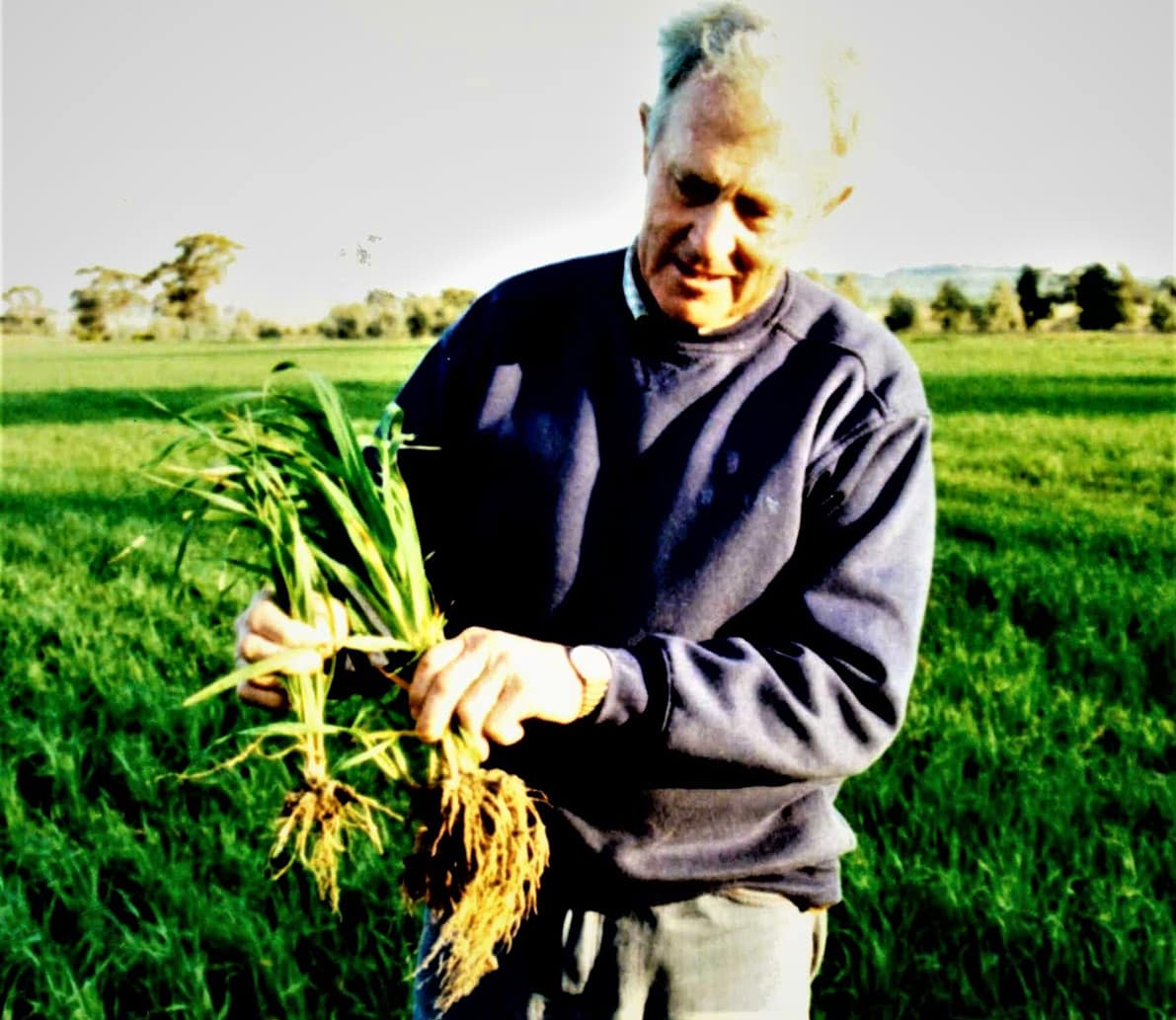
“It doesn’t disturb the soil layers the way other machines can do.
It just lifts the soil and drops it, lifts it just enough to sort of crack it.
It’s like putting a shovel in the ground and just pulling it back a bit and then letting it go.
I haven’t seen anything else like it.”
– Russel Thomson, “Kunmallup”, Woodanilling, WA.
Recent research has shown that the new Seedbed Conditioner machine will allow grain growers to increase their soil carbon at a rate equal to or greater than pastured soils.
The reason graingrowers have found it difficult-to-impossible to increase their soil carbon is because any cultivation destroys and exposes the roots of previous crops to the atmosphere. This speeds the breakdown of organic matter and full cultivation kills 80 to 90 per cent of the soil biology.
Furthermore, worldwide research over many years has confirmed that no-till seeding does not lead to substantial gains in organic matter and soil carbon.
No-till seeding, which disturbs about 40 per cent of the soil surface and leaves about 60 per cent undisturbed in the inter-row spaces, is proportionately less harmful to soil biology than tillage. However, the consolidated inter-row soil of no-till seedbeds is colder than cultivated soil. These two factors combine to restrict root growth and, therefore, any substantial increase in soil carbon.
The Seedbed Conditioner was created to complement deep ripping, which has become quite popular in recent years.
Deep ripping violently disturbs the soil and soil biology and the operation is slow and expensive. The yield benefits it delivers result from the improved soil water storage capacity and its increased availability to plants.
However, the yield benefits from deep ripping do not last. Unless ripping is periodically repeated, the disturbed soil it creates reconsolidates and the yield benefits decline.
Seedbed Conditioners are designed to operate in pre-ripped soil. Seedbed conditioning allows farmers to retain and build on the benefits of deep ripping without ever needing to repeat it.
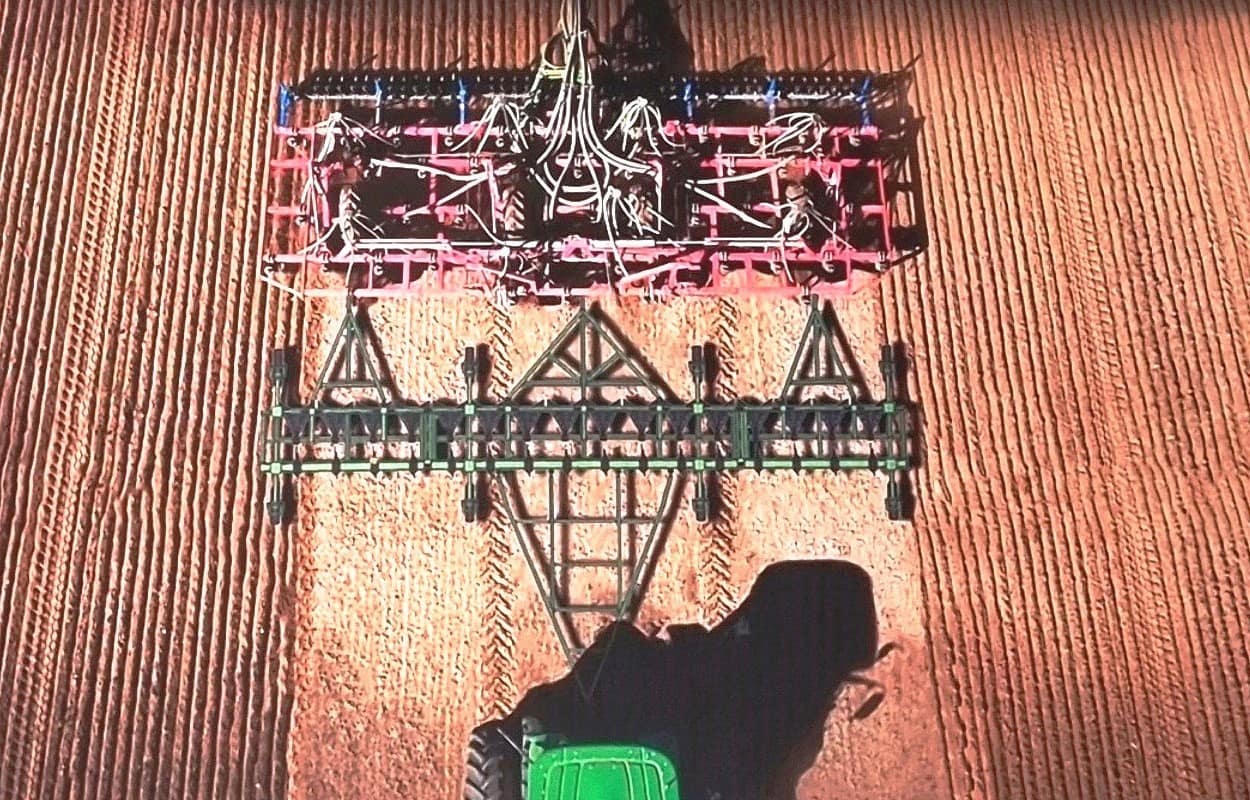
Seedbed Conditioners slice through soil and roots lifting, opening and dropping un-inverted soil and enlarged, undisturbed root-systems. In this way, they conserve enlarged root systems and soil biology in a well-aerated and root-reinforced deepened seedbed.
This preservation of enlarged root systems mimics pastured soils and ensures organic carbon accumulates. Furthermore, because seasonal crops produce more vegetative matter than pastures over a 12-month period, the potential increase in soil carbon from the use of a Seedbed Conditioner will be equal to or greater than that from pastures.
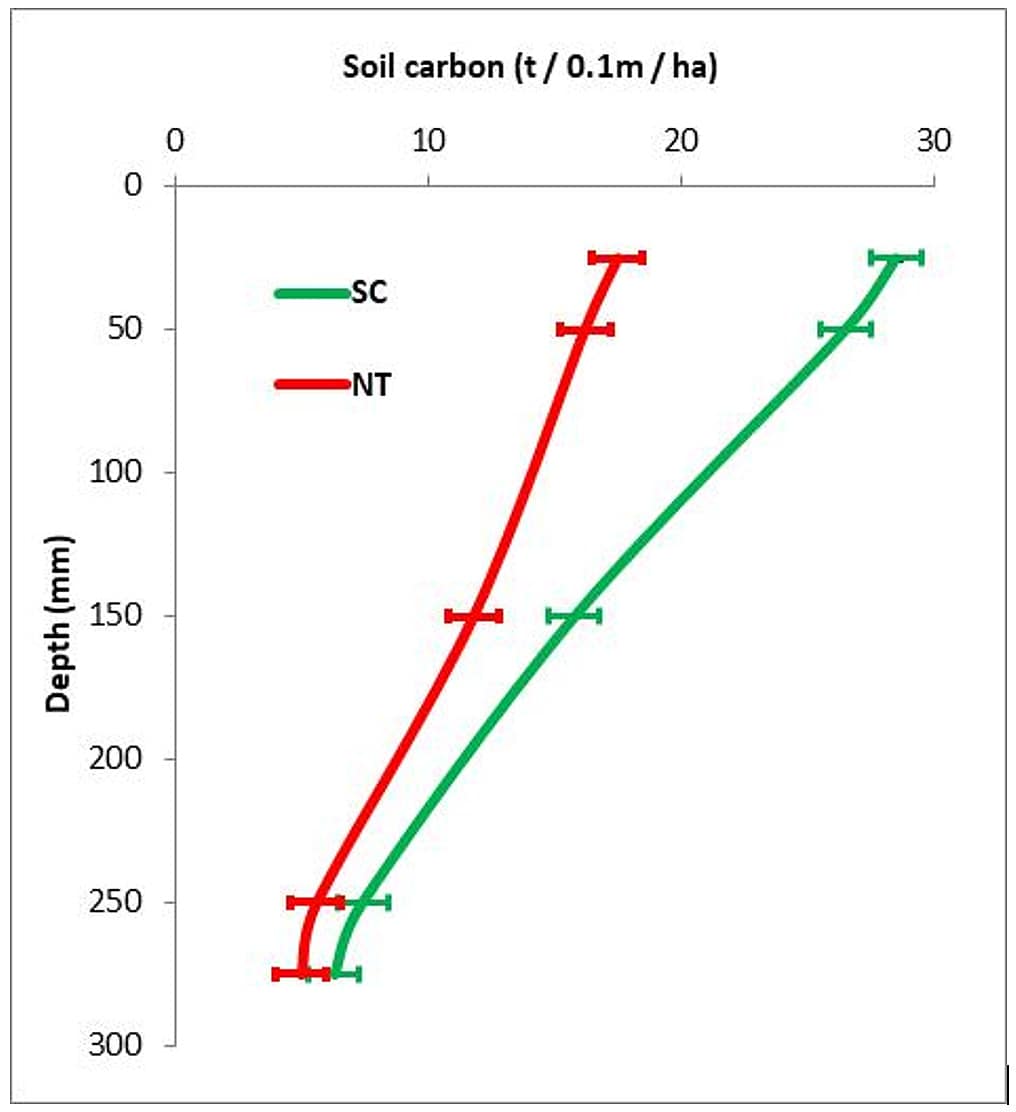
Large-scale field research data from six years of continuous cropping on a 100 ha paddock in Western Australia showed that, in the 300m deep rooting depth, the Seedbed Conditioner treatment produced a 48 per cent increase in soil carbon over the no-tillage treatment. (See photo and graph.)
This size of this increase in soil carbon across a 1,000 ha area of cropping, over the same length of time, at a February 2026 Carbon Credit Unit price of $37 / tonne, would generate extra income of $3.85 million!
The Seedbed Conditioner (both forms) has Australian and International patents. It is featured in the ARR.News Store.
Sales enquiries: Greg Hamilton 0481 764 070 gjhamiltong@gmail.com
The Seedbed Conditioner series of articles:
- New machine improves soil fertility and increases crop yields;
- New machine set to revolutionise Australian cropping;
- Drought and waterlogging resilience of Seedbed Conditioning;
- Increases in soil carbon and soil Carbon Credits income;
- Large increases in root growth and soil biology populations;
- Increases in soil nitrogen and reduced need for nitrogenous fertilisers;
- Sustainability/soil health of Seedbed Conditioning – increased fertility and prevention of soil-borne diseases;
- Substantial reductions in irrigation water use and application times.
Related peer-reviewed articles
- Blade loosening creates a deeper and near-stable rooting zone that raises the productivity of a structurally unstable texture contrast soil”, Soil Research, 2016, Vol 55: pp 101-113.
- “Deep blade loosening increases root growth, organic carbon, aeration, drainage, lateral infiltration and productivity”, 2019, Geoderma, Vol 245; pp 72-92.
- “Deep blade loosening and two-dimensional infiltration theory make furrow irrigation predictable, simpler and more efficient”, Agricultural Water Management, 2020, Vol 239: pp. 1-14.
Greg Hamilton is the senior author of all these papers.
Footnote: The term ‘Deep Blade Loosening’ was changed to ‘Deepened Seedbeds’ to avoid the comparison/interpretation that this practice was simply a variation of Blade Ploughing, which Australian experience showed severely inverted and churned soil, and had deleterious effects on soil fertility and productivity.
Australian Rural & Regional News is pleased to publish this series of articles sponsored by Greg Hamilton, the inventor of the Seedbed Conditioner and founder of Maximum Soil & Water Productivity Pty Ltd.

