


NSW Farmers Association, Media Release, 25 February 2026
NSW Farmers says plans to pollute rural and regional communities with Sydney’s rubbish should be immediately rejected.
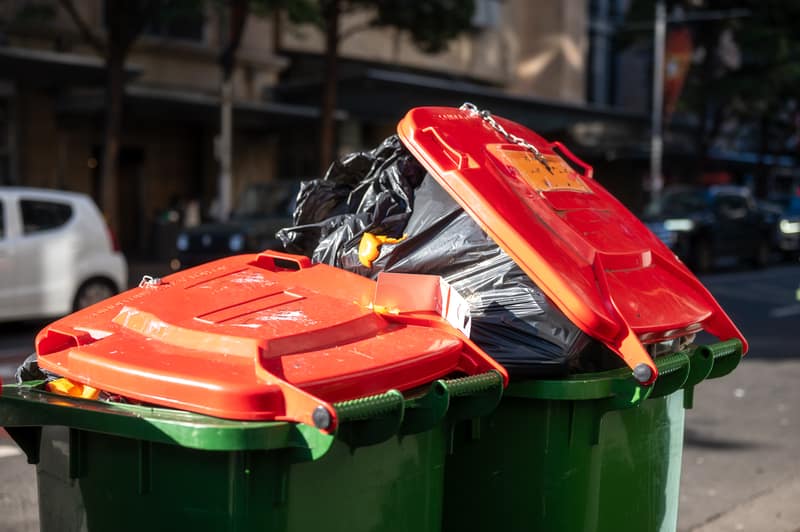
The proposed Parkes Incinerator would burn 700,000 tonnes of Sydney’s red-bin rubbish each year if approved, and NSW Farmers Vice President Rebecca Reardon said it was totally unacceptable to force any regional community to be the dumping ground for Sydney waste if they did not agree.
“When these projects were proposed for Western Sydney, there was a chorus line of Labor MPs very vocal in their opposition,” Mrs Reardon said.
“Back in 2020, Chris Bowen, who is now the Minister for Climate Change and Energy, called waste-to-energy incinerators ‘disgusting proposals’ that were ‘not clean energy.
“He said ‘it is burning garbage. It is literally a dumpster fire, and I’m not the only who thinks it’.”
Mrs Reardon said the people of Parkes and Tarago, near Goulburn, felt they were being treated as “sacrificial communities,” and being forced to become Sydney’s dumping ground.
“Why should rural communities be forced to host projects that are considered unacceptable for urban centres, particularly when these same regions produce a lot of the state’s food and fibre?” Mrs Reardon said.
“It’s yet another industrial burden on regional areas without any consultation or consideration for what these communities want. These communities are also suffering the consequence of forced large-scale wind, solar and transmission line infrastructure.
“There’s also significant concerns for public health, and the impact on the food and fibre grown in these communities. These projects should be immediately ruled out without question.”
Mrs Reardon will speak at the Parkes Farmers & Community March on Saturday 28 February.
Fast facts
- Research in Europe has found high levels of dioxins, PFAS and heavy metals in soils near incinerators. In China, scientists discovered that metals such as nickel, copper, cadmium and chromium exceeded safe limits in soils near a municipal waste incinerator. Similarly, in Spain, monitoring around a hazardous waste site revealed elevated levels of dioxins in soil, grass and even in resident’s blood plasma.
- Epidemiological studies have linked exposure to incinerator emissions with higher risks of cancers, congenital anomalies, miscarriage and respiratory illnesses. A review by the Australian Public Health Association states that both workers and nearby residents of waste incinerators face potential health hazards.
- The Parkes region contributes significantly to NSW’s wheat, barley, oats, canola and pulse crops. Its mixed farming systems also support substantial sheep grazing for wool and meat. Tarago, while smaller, also supports pastoral and mixed farming enterprises that underpin local livelihoods and contribute to a thriving agricultural industry.
- The significant number of heavy vehicles on council roads, or more freight movements on rural rail infrastructure – badly in need of major upgrades – will decimate our regions and agriculture’s economic return to the state budget.

