


The Hon. Clare Scriven, Minister for Primary Industries and Regional Development (SA), Media Release, 8 October 2025
Biosecurity measures have been bolstered to protect Kangaroo Island’s world-famous Ligurian bee population from the parasitic pest varroa mite.
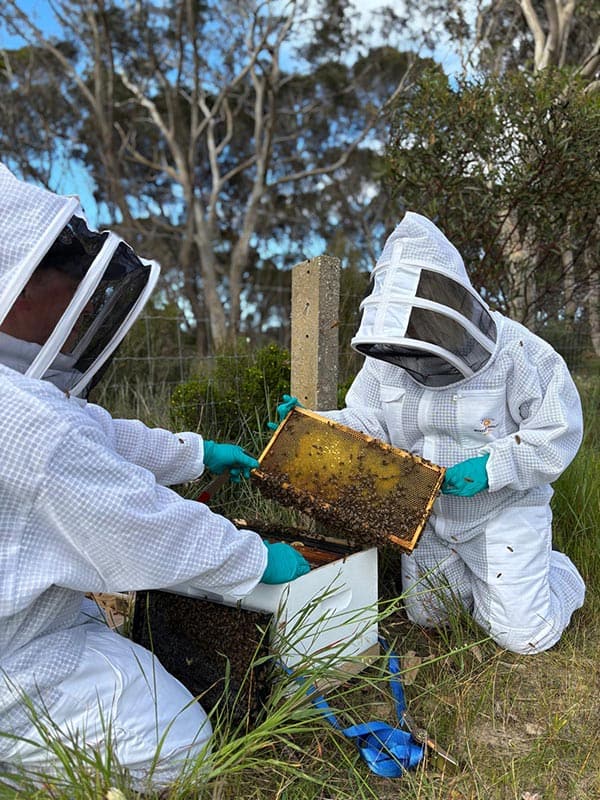
Every ferry bound for Kangaroo Island is now subject to biosecurity checks and a sentinel hive program has started to roll out across the island following the first detection of varroa mite in South Australia last month.
The Ligurian bee population was brought over from Italy in 1884 and Kangaroo Island’s isolation and biosecurity measures have protected it from disease and breeding with other types of honey bee.
As a declared bee sanctuary, there are restrictions on the movement of bees, honey and beekeeping equipment to Kangaroo Island. Random biosecurity checks of travellers on board ferry services to the island have been in place for over a decade.
Now, additional biosecurity staff have been employed to ensure checks are carried out on all ferry departures from Cape Jervis to Kangaroo Island.
A sentinel hive program is also being rolled out as an early warning system to help reduce the risk of varroa mite establishing and spreading on the island.
Sentinel hives are now in place at Cape Jervis, Penneshaw, Parndana and Kingscote Airport with a further six to be implemented across the island in coming months.
The hives are monitored regularly in collaboration between the Department of Primary Industries and Regions’ (PIRSA) Apiary Unit, the Kangaroo Island Biosecurity Program and Kangaroo Island beekeepers.
Following the detection of varroa mite in the Riverland last month, the Malinauskas Government acted swiftly to treat and remove all bee hives connected to the incursion from the state to protect South Australia’s apiary industry. No further detections have been made.
Quotes attributable to Clare Scriven
Kangaroo Island’s population of Ligurian honey bees is of great national and international significance and a popular drawcard for tourists.
We know varroa mite poses a threat to our Ligurian honey bees and we want to ensure we are doing as much as we possibly can to protect the colony and the broader apiary industry.
I have been listening to the concerns of beekeepers on Kangaroo Island, including during a roundtable event I held there last week and I thank them for their engagement and support as we tackle this challenge together.
Quotes attributable to Sharon Simons, Kangaroo Island Beekeepers Association Secretary
Kangaroo Island is the world’s oldest bee sanctuary and home to the purest strain of Ligurian Bee in the world.
This announcement is an excellent step in helping to protect Kangaroo Island’s bees, keeping them healthy and securing the future of the species.
We welcome the additional checks on ferries and the sentinel hive program to boost the current biosecurity measures and safeguard the world’s last pure Ligurian bees.

