

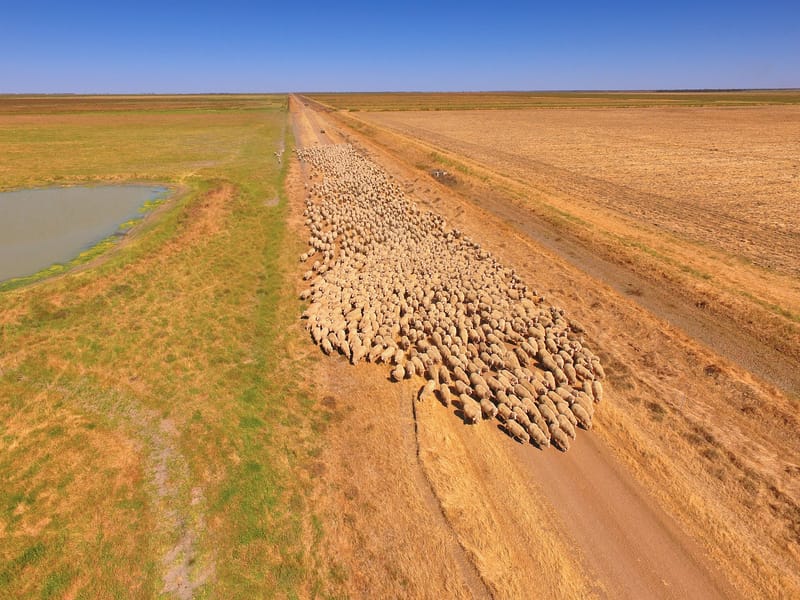
Sheep Producers Australia (SPA), Media Release, 22 September 2025. Australian Rural & Regional News asked some further questions of Bonnie Skinner, SPA CEO. See below.
Australia’s sheep industry is at a turning point – and producers are being asked to help write the next chapter.
Sheep Producers Australia (SPA) has launched the development of The Future Flock, a national strategy designed to guide the sheepmeat and wool sector through change and set a profitable, resilient direction for decades to come.
SPA Chief Executive Officer Bonnie Skinner said the project came at a time when producers were juggling volatile markets and regulatory changes, climate and biosecurity pressures, shifting consumer expectations – all while working to maintain profitability in a complex global environment.
“The Future Flock is an industry first approach to unite sheepmeat and wool, combine it with economics and create a vision for everyone that will guide the sector for decades to come,” she said
“Getting behind one plan – as an industry – provides clarity and confidence when we are making important long-term decisions that drive industry profit, sustainability within the sector and investment. Without a plan we react to challenges, with a strategy we shape our own future.”
Building on experience from leading the Sheep Industry Strategic Plans (1995–2020), SPA is committed to working in partnership to ensure The Future Flock provides the same sector-wide focus and measurable results.
What The Future Flock will do:
- Unite national and state priorities: A single national framework supported by state-specific pathways – including a WA Roadmap developed with the WA Strategic Steering Group and WA stakeholders.
- Put producers and industry at the centre: Workshops, field days and industry events will capture grass-roots experience from producers and input from service providers such as livestock agents, processors, transporters and consultants.
- Test ideas supported by economic analysis: Evidence-based modelling will back decisions with numbers that stack up commercially and deliver value at the farmgate.
- Leverage what exists: Using consultations and strategies already developed by industry groups, avoiding duplication and accelerating action.
- Deliver a living plan: An interactive, evolving roadmap with strong governance and clear accountability.
SPA is also calling on producers, processors, state farming organisations and supply chains to get involved. Expressions of Interest (EOI) to join the National Panel – to oversee The Future Flock – has opened and surveys are live on The Future Flock website.
Consultations will kick off later this year, with producers able to have their say at workshops, sales, field days and online forums. The Future Flock will be released at LambEx in Adelaide, South Australia next year.
This is a co-investment between the Australian Government and Sheep Producers Australia. The Future Flock will be delivered in conjunction with a dedicated WA Roadmap to 2028.
Australian Rural & Regional News asked some questions of
Sheep Producers Australia CEO Bonnie Skinner
ARR.News: How is this plan any different to the many previous plans – which would appear not to have worked which is why there is this plan?
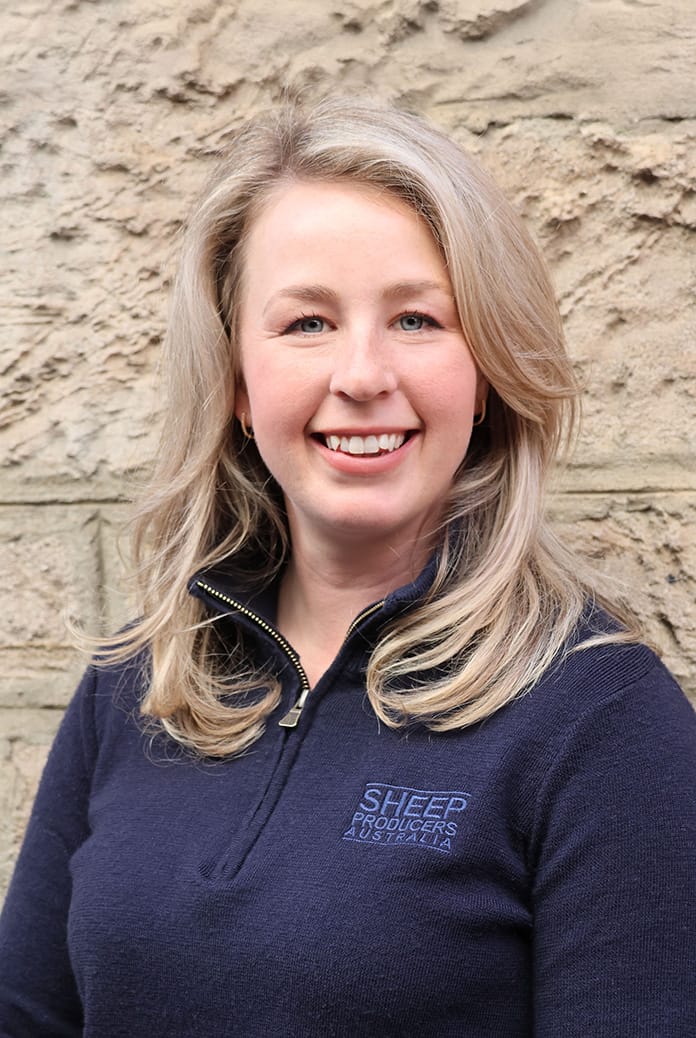
Bonnie Skinner: The sheep industry has had several strategies or plans to guide its direction, but these are either state based or focused on either wool or meat. This is the first national plan to focus on the future of both.
The Sheep Sustainability Framework is not a strategic plan – it measures the sheep industry’s progress on key sustainability themes (including animal care, the environment, economic resilience, people and community).The SSF will be a key complementary body of work to the future flock and an example of how the work will build on leverage existing bodies of work to achieve its outcomes.
The previous Sheep Industry Strategic Plans (1995-2020) provided a roadmap to ensure all of the sheepmeat industry had a focus and agreed outcomes to produce results across the entire industry. The Future Flock looks to build on this strategic approach to guide the growth of the sector over the coming decades.
ARR.News: Wool prices have been essentially flatlining for years with little hope of improvement, how will this change, especially given the onslaught of synthetics, the unwillingness of masses of consumers to pay premium prices for wool products and the dependency on the Chinese market where buyers determine the price?
Bonnie Skinner: We can’t pre-determine outcomes of The Future Flock consultation process – The Future Flock is about identifying the challenges and opportunities around markets and consumers and building a long-term plan that supports a competitive and resilient industry.
ARR.News: Whilst most producers produce commercial level wool – which most buyers seem to want – millions of dollars have been spent developing and promoting super super fine wool – for which few buyers exist – is this imbalance in research and marketing expenditure going to be rectified so that the expenditure is made in the interests of most wool producers rather than in the interests of a select few?
Bonnie Skinner: We don’t want to presume any consultation outcomes, if producers signal that wool research and marketing is something they want changed as part of The Future Flock process, it is something the industry will look at.
ARR.News: Whilst there has been excellent progress with developing export markets for sheep meat products, it would appear to be a virtually impossible task to replace live export income entirely with sheep meat export income – how will this be achieved in time to save the industry in WA?
Bonnie Skinner: SPA has consistently raised concerns about the need to maintain confidence and critical mass in the sheep industry in WA, where live export plays a key role in underpinning market options, seasonal turn-off, and regional employment.
Early on, during the government consultation process and the Independent Panel’s discussions, it was highlighted that the transition package and market conditions would influence the speed and shape of change within the WA industry.
The uncertainty introduced by the policy and its legislation have resulted in destabilisation, including reduced sheep numbers, increased turnoff, reduced investment, processor uncertainty, and market hesitancy. This impact is felt by the whole supply chain, including exporters. Delays in delivery of assistance to date have increased the impact on, and cost to, industry.
The WA industry – as part of the co-design process – called for leadership and strategy. In response, the transition advocate developed a Strategic Steering Group of local leaders who are representing the WA grassroots industry in discussions and planning about the future of the sector.
ARR.News How do you see the almost inevitable decline of the industry in WA impacting the industry in the rest of Australia?
Bonnie Skinner: The Future Flock will shed more light on how producers and the supply chain view these issues, but we do know there is strong and growing global demand for Australian sheepmeat because of its quality. Dry seasons and droughts have already driven high turn-off in southern regions, and prices today reflect the impact of historically low flock numbers.
The sheep supply chain, in WA and nationally, is complex and interconnected. Disruption or the loss of a component reduces competition and can have unintended consequences across the whole industry. WA also remains an important source of Merino ewes and lambs for the east, helping to maintain flock viability following years of drought and significant destocking. That interdependence highlights why a national strategy is so important to manage risk and keep the industry strong.
ARR.News: The size of the national flock has been in decline for some years – do you have plans to turn around this trajectory?
Bonnie Skinner: The size of the Australian flock has fluctuated for many years and reflected a boom–bust pattern driven by seasonal conditions and market signals. In 2020, Australia’s sheep flock hit just 62 million head – the lowest in more than 100 years. That moment was a turning point and sparked SPA to dig deeper, through a range of projects, to uncover why numbers had fallen so far. Following this the flock numbers increased, with MLA reporting in 2024 the flock size at 79.1 million head in June 2024 – the largest since 2007. Importantly, even when flock numbers have been low, producers have been turning off record volumes of lamb and mutton thanks to productivity gains. What The Future Flock will do is give us a clearer picture of producers’ intentions, their challenges and opportunities, and how policy, investment and industry can work together to better navigate the volatility within the industry and ensure a sustainable and profitable future.
ARR.News: Does the plan envisage rectifying the gross imbalance between the retail price charged to consumers for sheep meat by the major retailers and the price paid by those same retailers to producers? If so, how?
Bonnie Skinner: We can’t pre-determine outcomes of The Future Flock consultation process. We anticipate that if this is a significant issue and barrier to the growth or sustainability of the industry, it will come to the fore during consultation for The Future Flock.