


Australia has not just a skills shortage but a worker shortage of any skill when it comes to finding people in the bush who actually want to work.
Out there in the real world there is no longer a shortage of mechanics or tractor drivers — it’s the whole backbone of the trades. Builders, sparkies, plumbers: the people who keep farms, houses and small towns from grinding to a halt.
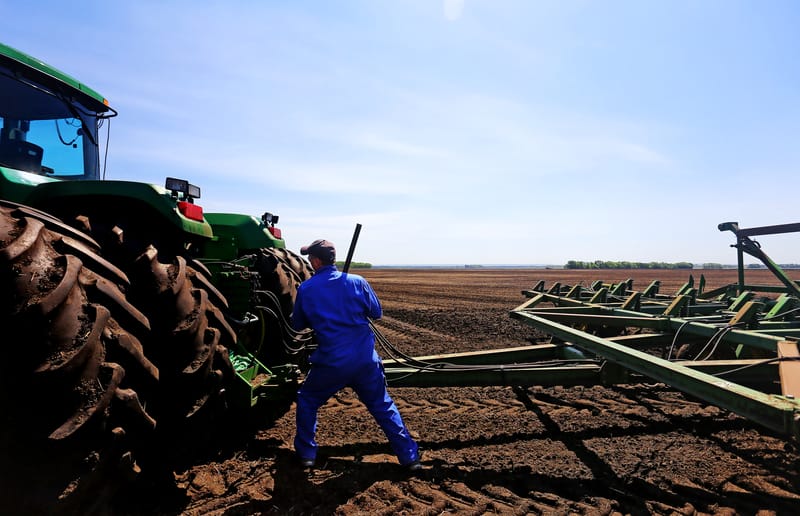
Every one of them is now on the critical shortage list. Nationally, half of all trade and technician occupations are officially flagged as in shortage, and in regional areas the story is even grimmer — barely 54 per cent of advertised jobs are being filled, compared to the mid-60s nationally. Apprenticeships, once the pipeline that kept the tools in young hands, have collapsed from 250,000 commencements pre-2012 to just 151,000 in 2024, leaving a yawning gap in the next generation of skilled workers. Even when you can find skilled migrants willing to move bush, the system strands more than 600,000 of them in limbo, blocked from using their professions by endless red tape and costly recognition hurdles. The result? Six-week waits to get a mechanic, six-month delays to get a builder, and invoices that make farmers wonder if it’d be cheaper to fly in a tradesman from Manila than drive out from Perth.
Apparently, there’s even a shortage of public servants in this country, though you’d never guess it by looking at the payroll. More than 2.5 million Australians now collect a government wage — that’s the entire population of Western Australia working for the Crown. In the 12 months to 2024 alone, another 87,500 were added to the headcount — that’s more boots on the ground than the entire Army, Navy, Air Force and Reserves combined. It makes you wonder if the only real “growth industry” left in Australia is the diversity, equity and inclusivity industry.
No surprise then that farmers are struggling to recruit; Canberra and Perth are hoovering up workers at an average salary of $115,000, with superannuation sweeteners and flexi-time rosters that make mustering sheep look medieval. Meanwhile, the trades pipeline has all but collapsed. Fewer than one in five school-leavers now pick up a tool, and those that do are quickly swallowed by the mines with six-figure starting salaries. The rest either drift into university to study useless degrees in sociology or quietly opt out of work altogether, finding a berth in the ever-expanding NDIS world as a patient rather than a caregiver. In fact, that industry is full of new migrants — the ones who came over to study more useless degrees like business when their real business was studying the immigration laws to work out how to get a permanent visa.
What a mess Australia has found itself in. We have become a country where, despite millions pouring into the country, skills shortages are everywhere, immigration is being gamed, and government is the biggest recruiter, the biggest spender and, in many regional towns, the biggest poacher of labour — leaving farmers, builders and small businesses to fight over what’s left.
For those on the land — or in the local dealership or engineering shop — the shortage of diesel mechanics, sheet-metal workers or ag technicians is a real and growing issue that the state and federal governments seem to have no answer for.
It’s no surprise then that some farmers are looking further afield, eyeing the Philippines, Kenya, Zimbabwe, South Africa, Nepal, India or Sri Lanka — all places brimming with skilled, English-speaking mechanics ready to hop on a plane tomorrow. The trouble isn’t supply. The trouble is the labyrinth of paperwork and costs required to bring them here.
Let’s explore just how hard it will be to bring in a South African mechanic to work on a farm or in town. The first hurdle is becoming what’s known as a “Standard Business Sponsor.” Sounds straightforward, but in reality, it means months of gathering ABN details, tax returns, bank statements and contracts — proof that your business is real, stable and compliant. It feels suspiciously like the process the state government has put in place for reapplying for your firearms licence. Once that’s in place, the next hoop is labour market testing. You’ve got to run ads on government-approved job boards for four weeks, keep meticulous records, and show that no Australian applied. Most farmers could save themselves the trouble and just keep the email chains from Seek, where applicants ask if there’s any surf near Southern Cross or a McDonald’s in Mukinbudin before disappearing into thin air.
Suppose you do find the right candidate while on your safari to South Africa — a qualified mechanic desperate to relocate to your town of 200 people. That’s when the paperwork really begins. Skills recognition, usually through Trades Recognition Australia, takes six weeks and about a thousand dollars, and can be a nightmare for people from countries where formal trade qualifications aren’t stamped in triplicate. Then comes the English test, police clearances, chest x-rays, medicals and even childhood immunisation records. It’s less about proving someone can rebuild a gearbox and more about proving they can tick every bureaucratic box. Still, it is no worse than half the stuff we have to do for EU grains accreditation or to comply with a WorkSafe audit trail. Farmers are unfortunately used to ticking boxes, but the difference is at least with grain or livestock there’s a cheque at the end of it. With visas, you’re fronting thousands in costs before you’ve even got a worker in the paddock turning a spanner.
And then there’s the visa. The Temporary Skill Shortage Visa, Subclass 482, is the default for most farmers. It allows workers to come for up to four years and potentially transition to permanent residency. The regional Subclass 494 offers another pathway, while the Designated Area Migration Agreements can make things a bit easier on salary thresholds and English requirements. But each option brings its own stack of forms, fees and delays. By the time you’ve paid the sponsorship charges, nomination fees, Skilling Australians Fund levy, visa application fee, medicals, police checks and — let’s be honest — a migration agent to hold your hand through the whole mess, you’re staring down a bill somewhere between $12,000 and $20,000. That’s before the mechanic has even touched down at Perth Airport, let alone picked up a spanner in your shed.
But if you strip it right back and do the paperwork yourself, the “cheap” version still isn’t cheap. You’re looking at around $6,000 in unavoidable government fees and compliance costs once you add up the sponsorship application ($420), nomination fee ($330), visa application charge (from $1,455), the Skilling Australians Fund levy ($1,200 to $1,800 per year of sponsorship), plus mandatory medicals, police checks and English testing (about $1,000). Skip the migration agent and you will halve the bill, but you’ll pay for it in hours lost to government portals that make myGov look like a model of efficiency. Either way, it’s a serious outlay before you’ve even seen if your new recruit can tell a ring spanner from a shifting spanner.
And when they do finally arrive, don’t expect smooth sailing. I’ve heard of new recruits detained at the airport by Border Force because they were carrying toolboxes that looked “suspicious,” while the backpackers were waved through. Once on the farm, there’s still the ongoing compliance: fair pay, safe housing, proper records, and regular updates to Immigration to prove you’re not cutting corners. In truth, most farmers do the right thing — often putting these workers up in houses far better than the ones they left behind — but then even backpackers get the same level of service.
It’s no wonder then that most stick with backpackers, but some are looking at the Pacific Engagement Visa as a potential long term fix. As it provides permanent residency places for a few thousand people from the region, it doesn’t cater well to employers who want to directly sponsor skilled workers like mechanics. That’s a missed opportunity, especially given the trucks, mines and workshops scattered through the Pacific where plenty of practical skills are forged.
So, is sponsoring an overseas mechanic worth it? The short answer is yes — but only if you’re prepared for a paperwork-heavy slog. For those who get through it, the prize is often a loyal, hardworking mechanic who not only keeps your machinery moving but becomes part of the local community, helping to fill the school with hard-studying kids. For those who don’t, it’s another season of relying on backpackers and expensive local dealers.
For those interested in trialling a mechanic or tractor driver for summer — and who are prepared to pay a bit more for the admin — the Pacific solution is worth a look as a pathway to securing a long-term worker. Have a read how it works through Omika’s story.
Related story: The Pacific solution: How does it work?

