

Australia’s largest energy transmission project, EnergyConnect, has moved into its next phase with specialist teams making significant progress constructing the eastern alignment of the project across the Riverina.
More than 1600 personnel are working on the critical project, with construction of two sections of new high-voltage transmission line, stretching 540 km from Buronga to Wagga Wagga, more than 70 per cent complete.
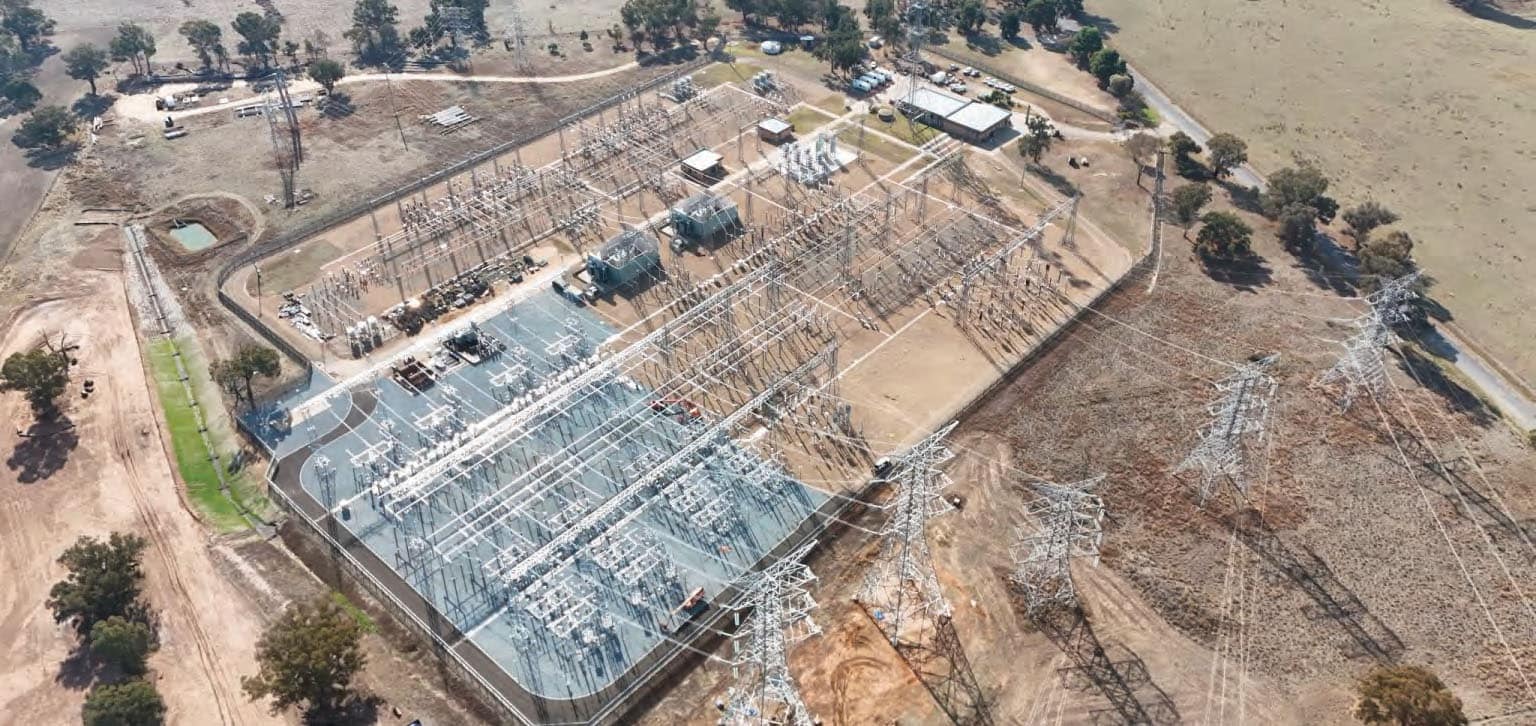
Construction of a world-class substation at Dinawan, near Coleambally, is also proceeding at pace, with major foundations works completed and sophisticated electrical equipment arriving from Europe.
Major upgrades to the Wagga Wagga substation have been completed to prepare the eastern end of the project for connection to the NSW grid.
Transgrid and its construction partner Elecnor Australia are delivering the 700 km NSW section of EnergyConnect from Wagga Wagga to the South Australian border with a connection to Victoria.
Executive General Manager of Major Projects Gordon Taylor said EnergyConnect was critical to Australia’s energy transition, connecting households and businesses in the Riverina and across the state with more affordable renewable energy from three states.
“Construction of the project is providing an economic boom for regional NSW, including much-needed job creation, skills development and local business support in communities across the EnergyConnect corridor,” he said.
“The project has so far invested $255 million in supply contracts with 325 local and First Nations businesses, helping them expand their workforces, skills, machinery and equipment.
“EnergyConnect is also providing education opportunities and skills development in regional NSW, including the Legacy 100 program, which is training 100 workers in transmission line construction as well as 100 scholarships for engineering students at Charles Sturt University.
“Hundreds of project workers are being accommodated in purpose-built camps at Booroorban near Hay, Bundure (Dinawan), Lockhart and Balranald, bringing more people into local communities to support local shops and businesses without adding pressure on limited housing and accommodation.

This article appeared in Narrandera Argus, 31 July 2025.

