

Despite the prolonged drought, the yalgiri (brush-tailed bettongs) reintroduced to southern Yorke Peninsula since 2021 are not just surviving, they’re reproducing.
A recent health check led by the Marna Banggara team found all captured females were carrying young, a strong sign the small marsupials are adapting well to tough conditions.
“There are some positive signs,” Marna Banggara ecologist Claire Hartvigsen-Power said.
“All of the females captured were carrying pouch young, which shows that they’re healthy enough to reproduce, even in tough environmental conditions.”
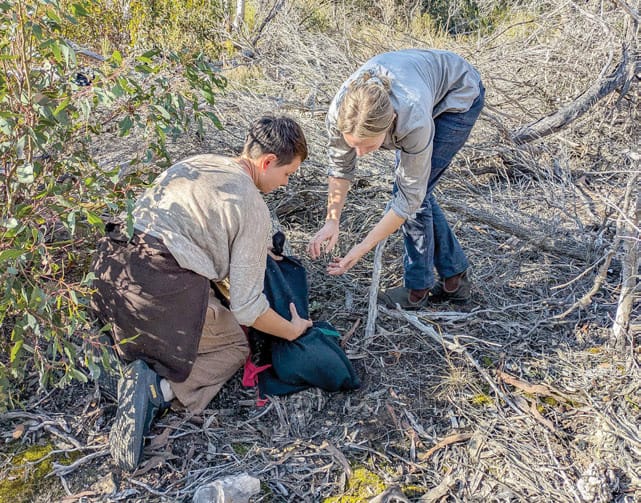
In late May, ecologists from the Northern and Yorke Landscape Board conducted targeted monitoring in Dhilba Guuranda-Innes National Park to assess how the reintroduced population was coping with reduced food availability due to drought.
Over three nights, the team captured 22 yalgiri, seven females and 15 males. Each animal was weighed, measured and assessed for signs of stress.
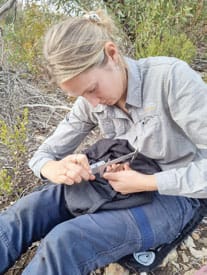
“The weight data was also encouraging, as more than half the animals had gained weight since their last capture in October 2024,” Ms Hartvigsen-Power said.
“For those that had lost weight, the decrease was less than 10 per cent, which fell within normal seasonal fluctuation ranges.”
She said high capture rates and sightings of new individual — those born in the park — provided strong evidence of successful breeding and dispersal.
“The monitoring also revealed continued digging activity, showing the yalgiri are actively foraging and playing their part as soil engineers.”
The rewilding initiative, which began with the release of more than 190 yalgiri between 2021 and 2023, aims to restore ecological function and lost species to southern Yorke Peninsula.
Last year’s monitoring event recorded 83 captures, including 31 animals born locally; 88 per cent of females were carrying young.
Marna Banggara is jointly funded by the Australian Government’s Natural Heritage Trust and the Northern and Yorke Landscape Board. It is supported by the Narungga Nation Aboriginal Corporation, environmental groups, rangers, volunteers and landholders.
For more information, visit www.marnabanggara.com.au.

This article appeared in Yorke Peninsula Country Times, 1 July 2025.

