

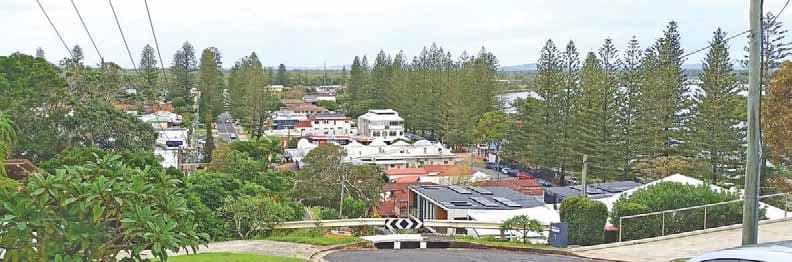
John McNamara, Research Officer, Port of Yamba Historical Society, Clarence Valley Independent
Reported in DISTRICT NEWS in 28 December 1907 C&RE:
Visitors to Yamba during the Christmas holidays have commented upon the constant diminution in the number of available shade trees, and at the same time Mr. J. H. Malden suggests, in the ”Agricultural Gazette,” that the Norfolk Island pine should be more freely planted along the coastal areas than it is. If this tree would thrive in the sand at Yamba, steps should be taken to plant some in the [Yamba] Park, where many of the native trees have lately died or the winds have blown them down.
The attractiveness of Yamba could be immensely enhanced if a row of suitable trees was planted, a reasonable distance above highwater level from the Convent round to where the southern breakwater meets the mainland. The Government would give the trees free, and the Progress Association could easily arrange a working bee for the planting. Guards would be necessary, but plenty of material is available.
Something of the kind is urgently required at Yamba.
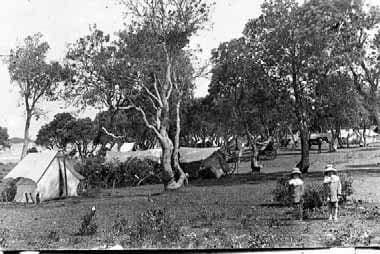
In the following years, the suggestion to plant Norfolk pines in Yamba was taken to heart by various community members and authorities. Efforts to plant these trees began in earnest, with notable initiatives led by the principal of Yamba Public School, David “Clarence” Rankin who planted fig trees and Norfolk Island pines in the school grounds in 1916. Prior to 1990, the Yamba Public School was located on Section 9, Town of Yamba with frontage to Wooli, River and Coldstream Streets. One of these plantings still exists in the Bowlo carpark behind the former headmaster’s residence at the corner of Wooli and River Streets.
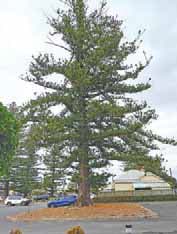
It was not until June 1926 that the Harwood Shire Council engineer recommended obtaining 24 Norfolk Island pines from the Botanical Gardens, Sydney for replanting in Yamba (renamed Flinders in 1931) Park.
The president said that he had, while in Yamba, inspected the park, and found about 25 trees dead out of the 30 planted. The Engineer said that the trees had been planted in the latter end of August by the Yamba Town Improvement Committee. He had been in communication with the Curator of the Botanical Gardens and explained the class of soil and contour of the country, and the Curator recommended the growing of Norfolk pines; also that they should be planted during June.
It was not until the inception of the Yamba Urban Area Committee (YUAC) that tree planting took place in earnest.
William Ager, who saved Yamba from the encroaching sand menace, stated in a Letter to 14 October 1931 DEX:
By proclamation in the Government Gazette Yamba became an urban area, and subsequently Messrs. H. Saxby, J, Campbell, and H. W. Atkins were elected to the committee (unopposed), and held their first meeting on January 10, 1930.
Prior to that important event, the affairs of Yamba were somewhat in a muddle. Perpetual disagreement and misunderstanding reigned between the citizens of Yamba and the Harwood Shire Council, and as a consequence the interests of Yamba were sadly neglected.
Although the urban committeemen, with the exception of Mr. Campbell, were new to the game, they had a big understanding of the requirements of the area, and set about their duties in a quiet, earnest, unostentatious way.
With the exercise of tact and common sense the committee won the goodwill and assistance of the Harwood Council, and the two bodies work together in perfect harmony.
Following a request by the YUAC, HSC ordered a delivery in March 1930 of 24 Norfolk Pines. By the end of July, The YUAC had made a start with the tree planting programme, with about 20 trees, all Norfolk Pines, having been planted from the Yamba Public School downwards [in Wooli Street] and in the Yamba Park. Mr Ager supervised the planting and several school children were appointed tree wardens at the school. Coral trees had been planted on Yamba Beach reserve bank. Shrubs presented by Mrs Patemen had been planted in Queen Street.
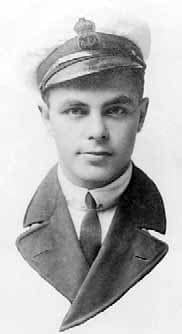
At the AGM of Yamba Public School P&C Association on 07 February 1934, headmaster Samuel Eades suggested arranging an Arbor Day function and recommended one tree be dedicated to the late Australian Airman, Bert Hinkler.
Herbert John “Bert” Hinkler was born in Bundaberg in 1892 and as a boy was fascinated by flight. He obtained his pilot’s licence towards the end of WW1 after participating in many dogfights and bombing raids.
After the war Bert would become the chief test pilot for A.V. Roe and would go on to achieve numerous world records in the field of aviation, including the first solo flight from England to Australia which he achieved in 15 and a half days.
He flew over Yamba twice. The first was on 27 April 1921 aboard his Avro Baby GEACQ after his record breaking flight from Sydney to Bundaberg. In 1928, he landed at Brooms Head Beach to make minor repairs to his propeller.
Bert met his untimely end on 07 January 1933 on the Italian Alps while attempting to break his own world record between England and Australia.
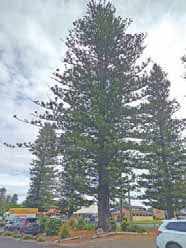
The Bert Hinkler memorial Norfolk Pine tree still stands today in the carpark of the Yamba Bowlo and is designated by a suitable plaque placed by the Port of Yamba Historical Society in 2001.
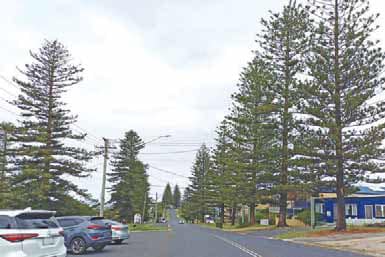
By the end of 1934, 50 Norfolk Pines had been planted as an avenue of trees in Wooli Street. During the remainder of the 1930s, the YUAC planted Norfolk pines in Ford Park, Yamba Beach, Yamba Public School playground, Wooli Street (northern side). The avenue of trees in Clarence Street was planted in 1941 and four were planted above the zig-zag in 1952. More trees were planted in Flinders Park in the 1950s and along Yamba Street in 1957. Some trees were grown from the seeds of the old tree in the school grounds and others from a private nursey, Hazlewood Bros., in Sydney.
The Port of Yamba Historical Society planted a Norfolk Pine in the grounds of the new Yamba Public School to carry on the theme of the Bert Hinkler memorial pine planted in the old school grounds just after the move to new school site in Angourie Road on 28 August 1990.
Mr Malden’s suggestion in 1907 and follow up by the Yamba Urban Area Committee has resulted in this iconic attribute at Yamba, one of many such features on Australia’s coastline.
Araucaria heterophylla (synonym A. excelsa) is a species of conifer. As its vernacular name Norfolk Island pine (or Norfolk pine) implies, the tree is endemic to Norfolk Island, an external territory of Australia located in the Pacific Ocean between New Zealand and New Caledonia. It is not a true pine, which belong to the genus Pinus in the family Pinaceae, but instead is a member of the genus Araucaria in the family Araucariaceae, which also contains the hoop pine. Members of Araucaria occur across the South Pacific, especially concentrated in New Caledonia (about 700 km or 430 mi due north of Norfolk Island), where 13 closely related species of similar appearance are found.

This article appeared in the Clarence Valley Independent, 18 June 2025.

