


Town and city bushfire protection case studies where prescribed burning and other adaptive management and mitigation have assisted in restricting bushfire impacts on communities across Australia and the United States
John O’Donnell, May 2025
There have been many bushfires that have had major impacts on towns and cities, indeed many that were bushfire disasters.
However, there have been many cases where prescribed burning, mechanical treatments/ thinning, active management options and grazing have resulted in reduced impacts on towns and cities or in some cases stopped bushfires completely. This is an especially good outcome considering the mostly small areas and scattered locations of bushfire mitigation often used across Australia, including prescribed burning, mechanical treatment and grazing, in most Australian states.
The full review is included here.
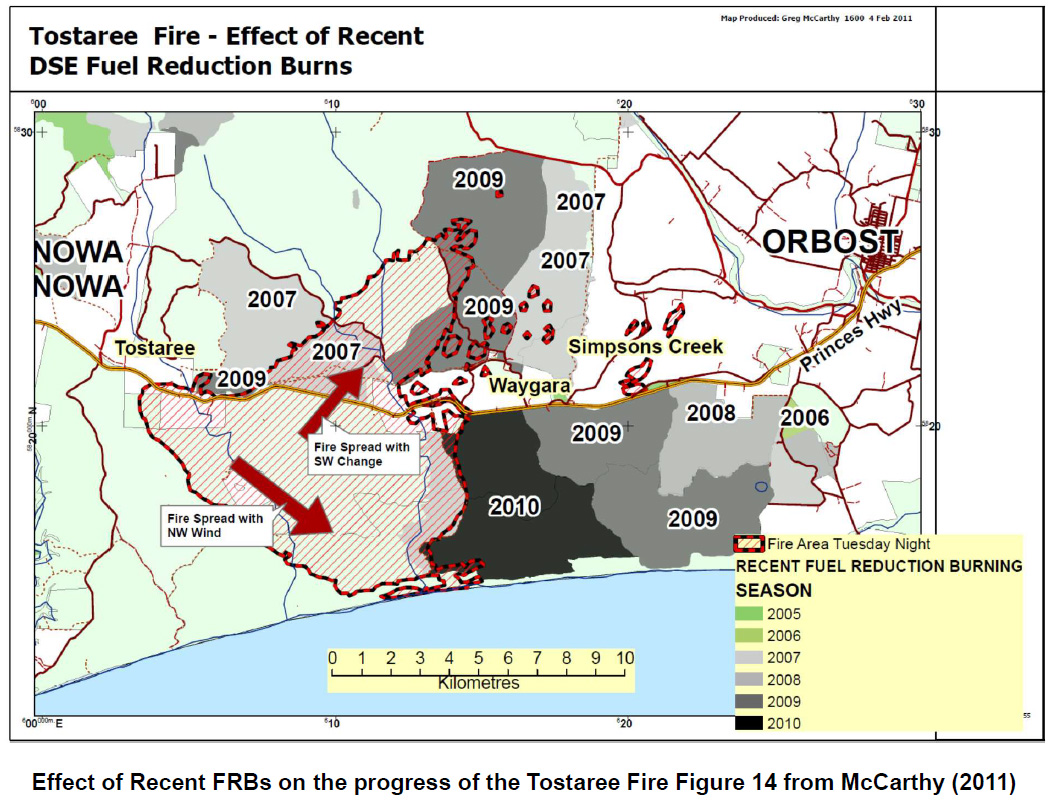
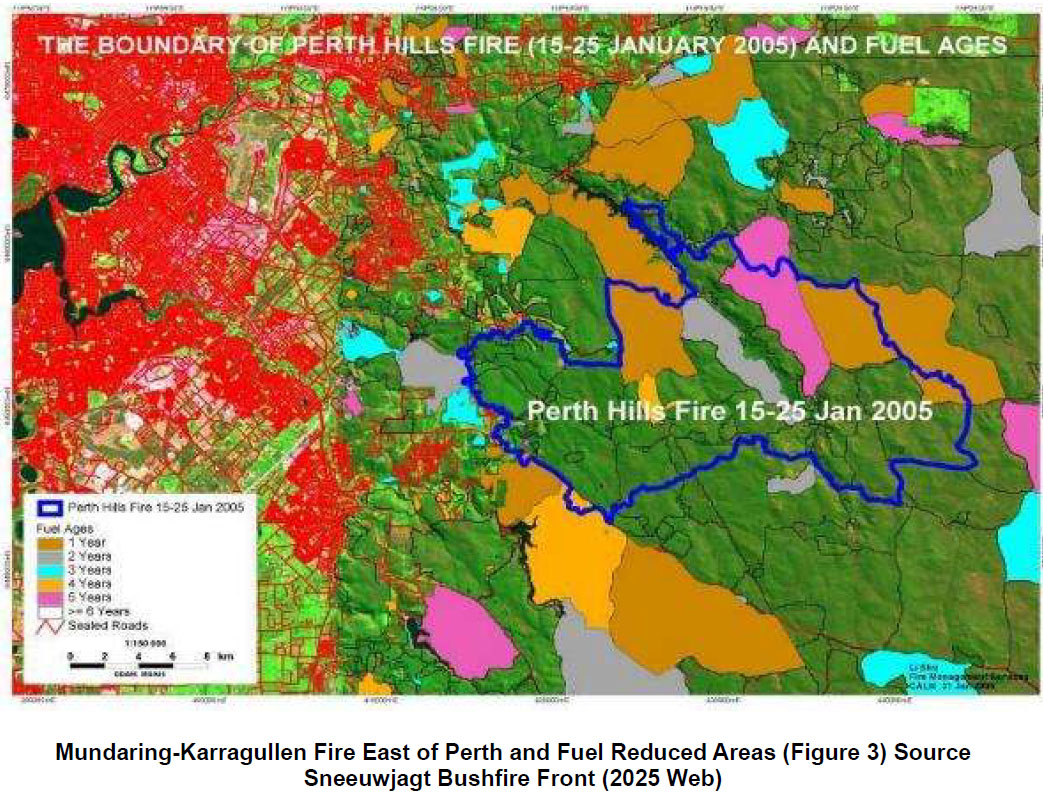
A number of these bushfire case studies are outlined within Section 2 in Australia, covering 25 case studies. The author appreciates the fact that a number of these case studies were written up, in some cases a number of case studies together.
A number of these bushfire case studies are outlined within Section 3 in the US, covering nine case studies.
Valuable lessons captured from the case studies and identification of potential opportunities for the future are outlined in Section 4.1 to 4.8. Key lesson areas highlighted in those sections; there are a large number of lessons and opportunity areas.
Failure to fully utilise the benefits of economic returns on investment disaster mitigation and preparation is to Australia’s loss. The current inefficiency of what is happening in relation to Australian bushfire disaster funding and management is highlighted in Section 4.7
It would be valuable for bushfire personnel, communities and politicians to consider these lesson areas and the many opportunities available to improve community and fire fighter safety and budget efficiency opportunities.
About John O’Donnell
John is a retired district forester and environmental manager for hydro-electric construction and major highway construction projects. His main interests are mild maintenance burning of forests, addressing the culture of massive fuel loads in our forests setting up large bushfires, forest health, establishing safe/ healthy and resilient landscapes, adaptive forest management, fire fighter safety, as well as town and city bushfire safety.


Hello John,
Both you and your readers in the eastern states may be interested in some research done at Uni of WA by a chemist, Dr Gavin Flematti. Just Google, or search on AI, for (flematti+karrikins). His research makes nonsense of claims that mild prescribed burning and smoke are ecologically harmful. I suspect Aboriginal people have known, by practical experience over thousands of years, that mild smoke, from frequent, patchy fires, is clearly ecologically helpful.
David Ward
Bridgetown WA
Thanks David, many are aware of his research, widely used in the reveg/ nursery industry
Many anti-prescribed-burn proponents advocate restricting it to permeters around assets such as towns. That issurely an admission of its effectiveness