

Michelle Daw, Yorke Peninsula Country Times
Entire marine habitats around Yorke Peninsula could be destroyed by the current algal bloom, a local marine conservationist has warned.
Speaking at a community forum in Marion Bay on Sunday, June 1, Andy Cameron of Foul Bay said the full extent of the damage caused by the bloom was yet to be revealed.
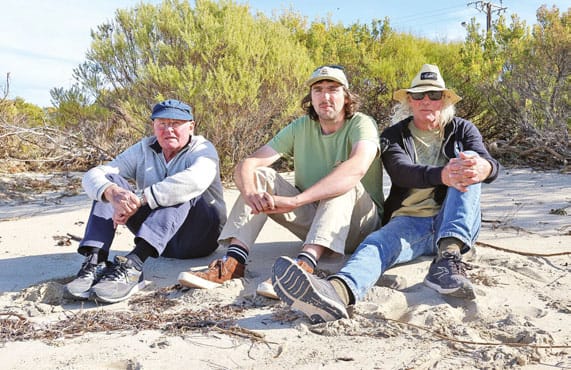
“What we are seeing is a complete breakdown of an entire food chain and, in the future, we are going to see the whole habitat gone,” he said.
“I don’t think people understand the full catastrophic effect of this event.
“The reality is going to hit from now on — it’s coming to a beach near you.
“People need to be really concerned about their own health as well as the health of their environment.”
Andy and his son, Lachie Cameron, have been documenting the devastation on YP beaches since early April.
“I have spent the past two months walking about 18 kilometres a day on our beaches and every step we took there were dead things,” Andy said.
“In a two-metre square area, there would be 15 dead or dying skates.”
Forum speaker and marine ecologist Janine Baker agreed the bloom had the potential to create “dead zones”, with deaths recorded across various marine species and habitats.
“A commercial fisher said to me they are seeing thousands of dead fish,” she said.
“They are rotting and they go down to the bottom of the sea and then the evidence has gone.
“The animals are suffocating and their gill tissue starts to decompose.”
The decomposition of algal cysts on the seafloor causes bacteria to multiply, leading to oxygen depletion and toxic conditions, threatening bottom-dwelling marine life.
Seabirds such as penguins and seabirds have also been affected.
The current bloom has been caused by Karenia mikimotoi algae, and Ms Baker said such blooms could last for months and travel long distances.
The species is globally distributed and can survive at various depths and in different temperatures.
“K. mikimotoi are marine hitchhikers,” she said.
“Marine heatwaves are not the only driver, as they can bloom in colder water,” she said.
“Because it broke out in March, people thought it was a heatwave.
“In the South East, they were getting lots of fish kills in 2024 and this happened right through spring.
“It was only when it hit the surf coast (southern Fleurieu Peninsula) and people started to get sick that it got publicity.”
A local fisher at the forum, who did not wish to be named, said he had found dead porcupine fish at Christmastime and his fishing rigs were covered in slime.
OzFish Unlimited South Australia project manager Brad Martin estimated the number of dead marine creatures could reach thousands or even millions for some species, with about one-third from YP coastal areas.
He encouraged people who found dead marine life to upload photos and details to a citizen science project on iNaturalist.
SA Health has advised the public to limit exposure to affected beaches [see YPCT, 3 June 2025, p 5].
Veteran marine ecologist Dr Mike Bossley, who also spoke at the forum, said it was too early to tell whether the storm on May 26-27 had impacted the bloom.
However, he saw signs of improvement on southern YP beaches on the weekend.
He said he had not seen any newly dead creatures compared with a fortnight earlier.
Lachie Cameron urged the community to document what they see on YP beaches and to raise concerns with government representatives, especially regarding climate change as a possible cause of the bloom.
“Just get the story out there and talk to each other, because it’s all pretty awful,” he said.
“Work together, as we are now, it’s fantastic — put your hand up and get involved.
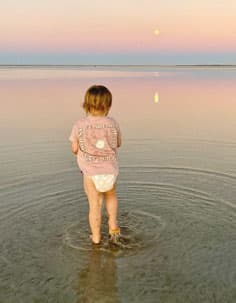
“I want my daughter to have the same opportunities to swim and snorkel in the ocean as I have had.”
More information
- Visit iNaturalist.org
- Contact OzFish Unlimited: ozfish.org.au or 1800 431 308
- Report fish deaths to FISHWATCH 1800 065 522
- Report marine wildlife deaths to National Parks and Wildlife Service offices
This article appeared in Yorke Peninsula Country Times, 3 June 2025.
Related stories: Algae concerns close oyster farms, No heads up: Locals say toxic microalgae advice was too slow; Suspected microalgae bloom kills SYP sea life

