

The Hon. Penny Sharpe, Minister for the Environment (NSW), Media Release, 20 March 2025
The Minns Labor Government has introduced nation-leading legislation that would require suppliers to take greater responsibility for the handling and disposal of products including batteries that can cause a risk to human safety and the environment.
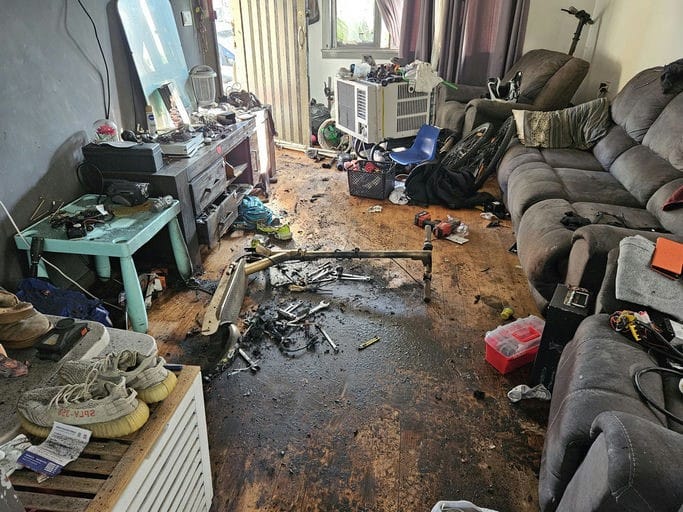
The new Product Lifecycle Responsibility Act, if passed, will create a framework for suppliers of certain products to participate in mandatory stewardship schemes. That means those who make and sell products will have to adhere to requirements on design and manufacturing, reuse and recycling and safe disposal options of their product.
NSW will be the first state to pass such legislation.
The first products that will be regulated under this act will be batteries, which according to NSW Fire and Rescue are the fastest growing fire risk in our state.
The waste and recycling industry estimates that between 10,000 and 12,000 fires each year in trucks and at waste facilities are caused by improper disposal, use, and poor design of lithium batteries.
Fire and Rescue NSW responded to 384 lithium-ion battery incidents since 2024 alone. Those incidents include at least 33 injuries and multiple fatalities.
If passed, the Act could require battery suppliers to:
- Register battery products to ensure compliance and facilitate safe disposal or recycling through dedicated collection points
- Run public education campaigns to improve awareness of battery risks and disposal options
- Enhance battery design, packaging, importation, and storage to improve safety and recyclability.
The new legislation and regulation will also apply to smaller embedded batteries, which are found in everyday devices such as, cordless vacuums, electric toothbrushes, children’s toys, e-bikes and e-scooters.
Industry and other stakeholders have helped shape the reforms and will be key to their successful implementation.
Quotes attributable to NSW Environment Minister Penny Sharpe:
“This Bill will give the NSW Government the strongest powers in the country to ensure suppliers take accountability for the products that they sell. This is nation-leading reform and I’m very proud to move on it.
“Batteries power our modern life, and we will need them more as we decarbonise our economy. But without adequate safety and care we will see further deaths, injuries, and property damage.
“Our product stewardship obligations will be a critical step in protecting firefighters, waste and resource recovery workers, and the broader community from dangerous and preventable battery fires.”