

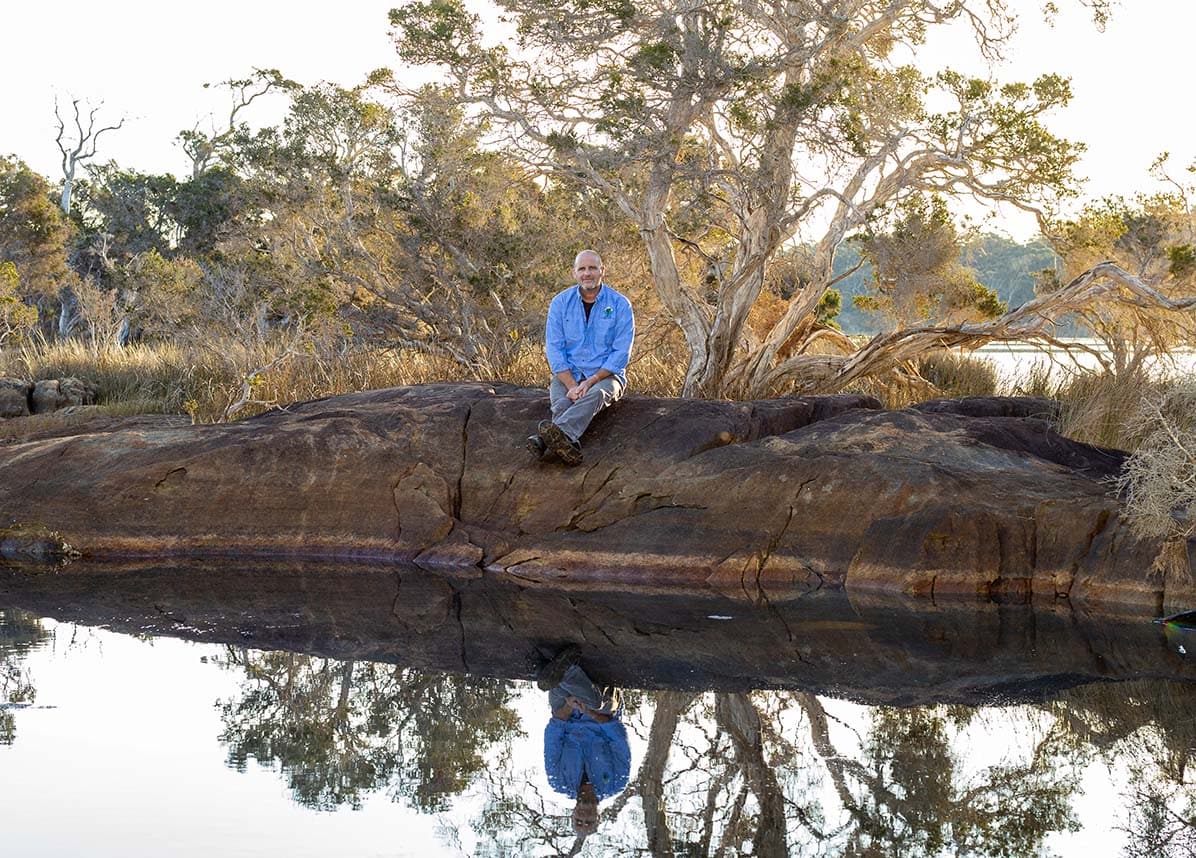
If your field of work is focused on environmental sustainability, forward-thinking is paramount as it’s all about meeting today’s needs without compromising the ability of future generations to meet their needs.
For one particular environmental group in southern WA, planning for the future is always top of mind and Shaun Ossinger, who heads up the Wilson Inlet Catchment Committee, believes we should be taking a preventative (rather than reactionary) approach when it comes to tackling environmental issues.
“Take biodiversity for example; what a lot of groups are doing is basically parking an ambulance at the bottom of a cliff,” Shaun says.
“We’re just triaging and focussing on that one thing or you could say ‘patient’. But that means we’re just living at the hospital and it’s a case of let’s deal with the sickest patient first. Meanwhile all those other people (issues) are getting sick and they’re just lining up to get in.
“We need to take a step back and look at the broader picture rather than jumping on board with whatever is the flavour of the day or the most doomsday species at the time.”
With this in mind Shaun and his forward-thinking team have chosen to make an investment in the future by starting a very special Dung Beetle program with a very special species. Known as Bubas bubalus these beetles were originally imported from Europe by the CSIRO who then began raising them in a breeding facility in Adelaide until there were enough of them for disbursement to suitable locations around Australia.
The importance of this particular species is that its breeding cycle differs from the winter-breeding species, Bubas bison. Shaun and his team secured a number of these new Bubas bubalus beetles to create their own breeding program and nurseries.
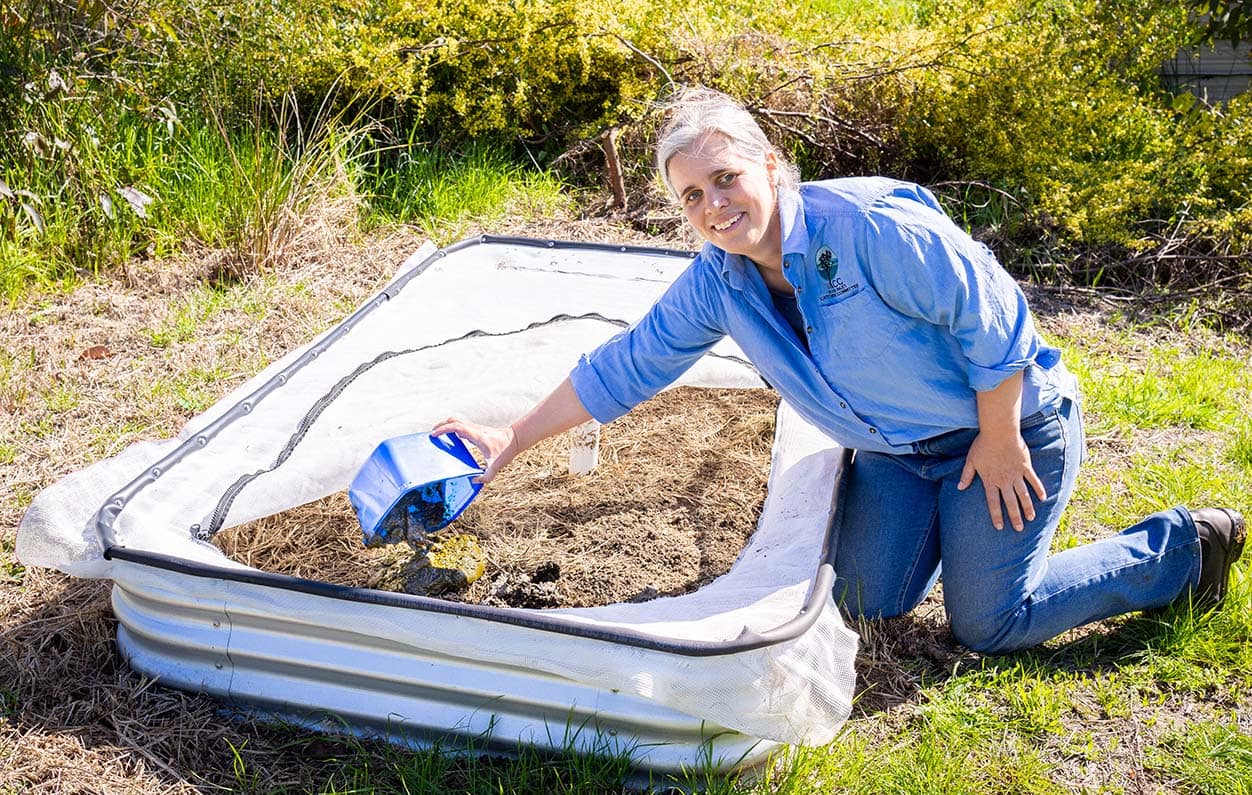
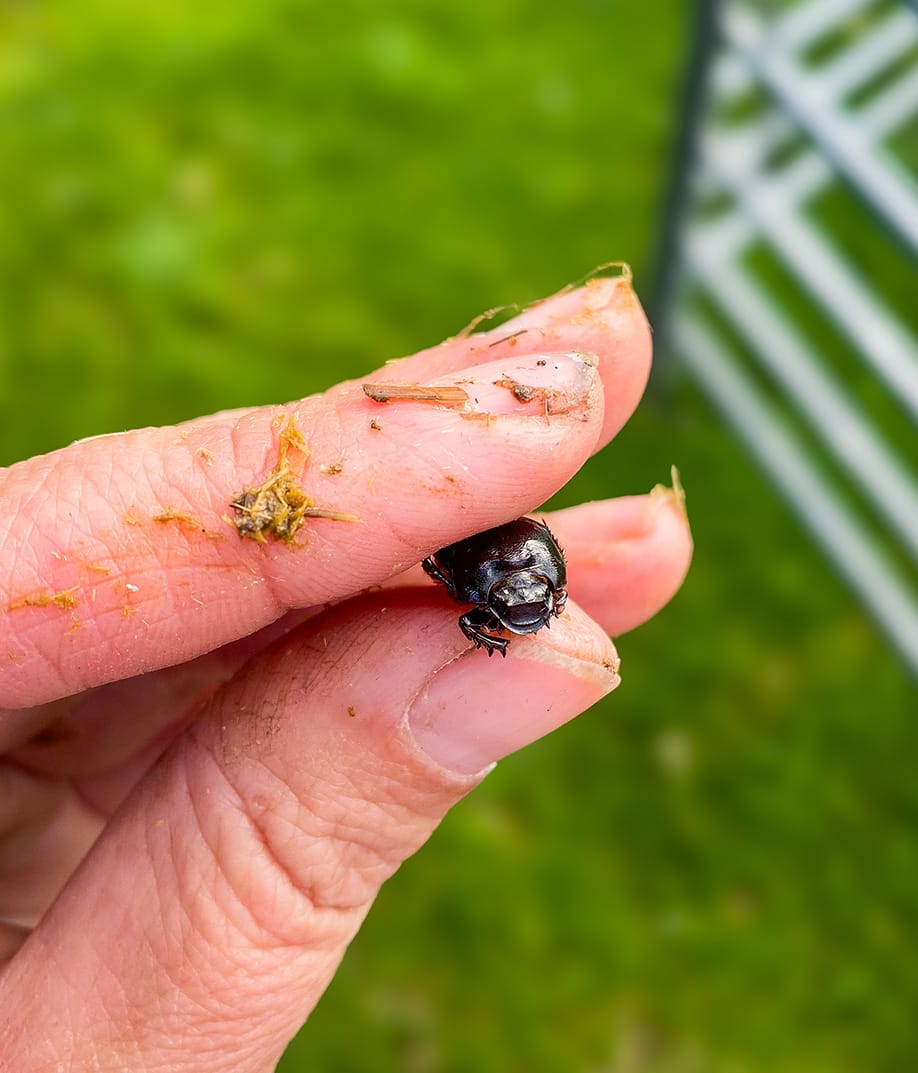
Photo: Serena Kirby
Heading up the breeding program is local farmer, scientist and sustainable agriculture project manager, Kylie Cook, who says breeding a species that’s active in spring and early summer brings multiple benefits as,
“Instead of having all the dung lying around on the ground’s surface where it’s just a waste problem the beetles incorporate it back into the soil where the nutrients can be reused. They also lead to a big reduction in flies during the warmer months,” Kylie says.
And from a waterways perspective, these busy beetles help reduce the amount of surface-lying dung that’s usually washed into local creeks where it can cause problems with excess nutrients in the water.
“We want to keep nutrients in the soil on the farms where they’re needed rather than in the waterways where they’re not needed,” she says.
Dung beetles also work to interrupt the breeding cycle of parasites that might be living in the dung and that eventually end up inside animals and impacting animal health. They’re also highly effective at improving soil health and soil drainage due to the tunnels they dig.
This particular dung beetle program has been so successful that Shaun’s original plan for 10 local dung beetle nurseries has been greatly surpassed as close to 30 nurseries have now been established.
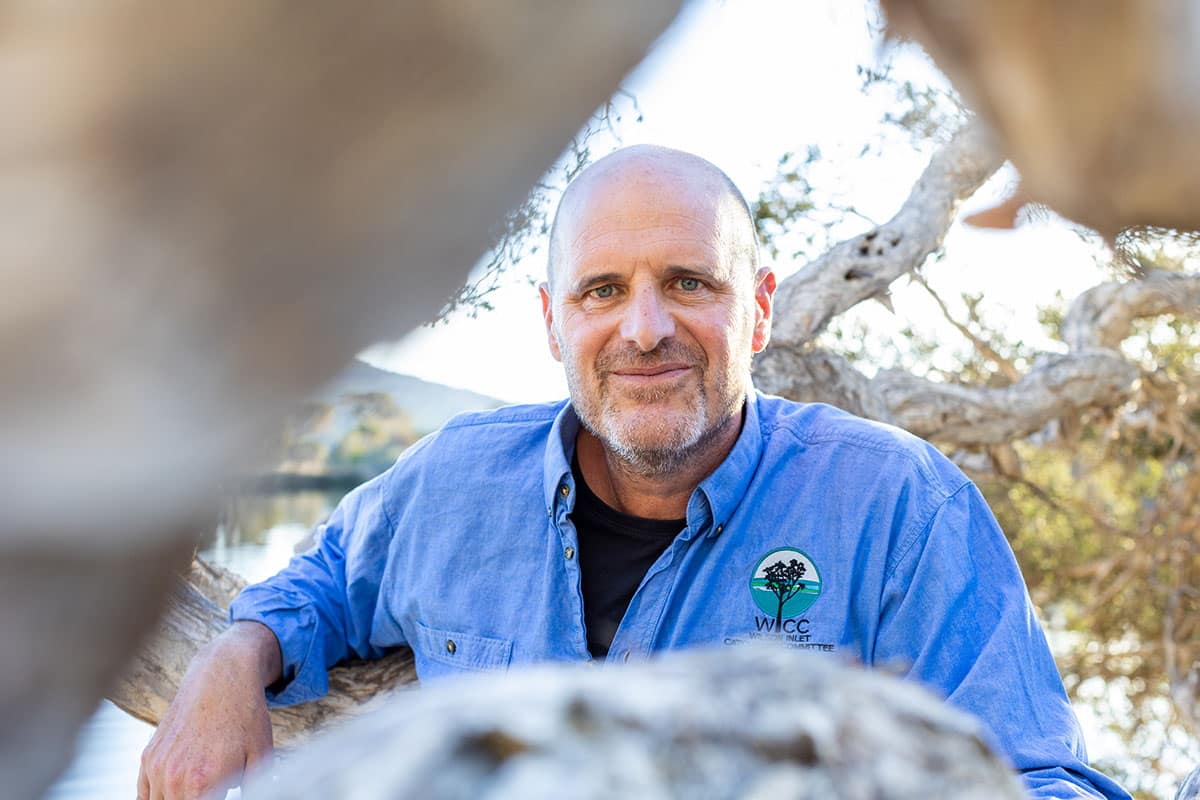
Shaun adds that it’s vital that environmental groups like his work hand in hand with local farmers as wetlands and waterways are highly dependent on sustainable agriculture. He also says that farm productivity has to be front and centre of sustainable agriculture and “fencing off billabongs to keep stock out creates a win-win situation”.
“Time after time we’ve heard from farmers that, after fencing of billabongs, the birds return which controls insects and improves biodiversity. The end result is that these areas actually become the farmer’s healthiest and best producing paddocks.”
And what’s not to love about that!