


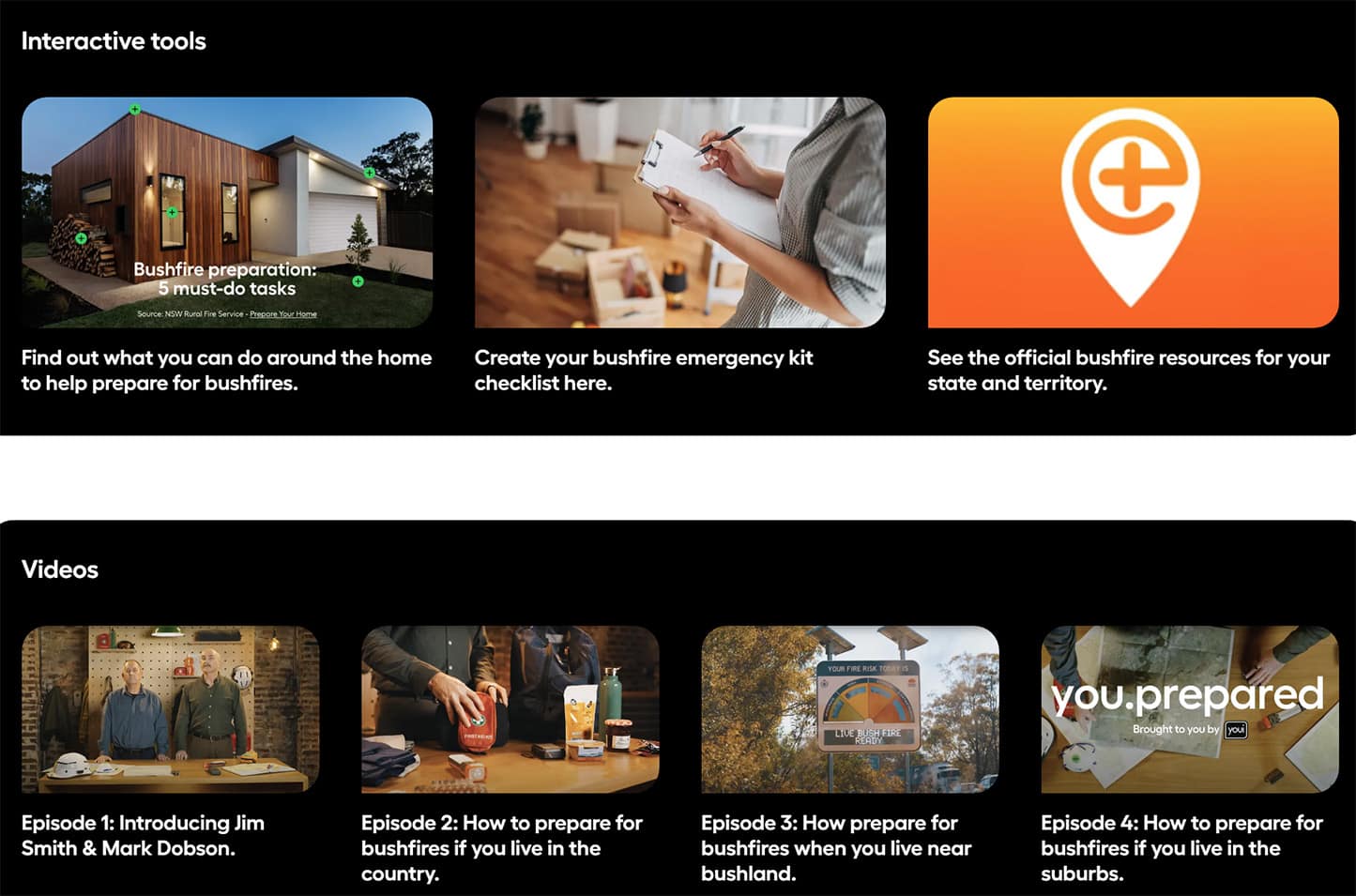
Australian Rural & Regional News asked some further questions of Youi, and received answers from Jim Smith, volunteer firefighter and former Deputy Commissioner for Fire and Rescue NSW. See below the release.
Lack of awareness and readiness concerns and bushfire season begins: YOUI
Youi, Media Release, 30 September 2024
Bushfires are extremely prevalent in Australia, and after the 2020 events made history for their catastrophic impact on wildlife and communities, preparedness should be top priority for Aussies as we head into bushfire season. Still, according to research conducted by insurance provider Youi, only 1 in 2 Aussies who were surveyed are concerned with bushfire risk.
In a Youi survey conducted with over 1,000 Australian residents who live in bushfire-prone areas, research shows a strong correlation between the level of concern about bushfires and the degree of preparedness.
Individuals who report the least concern about the threat of bushfires are also those who are least prepared, with 1 in 4 Aussies surveyed (26 per cent) acknowledging they’re unprepared. One third (32 per cent) of those surveyed living in areas at risk of bushfires are unaware of it.
Youi’s Head of Marketing Strategy, Planning and Insights, Dave Annesley, said the research indicates that Aussies who are more concerned about bushfires are also more likely to feel prepared to deal with their consequences, but that still leaves half of Aussies surveyed who feel underprepared.
“We’ve received over 1,000 bushfire-related claims in the past 10 years and know how devastating it can be for families. Simple steps can go a long way, and we want Aussies to get on top of them. This is why we launched a Bushfire Preparedness Hub, which provides tools and information for Aussies heading into bushfire season,” Mr Annesley said.
“While it’s great to see a strong level of awareness with some of the Aussies surveyed about bushfire risk (52 per cent), there is still a lot of work to be done for those who feel underprepared or unaware of the impact that a bushfire can have,” he said.
Being informed and educated on bushfire risk and preparation is key. Youi’s research indicates that 67 per cent of those who bushfires had impacted in the past now harbour a more optimistic outlook towards their level of preparedness for potential future events.
The data has also put a spotlight on the differences in states when it comes to bushfire preparedness.
Volunteer firefighter and former Deputy Commissioner for Fire and Rescue NSW, Jim Smith, said Youi’s data reveals a concerning difference in state preparedness for bushfires, with New South Wales residents and Queenslanders particularly unaware of the risks.
“Despite New South Wales and Queensland making up more than a third of Australia’s land mass, both states are regularly affected by bushfires, the survey highlights that residents in these areas are least likely to be aware of the risk,” Mr Smith said.
Mr Smith also notes that the survey shows that age plays a key factor in how Aussies perceive their risk. “Boomers and older are the least likely to be aware of the danger, despite having lived through the deadliest bushfire seasons in Australian history, including the Black Summer fires of 2019-2020, the Black Saturday fires of Victoria in 2009 and the Ash Wednesday fires of 1983, among many others.
“With bushfire season upon us, it’s imperative that Aussies are educating themselves and their families on how to be prepared. It could be as simple as taking the Bushfire Preparation Quiz on the Hub to find out whether you’re at risk and what to do if so,” he said.
Looking for ways to prepare yourself heading into bushfire season? Here are Jim’s top tips to prepare yourself and your home.
Bushfire preparation tips
Things to do around your home:
- Take extra care to clear leaves, twigs and debris from your property;
- Clean gutters, trim branches and remove litter;
- Fit seals around doors and windows to eliminate gaps;
- Install a fire sprinkler system for guttering; and
- Install metal mesh screens on windows and doors.
Insurance / contents:
- Check insurance coverage for bushfire (for example home, contents and car insurance).
Planning ahead:
- Create a formalised bushfire survival plan for your property;
- Make a formalised bushfire survival plan for both your family and your pets;
- Know the trigger for you and your family to leave before a bushfire approaches;
- Know the Fire Danger Rating and monitor your fire services app for warnings and alerts;
- Have your bushfire survival and evacuation kit prepared well before it is needed; and
- Ensure all important documents are in a storage container
For more information on how to prepare yourself for the bushfire season, visit
https://www.youi.com.au/you-connect/you-prepared. Or for more information on the survey results, visit:
https://www.youi.com.au/you-connect/you-prepared/australias-bushfire-preparedness-report.
Disclaimer:
Product issued by Youi Pty Ltd. Consider the relevant PDS to decide if this product is right for you. PDSs & TMDs available at youi.com.au. Where you have increased your cover or reduced your excess within 72 hours of a flood, storm, hail or bushfire occurring, cover will be limited to the amount that was effective prior to the change. Loss, damage or legal liability caused by, resulting or arising from flood, storm, hail or bushfire during the first 72 hours of your policy first being purchased is excluded unless certain conditions apply. See relevant PDS for full details.
Australian Rural & Regional News asked some further questions of Youi, in relation to bushfire risk and insurance, and also in relation to bushfire risk itself. Jim Smith, volunteer firefighter and former Deputy Commissioner for Fire and Rescue NSW, gave the following answers to the questions relating to bushfire risk.
ARR.News: Do you have an opinion as to why some people might not be as concerned or prepared as they should be about their bushfire risk?
Jim Smith: A couple of reasons:
The increase of tree and sea changers, see many people now living in coastal and rural areas that are bushfire prone. As they are new to the area, they are not aware of the bushfire history and the amount of preparation required to prepare their property. They need to talk to neighbours who have been there for sone time and their local fire service and council to assess their risk and prepare accordingly. The information provided in Youi’s you.prepared hub can assist them with this process.
Many people in these areas may be in a very urbanised part of a bushfire area surrounded by housing and kilometres from bushland. This can give a false sense of security as when fires approach, they can be heavily impacted by ember attack. Everyone needs to be aware of the bushfire risk in their area and prepare their property accordingly. The information provided in Youi’s you.prepared hub can assist them with this process.
ARR.News: How would you motivate people to action without simply scaring them?
Jim Smith: We have focused on reinforcing the responsibility parents have for their families and that neighbours have for more vulnerable neighbours. We have focused on the communal need of preparing your property and helping the community prepare together, which has led to well prepared and closer communities. Community Fire Units have been a huge success in the past, with streets being very well-prepared and uniting the community.
ARR.News: How do firefighters prioritise which properties to protect and in what order?
Jim Smith: There is no easy answer to this question. It depends on the severity of the fire and the amount of resources at your disposal. As an officer in charge of a strike team, you need to assess what you can achieve with the resources you have. So, when a fire approaches, you asses the risk and allocate your resources to life and then property protection. If you have residents remaining, you may put them in the most defensible property and defend that. If all residents have evacuated, you then can concentrate on allocating your resources to protect property that you have a high probability of saving. This is usually done on a case-by-case basis and relies heavily on your training and experience.
On occasions firefighters pull out of the area and then go back in after the fire passes. However, on arrival back to where houses may still be alight, a firefighter may opt not to put out the fires as it could take too much of their resources. You work out what is best for your buck, saving the greatest number of properties that you can with the resources that you have.
ARR.News: Should people be aware of where on the spectrum their property is likely to be in the event of a bushfire emergency?
Jim Smith: Definitely. Knowing your property risk is essential if you want to be prepared. If you are in an urbanised area away from bushland it may mainly be about preparing your property from ember attack and evacuation if you have vulnerable people as part of your bushfire survival plan.
If you are located on the bushland or urban interface close to bushland you should be preparing your property for impact by fire and ensuring your bushfire survival plan has you leaving early and knowing when, where and how you are leaving, alongside where you are going to. This also includes ensuring you inform someone you are leaving and where you are going to. The you.prepared hub can assist you with putting together your own survival plan.
ARR.News: How concerned are you about the 2024-25 fire season?
Jim Smith: I am concerned for this upcoming season based on a certain amount of complacency that creeps in when you have not had any significant bushfire seasons for a while. We have had a fairly dry winter this year and vegetation has dried out. It’s looking like we’ll have some significant grass fires as there has been a lot of growth over the last four years or so. If we have some significant hot and dry periods this will lead to some major bushfires occurring. With climate changing raising average temperatures around Australia and bushfire behaviour becoming much more erratic and causing fires to spread much quicker than in the past, we need to be well prepared for this year’s fire season.

