The breeze was blowing up small waves as the unmistakable taste of salt lingered on my lips. Standing before me, a concrete wall battling the force of the Southern Ocean.
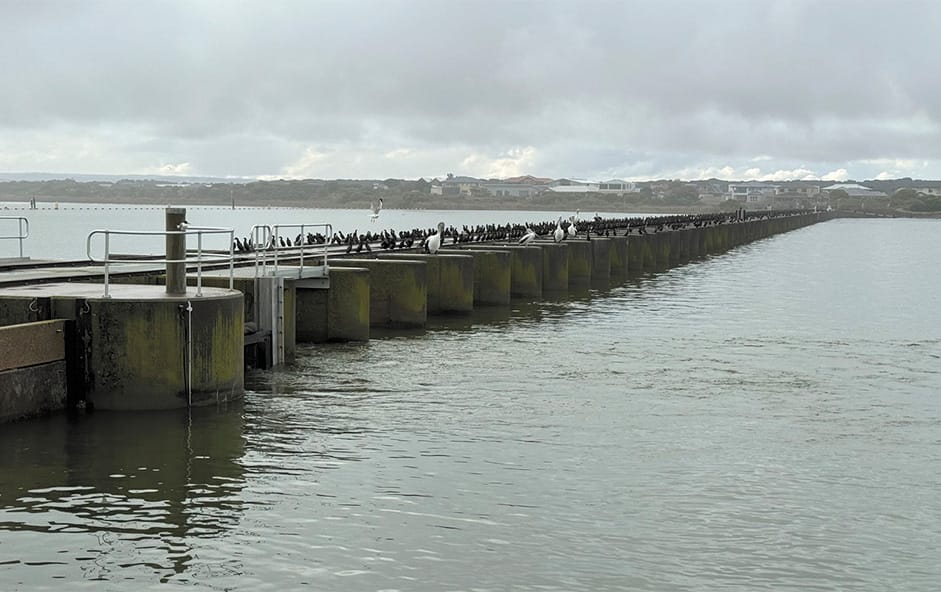
All up, 7.6 kilometres of barrages were constructed by South Australia in a crude attempt to turn an estuary into freshwater lakes, with water solely supplied by the Murray River, a historical sin underpinning and undermining the Murray-Darling Basin Plan.
Our tour guide Ken Jury, expert on the South Australian Lower Lakes and Coorong. Ken, an investigative journalist with a passion for marine and aquatic ecology, worked for the Adelaide Advertiser, Channel 7 and later had his own radio program on station 5DN for 23 years. Ken also worked for South Australian Fisheries as a journalist, where he produced the South Australian Fishing Magazine to a national and international audience. Ken sees a better way forward for the basin and believes that governments are risking the viability of the whole basin.
Approaching the Goolwa barrages, Ken points out that the informative signs that once lined the approach to the concrete structure had all been removed. The signs told the story of the river system, how modern Australia engineered and regulated the highly variable river system for water security, food production and navigation.
“Before the barrages were built, the Lower Lakes had a commercial fishery of some 40-odd commercial fishermen.
“Quite a few of them, at least half, only ever fished the big lake, Lake Alexandrina.
“This is before the barrages, and you can imagine the ocean coming in and then, of course, going out again.
“They fished the top end of Lake Alexandrina.
“They would fish for Murray cod and mulloway.
“Freshwater fish and estuarine fish.
“That water in the lake was stratified.
“It’s coming in from the ocean”¦ and in the meantime, the River Murray is emptying a little bit too.”
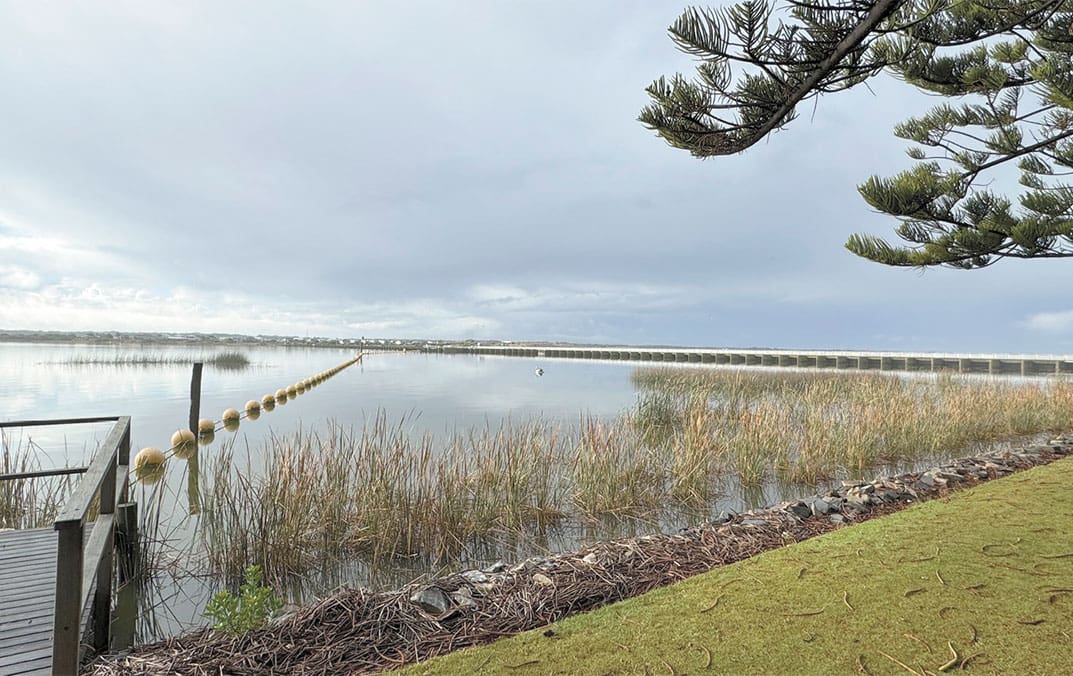
Each fisherman had two people on board and they would use a weighted bottle on a cord and drop into the water and pull it up to check if they had saltwater or freshwater to choose the appropriate fishing equipment. Within 100 metres, fishermen could go from freshwater to estuarine.
“As a consequence, they’d catch mulloway and Murray cod, they were hugely successful.
“Once the barrages were completed, the mulloway couldn’t get in, it stopped it completely.”
Ken said a Victorian Fisheries tagging exercise demonstrated that mulloway from the east still travel to the Goolwa channel outside the barrages and attempt to enter the lakes, nosing right up to the structures.
“This fishery would have been one of the top ones in Australia, there’s no doubt about it.”
The estuarine nature of the lakes is well-documented through historical accounts of indigenous Australians, European settlers and scientific research, yet the plan to save the lakes and Coorong appears stuck in the political vortex of solely blaming the upper states.
Ken pointed out the estuary went as high as Mannum and reflected on the shells stuck in the cliffs, demonstrating the saltwater influences of time.
Recently, 200 tonnes of fish died in the Southern Coorong highlighting the dangers of not addressing the local issues. Having listened to the narrative, one would have thought that years of high Murray flows would have solved the ills of the Coorong, but sadly, no, and history tells us why. As far back as 1863, work began on draining the south eastern landscape for agricultural pursuits. For the past 140 years, the vast swamps of the SE have been drained. This fresh water, before the drainage, flowed to the southern lagoon, where it met salt water to form the now-deceased estuary, once a major breeding and nursery area.
As Ken leads us around, his knowledge and experience pour from his encyclopedic mind. The experience of the millennium drought will be forever burned in Ken’s mind. Acid sulphate soils scarred the waterways while the government refused to let the tidal flows in.
“We were measuring the acid out there at PH2 to PH2.5,” said Ken.
“Monosulfidic black ooze, yes, that’s what we’ve got.
“Did you know that the Lower Lakes combined have over 500 million tonnes of it combined?”
Ignoring pleas to let seawater into the estuary, government officials called in aircraft to spread thousands of tonnes of lime to try to neutralise the devasting effects. The wind would pick up the acid and blow it across the landscape, making people ill and eroding corrugated iron sheets.
Pyrites from mineral deposits in the Mount Lofty Ranges have washed down creeks and rivers into Lake Alexandrina for thousands of years. While safe when covered in water, they are quite dangerous when exposed. Ken said a recent housing development at Buckland Park had the potential to release more pyrites, which could impact local market gardeners and further impact the water quality of the lower lakes and Coorong.
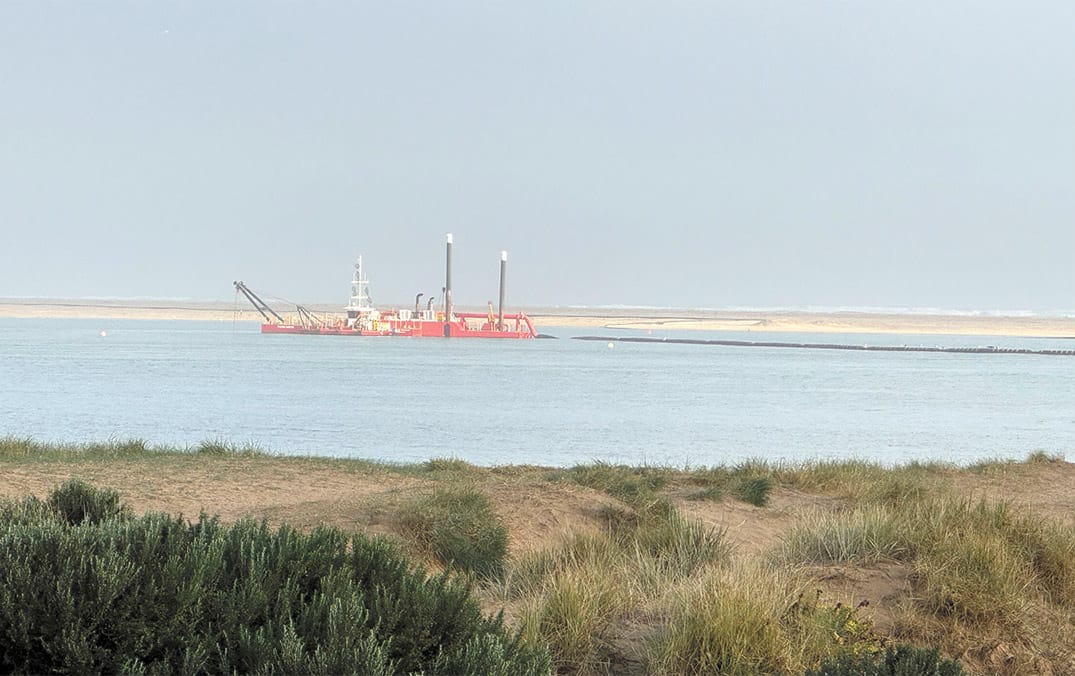
We made it to the beach and watched the ceaseless dredging of the ‘river mouth’. Ken pointed out his simple solution that would use simple earthworks and automation of the barrages to capture a high tide behind the wall, to be released at low tide, scouring the mouth without the huge energy costs and expense of the current arrangement. The Basin Plan calls for the Murray Mouth to be held open 95 per cent of years, without the assistance of dredging. Unlike Ken’s solution, the Federal Government seeks to do it with fresh water. For reference, the 2016 floods achieved a meagre 10 days before the dredge had to resume.
In a world of Pliberseks, we need more Jurys.
Thanks for the tour, Ken.

This article appeared in The Koondrook and Barham Bridge Newspaper, 4 July 2024.