

Parts of New South Wales are in the grip of a Varroa mite infestation, the most serious pest for honey bees.
The tiny, reddish brown mites are external parasites, which are a serious threat to bee populations and horticulture industries that rely on pollination.
Varroa mite was first detected in Australia in the Newcastle area on June 22 and soon after, in a bid to halt the spread of the mites, bee movements were halted in NSW.
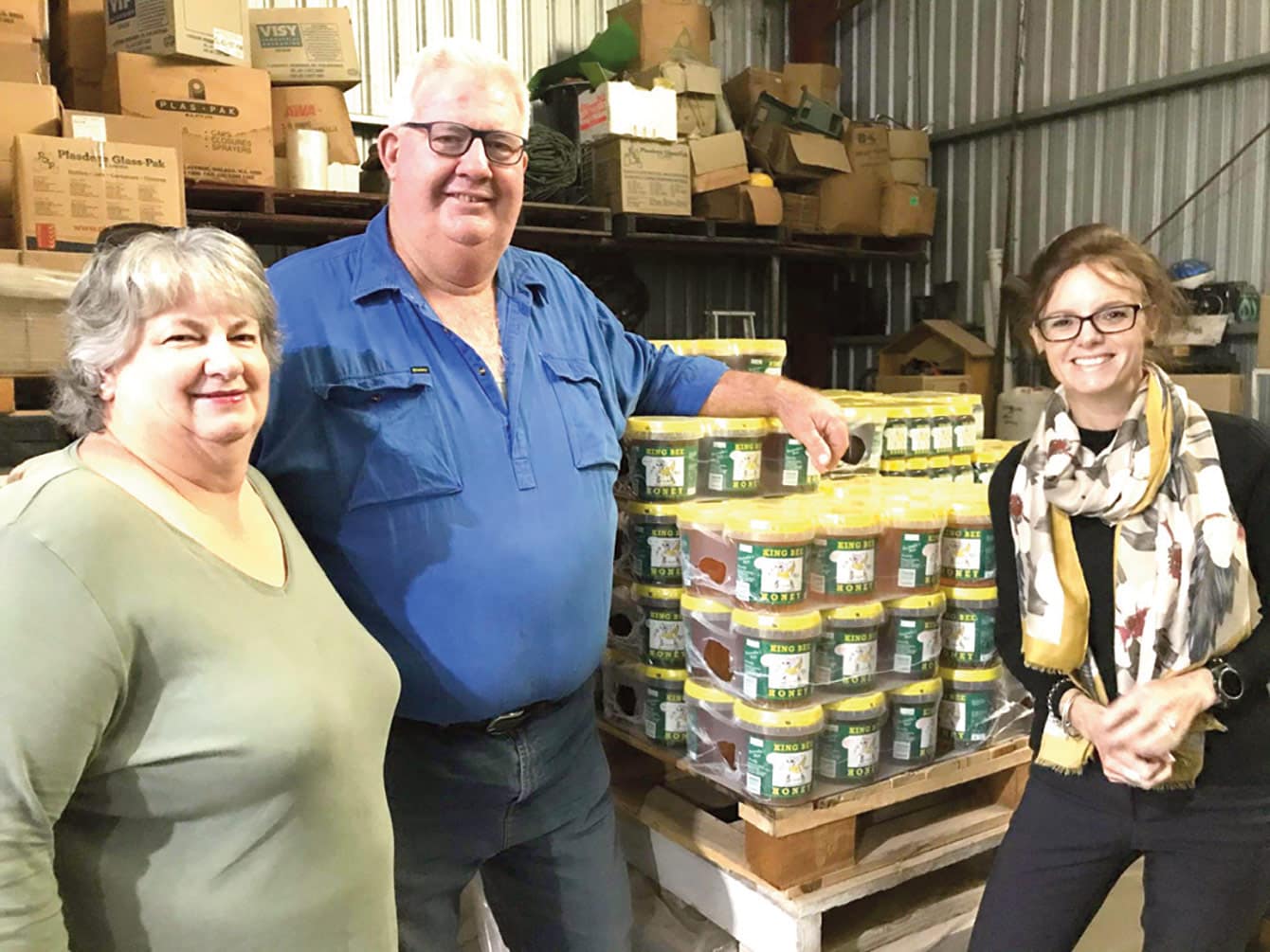
Narrandera apiarist and owner of King Bee Honey, along with his wife Wendy, David Mumford, is one of the region’s beekeepers to be affected.
The Riverina region has fared well so far compared to other areas which have had hives eradicated.
Under a new plan announced by Agriculture Minister Dugald Saunders NSW beekeepers will soon be able to move their hives again for pollination services and honey production again.
“We’ve all been affected ever since the state was shut down when Varroa was detected about three weeks ago,” Mr Mumford said.
“At the moment we’re not allowed to move the bees so we can’t effectively work them.
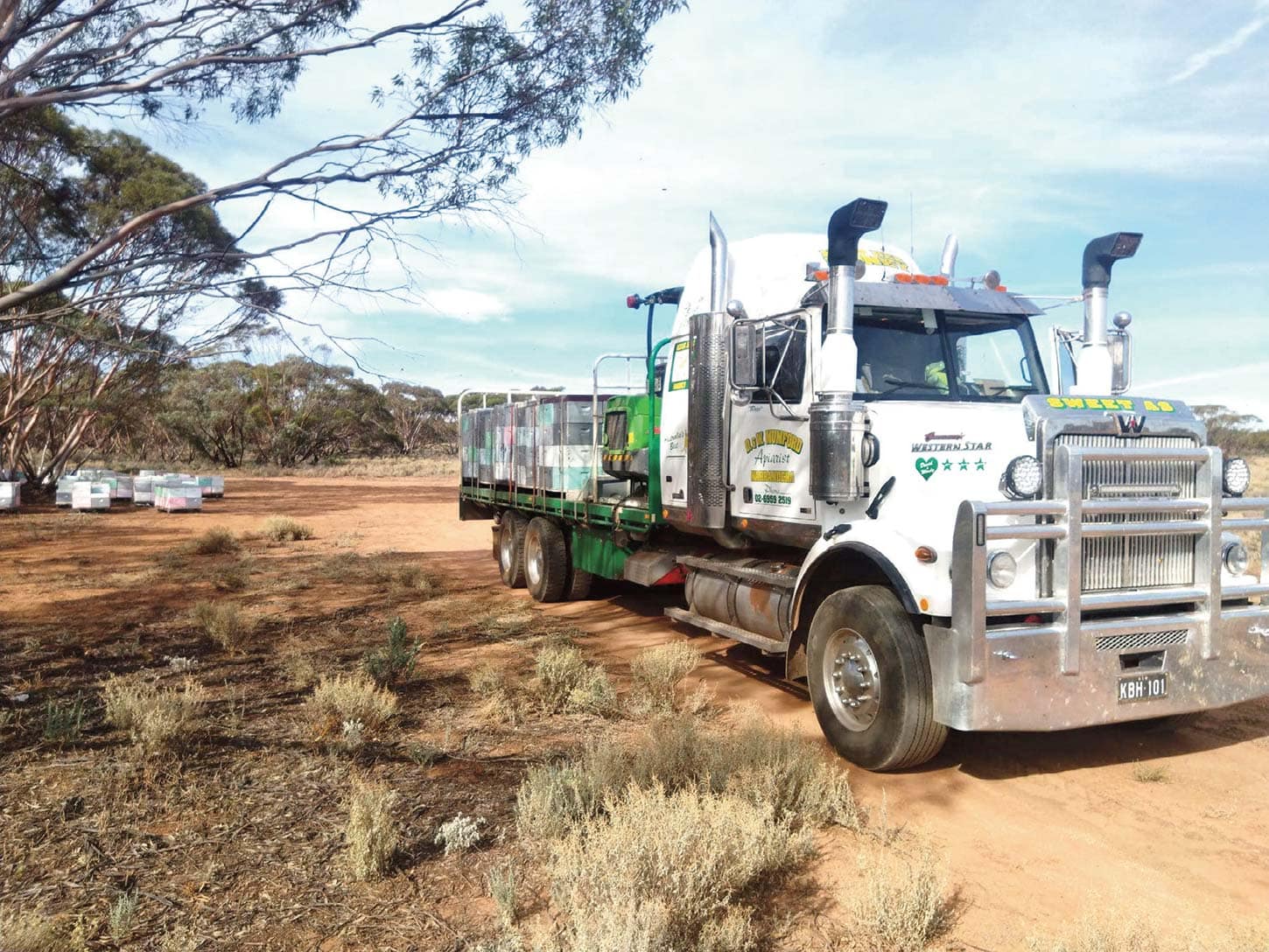
“We readily move truck-loads of bees; about 240 hives at a time, but we haven’t moved them in the past couple of weeks.
“It’s the worst thing that could’ve happened, but not a complete disaster yet as it’s not affecting us big time, but we are impacted; it’s a bit of a hiccup.”
Producing 60,000 kilograms of honey each year, Mr Mumford said he would not meet that target this year.
He believes crop growers could also be negatively impacted by the lack of movement from bees to help pollinate crops.
The almond industry could be under threat with the pollination season starting in August and about half of the beehives needed for pollination coming from NSW and Queensland.
“It’s depleted a lot of our winter production and we can’t tell how much production will be depleted until the end of the season in about March or April,” he said.
“Once you lose a period we’ll never catch up as it keeps compounding.
“They’re trying to open it up in certain areas for almond farmers but I don’t know whether they’ll be able to.
“A lot of canola growers will lose a percentage of pollination too.”
Working with bees on a commercial basis for 47 years, Mr Mumford said the Varroa mite had not been detected in Narrandera ”as far as we know”.
Bee industry on edge
“So it’s a precautionary method being unable to move the bees and we just have to keep doing what we’re doing,” he said.
“We move the bees seven or eight times a year and they can be in the area we move them to for between three and six weeks.
“If it gets down here we’ll have to use insecticides and it’ll mean we lose a percentage of our hives if it comes here as bees are susceptible to those pesticides.”
Meanwhile, the National Management Group (NMG) for Emergency Plant Pests has endorsed a National Response Plan to eradicate Varroa Destructor from NSW.
Member for Cootamundra Steph Cooke has welcomed an $18 million compensation package which has been developed for registered beekeepers affected by the varroa mite out-break, under an agreement reached by the Commonwealth and State governments and industry.
However, Mr Mumford believes the compensation package will not be enough to address the problem.
“The $18 million compensation package is nowhere near enough – it needs to be increased as it won’t even scratch the surface,” he said.
“I don’t think I’ll qualify for it.
“I believe it’s mainly for the hives that have been eradicated, especially in the Newcastle area.
“But I plan to have a meeting about it with Steph Cooke.”
Ms Cooke encouraged local beekeepers to keep doing their part.
“Agreement to provide reimbursement costs to residents who have bees for commercial use and recreation will ensure people will continue to come forward,” Ms Cooke said.
“We all have a common goal to protect the sector locally and at a state and national level and it’s good to know beekeepers won’t be out of pocket.”
Ms Cooke said the agreement would see registered commercial beekeepers reimbursed for all equipment, hives and bees that are destroyed in the eradication process, as well as the costs of honey.
NSW Agriculture Minister Dugald Saunders said eradication was the primary goal and the state’s strong initial response and contact tracing work have made this possible.
“We still have extensive surveillance operations in place to find and destroy any further cases of this infestation,” Mr Saunders said.
“I want to thank the entire bee keeping community for their commitment and vigilance during this time.”
The National Management Group also endorsed compensation for licensed recreational beekeepers in recognition of their vital role in response to the infestation.
The NSW Government is putting on an additional 26 compliance and surveillance officers to manage risk to facilitate key pollination events and ensure business continuity.
The impact of Varroa could lead to a catastrophe if Nobel Prize winner, physicist Albert Einstein’s comment in relation to bees is correct.
He said: “If the bee disappears from the surface of the Earth, man would have no more than four years left to live.”

This article appeared in the Narrandera Argus, 21 July 2022.

