
“Have You Got What It Takes?”
Where cricket meets leadership
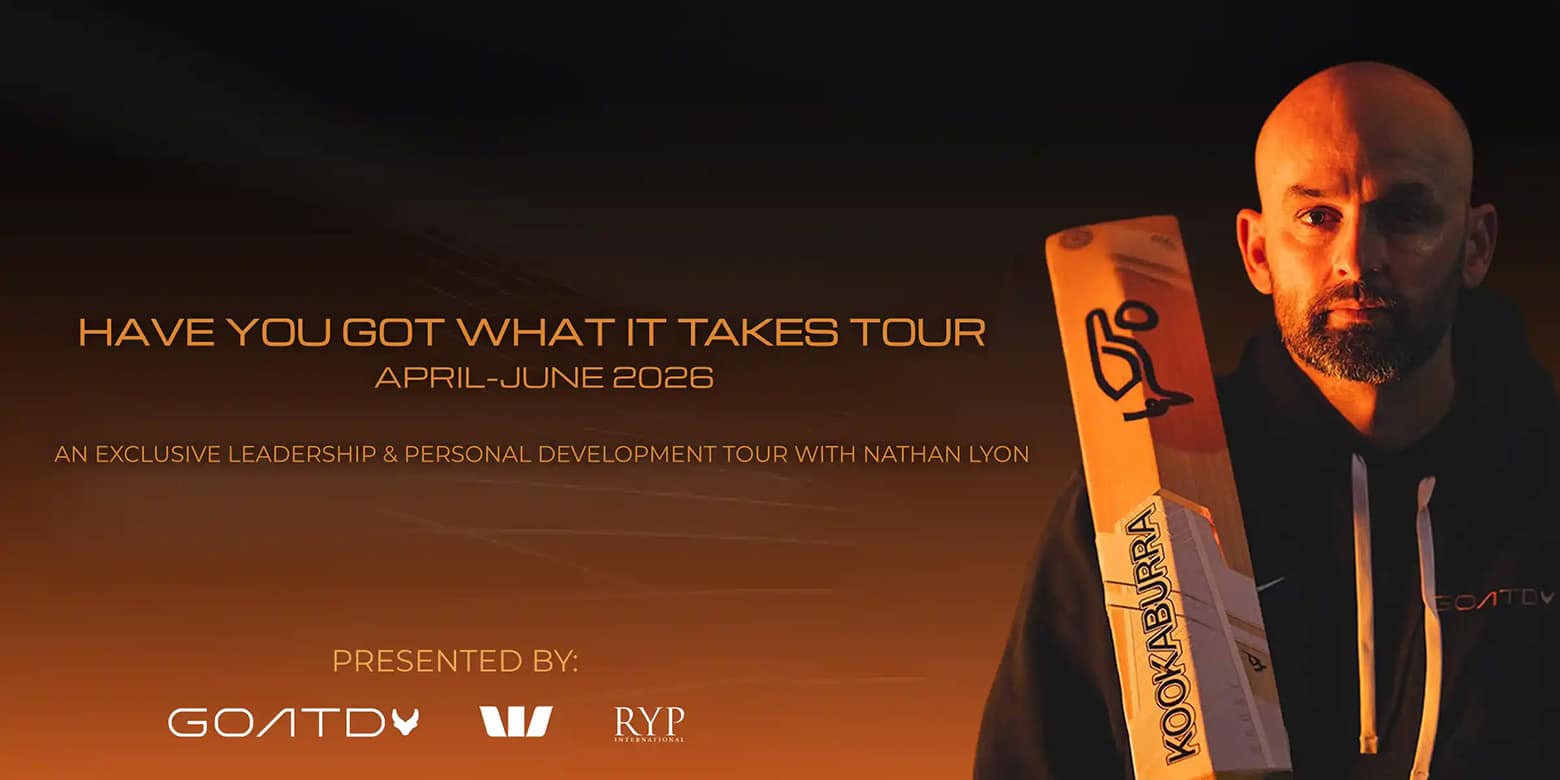
In a powerful collaboration bridging elite sport and leadership development, Australian Test cricketer Nathan Lyon has joined forces with David Stewart from RYP International to deliver the “Have You Got What It Takes Tour” a multi-layered experience designed to impact not just young athletes, but entire communities.
ARR News: What sets this tour apart? Is it its structure?
Nathan Lyon: Rather than a single talk, it’s built as a three-part ecosystem:
- A business leaders’ roundtable breakfast;
- An emerging leaders’ summit; and
- A players, coaches, and parents’ forum.
Each engages a different, but interconnected, group that influences the future of leadership in Australia. We also run a free cricket clinic for children, because accessibility and participation matter.
ARR News: You’ve expanded this into three distinct events. Why was that important?
Nathan: Because leadership doesn’t exist in isolation. If you only speak to young people, but not to the leaders above them, or the parents and coaches shaping them, you miss the system. We’ve designed this intentionally. The breakfast targets decision-makers. The summit focuses on emerging leaders. The club forum addresses the environment around young people. If you want real change, you have to influence all three. In cricket, you don’t develop in a vacuum. Teammates, coaches, parents, and clubs all shape your journey. So instead of simply telling my story, we’ve created something that supports the entire leadership pathway.
ARR News: Let’s start with the business breakfast. What’s the focus?
Nathan: This session goes deep into what actually drives high-performing teams, not clichés, but real behaviours. We explore:
- The balance between high care and high challenge;
- Why credibility underpins leadership;
- The difference between management and leadership;
- Why great teams treat feedback as a gift; and
- The discipline of results-based accountability without blame.
A lot of organisations think they have high performance, but what they really have is compliance, and there’s a big difference. The best teams I’ve been part of are those where people understand their role and feel genuinely valued. It’s not about having the best individuals, it’s about how those individuals come together. We challenge leaders directly: Are you building a team that performs under pressure, or only when things are easy?
ARR News: The emerging leaders’ summit tackles “what is not taught.” What do you mean by that?
Nathan: We myth-bust leadership early. It’s not about titles, being the loudest voice, or having all the answers. Leadership starts with self, how you manage emotions, respond to setbacks, and build habits that drive long-term performance and employability. We focus on lifelong employability skills, things like an ability to collaborate, adapt, listen, communicate, read non-verbal cues, be resilient and curious. These are the real differentiators. I wish I had access to something like this when I was younger. In sport, and in life, you’re often judged on performance but rarely taught how to handle the ups and downs. Learning to work through vulnerability is a critical life skill. Without guidance, most people learn it the hard way.
ARR News: The parents, coaches, and club forum feels especially important. Why?
Nathan: Because they are the unseen force shaping young lives. Junior clubs are the heartbeat of Australian sport. For me, it all started in Young, my local cricket club is where I fell in love with the game and built lifelong friendships. Coaches don’t just develop players, they shape people. The best coaches build confidence, teach resilience, and create environments where kids genuinely enjoy the game. Because kids don’t drop out of sport when they stop loving it, they drop out when the environment stops being fun or supportive. We talk openly about the role parents and coaches play in either building, or breaking, confidence. Less than 1 per cent of junior athletes reach elite level. That means clubs carry a far greater responsibility: helping shape capable, confident young people for life.
ARR News: What are the key messages for coaches and parents?
Nathan: First, you are role models, whether you realise it or not. Young people are always watching. How you respond to wins, losses, referees, and setbacks shapes their behaviour. Second, focus on effort and development, not just results. And third, create psychologically safe environments where kids feel comfortable making mistakes and learning. Let kids play. Let them enjoy it. Not every child will become a professional athlete, and that’s okay. But every child can gain something valuable from sport if the environment is right.
ARR News: When you step back, how do these three events connect?
Nathan: They form a complete community leadership ecosystem: The business breakfast shapes workplace environments. The emerging leaders’ summit shapes how young people lead themselves. The club forum shapes behaviour and mindset early in life. Align all three, and you create something powerful, a consistent, community-wide understanding of what credible leadership looks like.
ARR News: So, it all comes back to the same question: “Have you got what it takes?”
Nathan: Yes, but not just to succeed. It’s about contributing, growing, and handling the tough moments. Leadership starts with self. Situational leadership, in particular, is like a muscle, you have to keep working at it or it fades. Regional Australians understand this well. They’ve always been resilient and adaptable, often more so than those in metropolitan areas, because they’ve had to be. Part of this tour is about recognising, reinforcing, and celebrating that strength.
ARR News: What do you hope people take away from the full tour experience?
Nathan: That success isn’t built on shortcuts. It comes from doing the basics well, consistently. And that being part of a team, in sport or in life, is a privilege. You earn your place every day.
ARR News: Final message?
Nathan: The “Have You Got What It Takes Tour” isn’t just a program, it’s a coordinated effort to influence leadership at every level of the community. By bringing together elite sport, leadership principles, and grassroots development, David and I want to support leaders across regional Australia to tackle their most important challenges. This isn’t just about building better athletes or better leaders, it’s about building stronger communities that can thrive.