

Geoff Pearson, Livestock President, WA Farmers, Media Release, 15 April 2026
WAFarmers consistently advocated to the Federal Government during its consultative process on the phase out of live sheep exports, including in our 2023 submission that this decision would be significantly detrimental to the Western Australian wool industry.
We hate to tell you that we told you so! Three years on, we are seeing that prediction become reality.
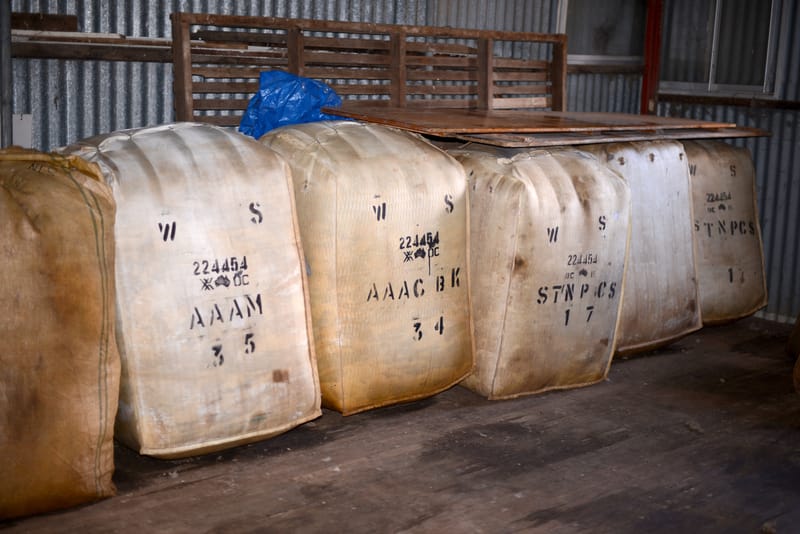
The announcement by agribusiness giant Elders that it will cease the processing and selling of wool in Fremantle from July 2027. WA clients’ wool will now instead be processed and sold through their Melbourne facility. This is just the tip of the iceberg in the demise of the WA wool industry, eroding the recent spike in producer confidence driven by wool price increases.
Despite assurances from Elders that WA wool growers will not be financially impacted by their decision, it is difficult to reconcile that the increase in costs associated with transporting wool to Melbourne will not be passed on to the grower in some form eventually.
In our 2023 submission to the Federal Government on the impact of the phase out of live sheep exports by sea by 2028, we informed them that 84 per cent of WA’s sheep flock are Merino, with WA producing 19 per cent of the Australian wool clip. We advised that even a 7.5 per cent reduction in the WA Merino flock would decrease wool production in WA by approximately 12 per cent. The live export trade functioned as a reliable market and disposal mechanism, particularly for Merino wethers and drought liquidation. We warned that WA would shift from predominantly Merino into shedding and terminal cross breed or grow more crops, a real and significant threat to the WA Wool Industry.
Recent data now tell us that our estimates on the decline of the WA wool industry were conservative.
Elders cited a near 40 per cent drop in WA’s wool clip as the catalyst for their decision to move WA wool selling to Melbourne.
Since 2023, Western Australia’s Merino base has contracted sharply; with research indicators suggesting a 20–35 per cent decrease in the Merino flock resulting in a decline of around 25–30 per cent to the WA wool clip since 2023, contrary to Elders figures. The reduction is driven by whole-flock liquidations, reduced Merino joining, shift to meat-based breeds, and the loss of at least 800,000 Merino breeding ewes interstate.
This is not a seasonal dip but a structural reset. The breeding base has been cut, the pipeline of future wool sheep has narrowed, and the system is shifting away from Merinos altogether. The impact on production has been immediate, significant and disproportionate driven by a complete loss of confidence in the industry and wool market.
A significant factor in producers moving to breed sheep that fatten faster is the shift towards forward price contracting for sheepmeat, something that is lacking in the WA wool market. Price certainty in times where input price increases are being felt at the farmgate is a significant driver of producer confidence. The introduction of more forward price contracting options for WA wool growers would provide the confidence for them to stay in the game. However, to date we have not seen any suggestions of this nature, to rebuild confidence in the wool industry outlined in the Federal Governments Live Sheep Export Phase Out Transition package.
In the wake of the Elders decision, WAFarmers encourages wool growers to research and explore the many marketing options including direct selling that is available to them for marketing and selling their wool.
We fear that the Elders decision to effectively bail on the WA wool industry is just the first of many in the WA wool supply chain, and again we ask, what is the Federal Government doing to prevent the collapse of the WA wool industry in the wake of their very poor, ideologically driven decision to phase out live sheep exports by sea?