


Lockyer Valley Regional Council, Media Release, 9 April 2026
They may look cute and cuddly, but these highly trained sniffer dogs mean business.
Fire ant odour detection dogs and their handlers were mobilised in the Lockyer Valley last month to search for the highly invasive pest.
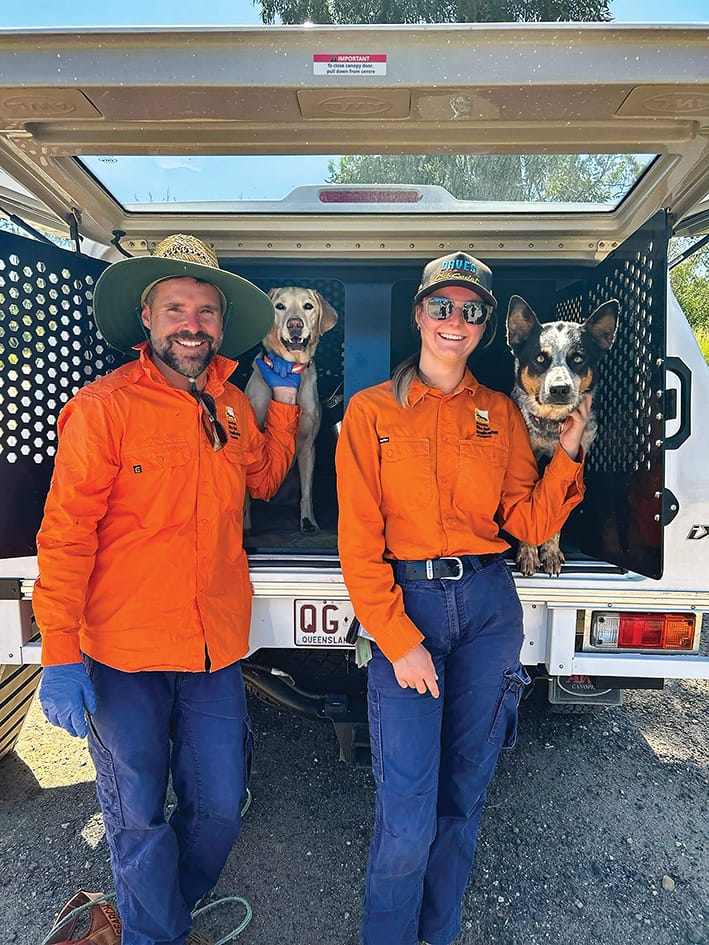
Pest Management Portfolio Councillor Cheryl Steinhardt said sniffer dogs play a critical role in the National Fire Ant Eradication Program (NFAEP).
“These dogs are simply amazing and can sniff out fire ants deep in the ground and find nests that are not easily detected by the naked eye, bypassing the many other ant species along the way,” she said.
“They uncovered fire ants on a Council site in Blenheim that we have now treated and will closely monitor.
“Without their help, these fire ants could have spread to neighbouring areas, so we are extremely grateful to have had these skilled canines in the region, who along with their handlers, form part of the NFAEP’s Odour Detection Dog Team.
Fire ants are one of the most invasive species in the world and are extremely destructive and aggressive.
“If left to spread, fire ants can have devastating consequences on our health, environment, economy, agriculture and outdoor way of life,” Cr Steinhardt said.
“Fire ants inflict painful stings repeatedly and in unison and can cause severe and potentially fatal allergic reactions in humans and animals.
“They can also fly up to five kilometres, making it challenging to contain their spread. This is why early detection is vital.”
Every Queenslander has a general biosecurity obligation to report suspected sightings of fire ants within 24 hours online at www.fireants.org.au or by calling 132 ANT (13 22 68).
Cr Steinhardt said Council has employed a dedicated Pest Management Officer to undertake fire ant surveillance and suppression treatment on Council-owned land. This proactive approach has helped manage fire ants in preparation for eradication treatment across parts of the Lockyer Valley.
“While Council is responsible for treating fire ants on Council-owned land, we are imploring residents to be on the lookout for nests around their homes and private property too, and report any suspected sightings immediately to the NFAEP,” Cr Steinhardt said.
“The places to look for fire ants on residential properties are lawns, footpaths, driveways, fence lines, garden beds and potted plants, near water sources and utility pits, including water and gas meters.
“On rural properties, check near dams and irrigation lines, edges of cultivated land, cropland, fence lines and in piles of organic matter.
“Fire ants come in various sizes (2-6mm) in the one nest and swarm aggressively when disturbed, and their nests look like mounds or patches of loose soil with no clear entry or exit holes.”
Learn more on how to identify fire ants and inspect your property at https://www.fireants.org.au/about-fire-ants/identify.


Thanks to the eradication program for all the work you do to keep Australia safe by eradication of these nasty fire ants ?