


Alex Nelson, Alice Springs News
When I moved to Pitchi Richi Sanctuary in October 2022, buffel grass smothered almost the entire site. Aside from a small area around the resident caretaker’s cottage, I assessed that buffel grass comprised a minimum of 99.9 per cent of the groundcover across the entire property. I commenced physical removal of the buffel in early December 2022.
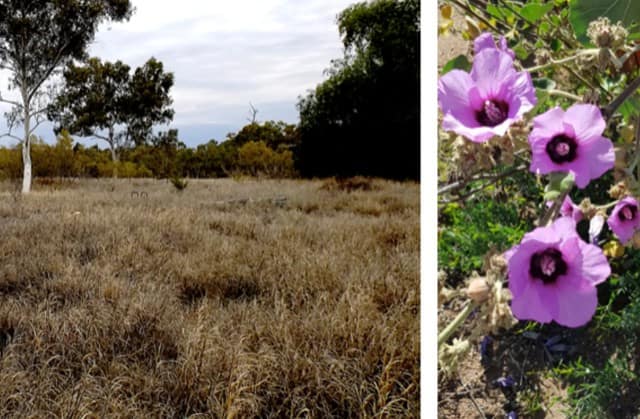
There was one native hibiscus (Radyera farragei) barely alive in the abandoned garden at the caretaker’s cottage. It was obviously planted there some years earlier. Aside from this individual, there was not one native hibiscus plant anywhere at Pitchi Richi.
Following heavy rain in April 2023, I was surprised to discover a few native hibiscus seedlings germinating in areas where I had recently cleared buffel grass. These young plants were a long distance from the struggling hibiscus at the cottage, so I surmised these had germinated from seed lying dormant in the soil for many years.
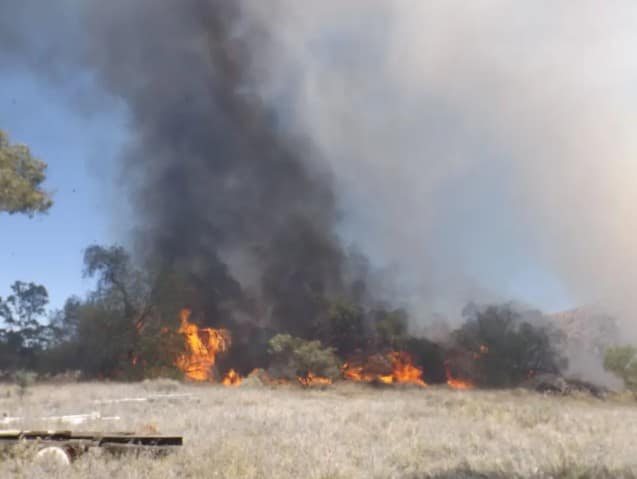
This was confirmed following the wildfire that swept across most of Pitchi Richi in late December 2023. Good rains during autumn and winter 2024 prompted a massive germination of thousands of native hibiscus seedlings where only a few months earlier there was no trace of this species in an area completely smothered in buffel grass. The seeds had been waiting many years, possibly decades, for the right conditions to enable germination.
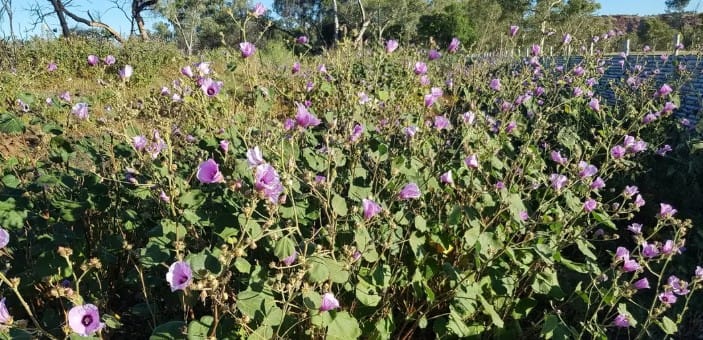
Follow-up control of buffel grass regrowth ensured the majority of the young hibiscus survived, and these plants, now shrubs over a metre high, dominate across parts of the old sanctuary with a spectacular display of blooms.
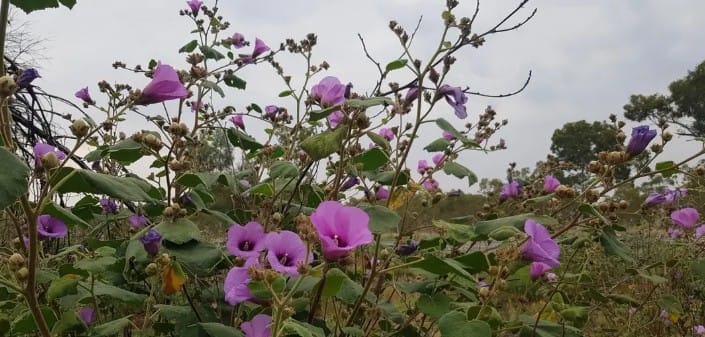
It’s obvious from this chain of events that native hibiscus, once common along the banks of rivers and creeks in Central Australia, is the ultimate “fireweed”; however, once established these tough plants can survive for many years.
Pitchi Richi Sanctuary is now a local stronghold of this magnificent wildflower; and this old conservation reserve – the first in Central Australia and probably the NT – holds promise for what could be achieved for the Todd River, helping to restore its true value as a major asset for Alice Springs.
This article appeared on Alice Springs News on 3 December 2025.
Related stories: buffel grass

