


Queensland University of Technology (QUT), Media Release, 27 November 2025
The world’s farms could become one of the most powerful tools in the fight against climate change according to a new international study led by QUT.
Published in Plant Physiology, the paper lays out a framework to assess how plant agriculture and synthetic biology innovations can help mitigate climate change by cutting greenhouse gas emissions and increasing carbon storage.
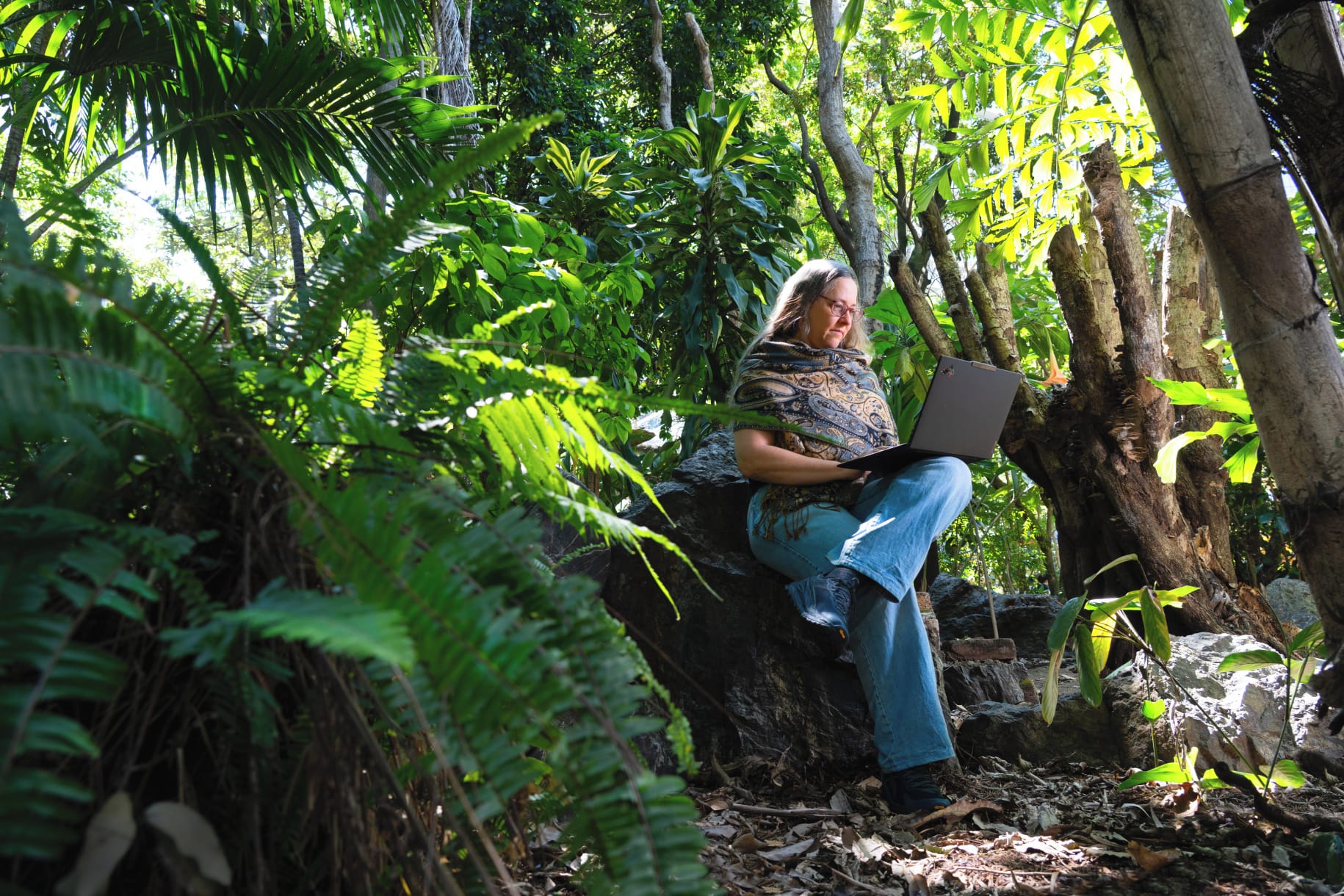
Lead author Professor Claudia Vickers, from the QUT School of Biology and Environmental Science, Centre for Agriculture and the Bioeconomy, QUT Centre for Environment and Society, and the ARC Centre of Excellence in Synthetic Biology, said that while farming contributes substantially to global emissions, its vast footprint means even modest improvements in carbon capture or emissions reduction can deliver global-scale impact.
“Global croplands are estimated to capture more than 115 gigatonnes of carbon dioxide annually through photosynthesis,” she said.
“Even modest improvements in how crops capture, use, and store that carbon, if applied across existing farmland, could deliver huge climate benefits.”
The study introduces a quantitative framework to compare the potential of different strategies – from bioengineering crop traits to non-genetic approaches like biochar and reforestation.
Professor Vickers said the framework helps compare “apples with apples” by considering not just the carbon captured per hectare, but also scalability, durability, technical feasibility and socioeconomic fit.
The researchers found that reducing reliance on synthetic nitrogen fertilisers could have the most immediate, large-scale effects, each offering gigatonne-level potential for carbon mitigation.
In the longer term, synthetic biology approaches could collectively contribute up to 260 gigatonnes of carbon dioxide equivalent drawdown over the next century.
The analysis shows that while the amount of carbon captured per hectare varies greatly across strategies, the ultimate impact depends most on the scale of deployment, and according to the authors, no single intervention will be sufficient.
Instead, a portfolio of strategies is needed, combining mature solutions that can be deployed immediately with innovations still in development.
Professor Vickers said that successful interventions must be technically feasible, economically viable, durable, and scalable, while ensuring minimal harm to ecosystems.
“Improving agricultural carbon sequestration also helps deliver to food, feed and fibre priorities, along with farmer income and security. This makes these solutions triple bottom line solutions – addressing social, environmental, and economic outcomes,” she said.
“Agriculture is uniquely positioned to both feed the world and fight climate change.
“But we need to focus on the interventions that can deliver meaningful, measurable outcomes. Our work provides a roadmap to do just that.”
Read the full paper, Harnessing Plant Agriculture to Mitigate Climate Change: A Framework to Evaluate Synthetic Biology (and other) Interventions, published in Plant Physiology, online.

