Sunrise Christian School Naracoorte principal Aaron Haines says there is a lot of misunderstanding about how independent schools are funded and is calling for a clearer, more balanced discussion.
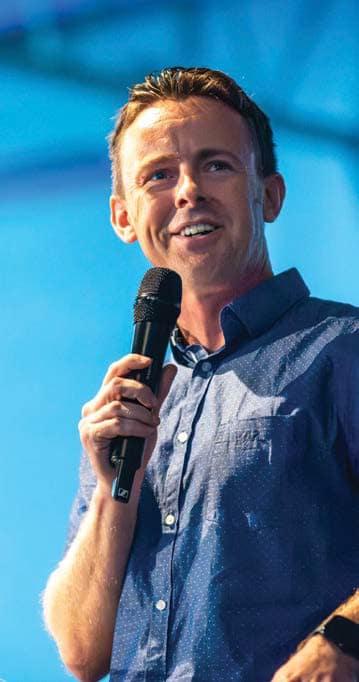
Mr Haines said school funding was incredibly complex, and all stakeholders had a responsibility to help teachers, parents, and the wider public understand how the Australian education system worked.
The principal’s comments come in response to an article published by this newspaper [The Naracoorte News] on July 23, 2025, titled “Private schools overfunded”.
The article reported on criticism from the Australian Education Union (AEU) SA, which raised concerns about unequal school funding in the state.
The union accused the government of continuing to overfund private schools while public schools struggle with limited resources.
This criticism followed the state government’s announcement that it will keep funding private schools at 22 per cent of the Schooling Resource Standard (SRS) until 2034.
Combined with the Commonwealth’s contribution of 81.6 per cent this year, private schools in South Australia will receive a total of 103.6 per cent of the SRS—surpassing the national funding benchmark.
But Mr Haines expressed concerns that the inaccurate portrayal of school funding undermined the shared goal of ensuring every student—regardless of which school they attended—was fully and fairly funded.
He said a number of independent schools were currently in the process of transitioning down to the Schooling Resource Standard (SRS) by 2029, a benchmark set by the federal government to guide fair education funding.
“These transition arrangements were put in place by the government to recognise the significant impact that changes to the funding model would have on many schools and allow operating models to be adjusted gradually over time,” Mr Haines said.
“Contrary to misleading claims from some critics that the ‘majority of independent schools are overfunded,’ the latest data suggests that less than a third of the 1216 independent schools nationwide are still transitioning.
“For many of these, funding levels may only be slightly above the SRS level. Independent schools are only partially funded, with the gap covered by family contributions,” he added.
Without transition arrangements, Mr Haines said schools would have no option but to implement fee increases for families.
“Given that 60 percent of families sending their students to independent schools are from low- to middle-income households, this would hurt the hundreds of thousands of everyday Australians making sacrifices to give their children the best education possible.
“Independent schools already receive far less government funding than government schools.
“On average, government funding for independent schools is nearly $10,000 less per student compared to government schools.”
The principal said this was because the funding model adjusted based on non-government school parents’ capacity to contribute.
“Schools with wealthier families receive as little as 20 percent of the SRS, while a government school with the same student population would receive 100 percent—regardless of parental income.”
Mr Haines said independent schools educated 716,000 students across the country, offering families a choice that reflected their values and aspirations.
This article appeared in The Naracoorte News, 13 August 2025.