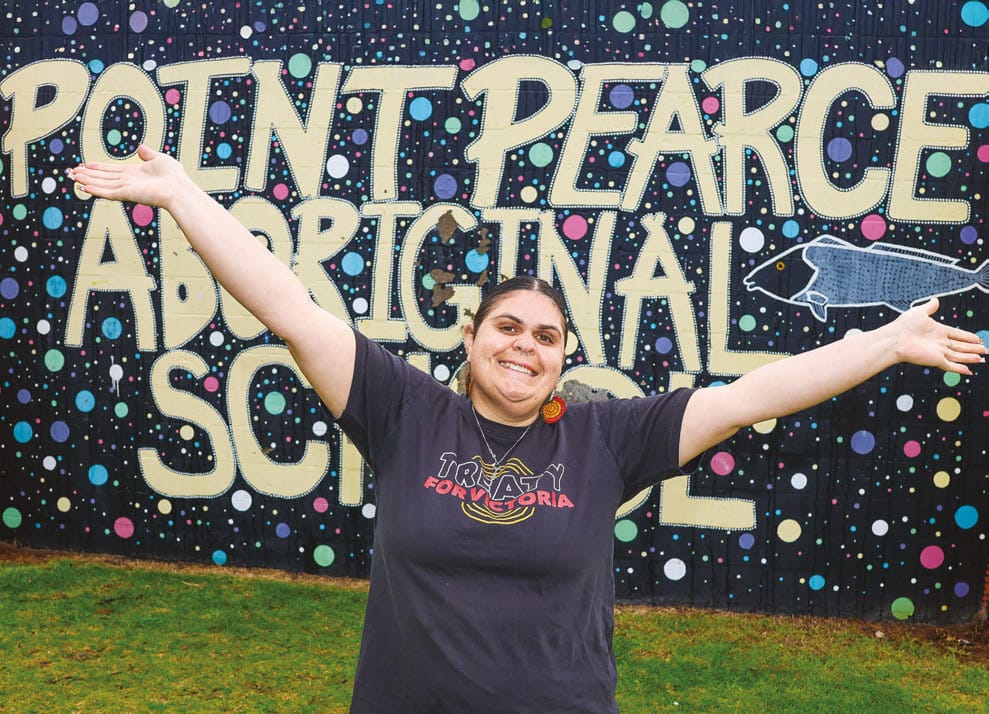
Rachel Hagan, Yorke Peninsula Country Times
A Point Pearce educator is reflecting on her personal journey with education and how the space needs to move forward as we recognise the next generation of young Aboriginal leaders for NAIDOC Week.
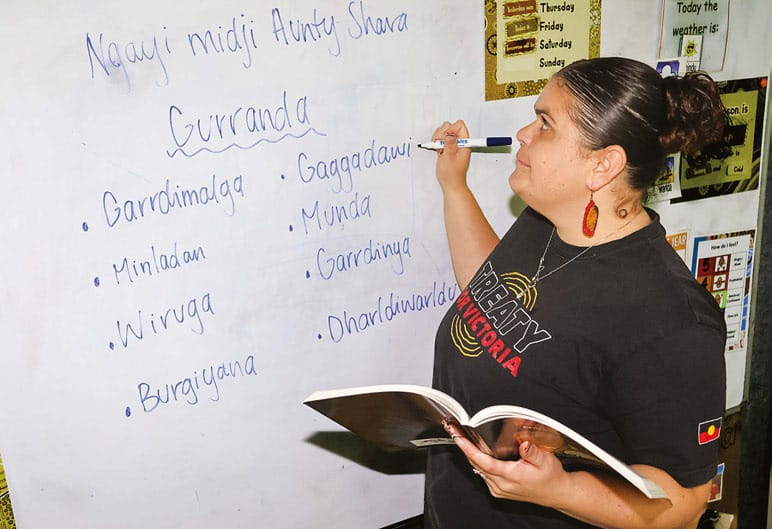
Tshara Rigney is a Aboriginal Community Education Officer and Point Pearce Aboriginal Corporation director who works at both the Point Pearce and Maitland campuses of Central Yorke School.
Her determination to become an educator stemmed from personal experience and the desire to do better for the next generation of Aboriginal children.
School is now a positive place for Ms Rigney, but growing up on the Yorke Peninsula this was not always the case.
“I grew up near Warooka, and at age five I remember being called my first slur… but when I got older, I would hear it more frequently,” Ms Rigney said.
“We get scared for our children because they are probably going to experience racism and feel the same way we did at some point in their childhood.
“As a society we may have come a little way since then, but it sometimes feels like we are going backwards.”
Despite this early experience, Ms Rigney said she has visited her old school as an educator, and has noticed the improved culture and much more inclusive space.
“It was almost healing for me,” she said.
The 2025 Closing the Gap report stated that placing culture at the forefront of education kept young people engaged and fostered their sense of identity, which was important for positive education outcomes.
One of the priority reforms the report outlined is shared decision making authority for First Nations people.
Even as an adult who is confident and proud of their identity, Ms Rigney said she and other Aboriginal people often have a big hurdle placed in front of them when in non-Aboriginal spaces.
“I feel like I’m always having to really push when I need something or even for people to just understand why I am asking and it can be quite mentally taxing,” Ms Rigney said.
“I’m very grateful for the support I do have in the right spaces, but sometimes it feels like I’m under a microscope and I have to fight that extra bit harder to be respected.
“From my own personal experience, I feel like I’m made to fit into someone else’s box and be what they think I should or should not be as an Aboriginal woman.
“I’m not given the opportunity to be in control of my narrative and sometimes Aboriginal people are put under the same blanket — it is assumed we do not have individuality, but we’re a very diverse community.”
This is why Ms Rigney is passionate about bringing all students, no matter their background, along for the ride.
She said she felt strongly about making sure all students felt welcome in Aboriginal spaces when invited to join in cultural activities.
Through her role as an educator, she said she has seen how well the next generation of non-Aboriginal students are embracing the culture of their Aboriginal peers.
“We want to share our culture because we are proud of it,” she said.
“I feel very privileged to be in the position that I’m in, and to be able to very slowly chip away at making a change.
“I know that it’s not going to happen overnight, but I am hoping to inspire and empower the next generation to stand up for change.”
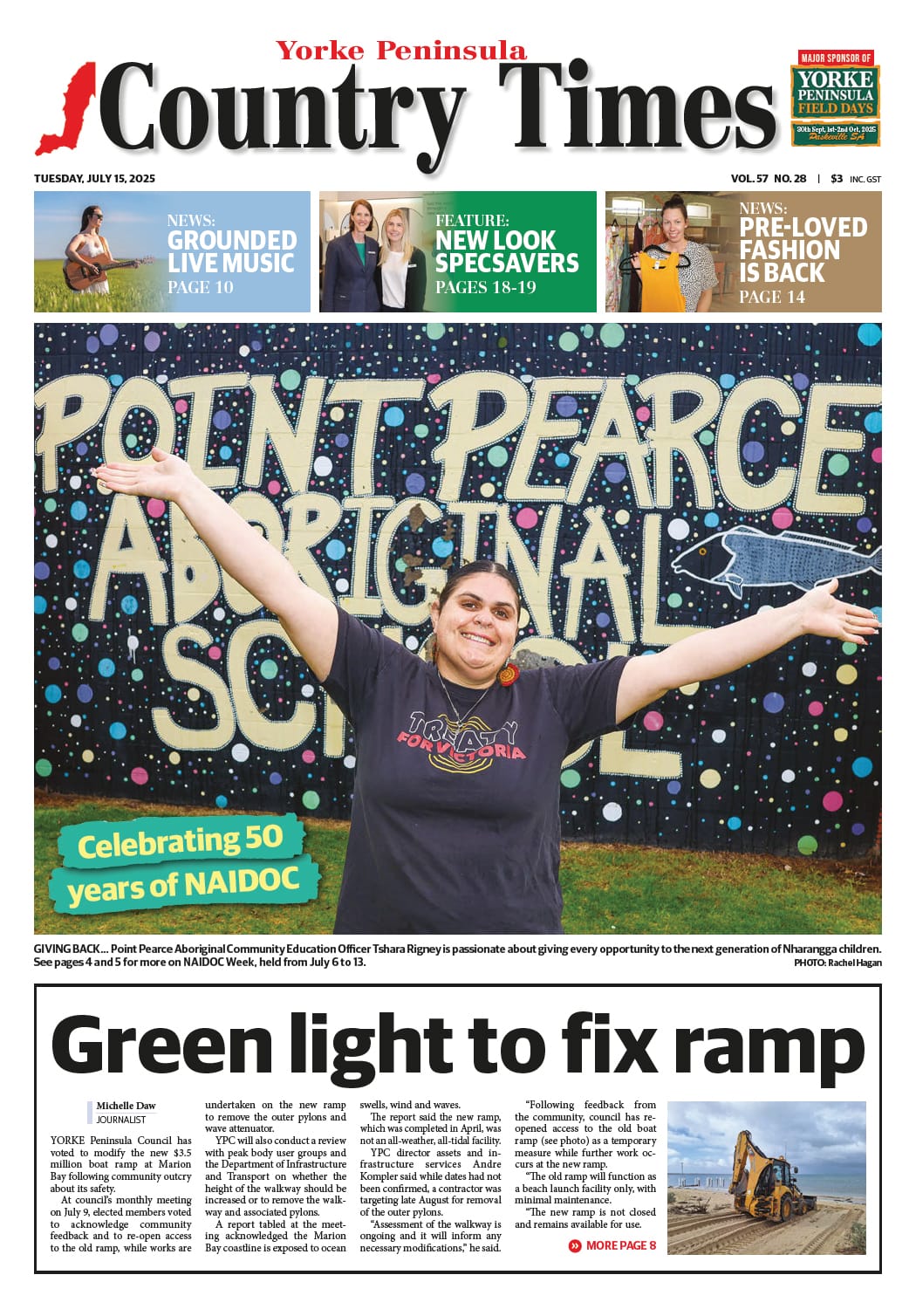
This article appeared in Yorke Peninsula Country Times, 15 July 2025.