

Ian McLaughlin, Toganmain Woolshed Precinct Inc, Narrandera Argus
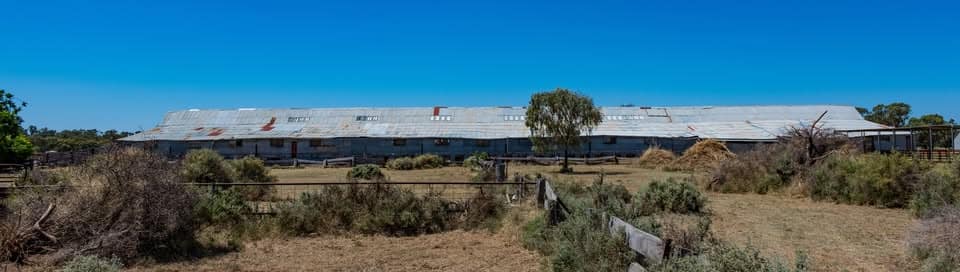
This June, the Riverina will come alive with the echoes of clippers, stories from generations past and the vibrant sounds of local music as the historic Toganmain Woolshed celebrates its 150th anniversary.
Situated along the Murrumbidgee River between Darlington Point and Carrathool, Toganmain Station has long stood as a testament to the rise and resilience of Australia’s wool industry.
Now, on the weekend of 14 and 15 June, the community is invited to commemorate this milestone at a celebration filled with storytelling, music, markets, and the unveiling of a new chapter in the site’s proud legacy.
A legacy of wool
First established by NSW Colonial Secretary Sir Alexander Macleay and later expanded under the Robertson family from 1867, Toganmain once spanned an extraordinary 67,600 hectares, with 21 kilometres of prized Murrumbidgee river frontage.
At its height, the property employed over 90 blade shearers and scores more rouseabouts, cooks, and wool scouring hands. In September 1876, Toganmain set an Australian record with 202,292 sheep shorn – a feat that has never been equalled.
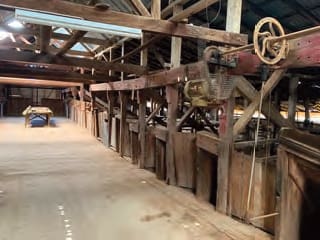
The heart of this pastoral powerhouse was its colossal woolshed. Constructed in 1875, the 73 by 24-metre structure remains the largest surviving woolshed in the NSW Riverina. Originally housing 110 blade stands, it later became one of the first Australian sheds to adopt the revolutionary Wolseley Sheep Shearing Machine. By 1888, 15 machines complemented 65 blade stands – ushering in a new era of wool production.
Beyond shearing, Toganmain was a thriving centre of rural industry and innovation. In the 1890s, a horse tramway linked the shed to the wool store and scouring facilities by the river. Electric lighting and telephone communications connected the homestead to its outstations years before such technology became common.
The grandeur of its early days gave way to decline as synthetic fibres rose, droughts took their toll, and wool’s dominance faded. Yet through the decades of change, the woolshed endured – its timber bones and corrugated iron shell bearing silent witness to the lives and labours of thousands.
The cultural heartbeat of a region
More than just a working structure, Toganmain Woolshed stands as one of the great “cathedrals of wool” built in a time when European markets clamoured for Australian fleece and optimism was boundless.
The woolshed and its associated buildings – including the shearers’ quarters, barracks, blacksmith’s shop, and wool store – formed a small colony of labour and life on the riverbank.
Toganmain’s reputation stretched across oceans. Its fleece was prized in both Australian and English wool circles, consistently praised for its quality and style. The site embodies not just a history of agricultural endeavour, but also of community, innovation, and the broader sweep of rural life in Australia.
As Peter Freeman, architectural historian and author of Historic Shearing Sheds, explains: “We’ve already lost many significant buildings across Australia. Our vision is to create a cultural attraction that will educate visitors and preserve that piece of history for generations to come.”
A revival for the future
After years of neglect under cropping-focused ownership in the late 20th century, the woolshed fell into disrepair. But a growing group of passionate volunteers – known as the Friends of Toganmain – have spent more than a decade working to preserve and restore the precinct.
What began as the Friends of Toganmain has since evolved into Toganmain Woolshed Precinct Incorporated, a not-for-profit association dedicated to safeguarding this unique heritage site.
Their vision is ambitious: to transform the woolshed into an immersive museum experience that tells the stories of shearers, Indigenous custodians and pastoral pioneers. Oral histories, static displays, interpretative signage, and community engagement will combine to create a unique heritage tourism destination.
A key milestone in this journey was reached with the woolshed’s official listing on the NSW State Heritage Register earlier this year. Now designated as SHR 02097, the listing not only recognises the site’s immense historical significance but also opens the door to heritage grants and sustainable tourism development.
The woolshed stands on Wiradjuri land, and the enduring connection of the Wiradjuri people to this Country is acknowledged through nearby scar trees and cultural practices that stretch back thousands of years. The planned museum and educational programs will honour this deep history and promote respectful cultural engagement.
Easter working bee brings the vision to life
Coming into Easter, it was touch and go whether the 150th Celebration weekend would go ahead. Thanks to the efforts of a far-flung team of volunteers – and the ongoing work being done on a weekly, almost daily basis by the local crew – the dream is now a reality.
Over the Easter long weekend, people travelled from across Victoria, Queensland, South Australia, and along the east coast to help bring Toganmain back to life.
A pair of electricians spent over a week bringing the wiring up to standard, including installing a long string of lights down the main board – set to add stunning atmosphere to Saturday night’s celebration dinner. A retired builder followed to patch and tidy in their wake.
The Hawks Nest Men’s Shed team raised a sinking floor inside the shed, crawling beneath the structure with only the occasional head seen popping up through the floorboards. A separate crew milled a locally sourced fallen cypress into timber for a new ramp, ensuring safe access for all.
A couple volunteering for the first time tackled a bathroom makeover – cleaning, tiling and painting – while a pair of bricklayers repaired and reignited the large wood-fired oven, which was promptly used to cook pizzas for the volunteers.
Others painted quarters to make them liveable, swept out mountains of blow grass, prepared meals and replaced floorboards around the precinct.
Since then, locals have continued putting in countless hours to ready the site for the big weekend.
Meanwhile, other volunteers have supported the project from further afield. The successful application for the NSW heritage listing took months of dedicated work.
New designs for merchandise were created to help people across Australia feel part of the project. Graphic design work delivered new banners and brochures to promote the event, and a new website was launched to streamline communication and keep supporters informed.
All of this was done by volunteers. And now, Toganmain is ready to welcome you.
A celebration 150 years in the making
The 150th Celebration Weekend on 14-15 June is a heartfelt tribute to Toganmain’s storied past and an exciting look at its future.
Saturday night’s dinner – already booked out – is set to be a memorable affair: under the woolshed lights on the main shearing board, guests will enjoy a country-style meal, guest speakers, storytelling, live music, and a bonfire to close the evening. The atmosphere will reflect Toganmain’s blend of elegance and bush character, with a dress code of “smart warm casual with a touch of country charm.”
Throughout Saturday and Sunday, the woolshed precinct will be open to the public with day passes available. Local band Stickie Fingers will provide a festive soundtrack across both days. Food vendors and market stalls will offer regional delights and handmade wares, while guides stationed throughout the shed and around the precinct will be on hand to assist and answer questions about its historic features.
Saturday morning will feature the official book launch of Toganmain: Then and Now by Lexie Keane, a richly illustrated volume chronicling the station’s people, architecture, and evolution. Lexie worked from Brisbane to gather stories, connecting with former workers, descendants, and friends through social media and word of mouth. Thanks to a generous donor covering all printing costs, every dollar spent on the book will go directly to restoration efforts.
The Dining Room will also host static displays curated by the volunteer committee, including historical photographs, tools of the trade, and a tribute to the many shearers who lived and worked on-site.
Community spirit on display
True to its roots, the 150th weekend is also a fundraiser. A community raffle is now open, with tickets just $5 and prizes ranging from a handcrafted timber-framed photo by Julie Clarke and Jarom Stokes, to a BCF-donated campfire unit, and garden sculptures by local artist Marija Maclean.
All proceeds go towards the ongoing conservation and restoration of the precinct, helping ensure that Toganmain continues to inspire future generations.
A living link to Australia’s wool story
As the region gathers to celebrate Toganmain’s 150 years, the focus is on more than nostalgia. This is about reconnecting with a defining part of Riverina identity – where generations found work, built communities, and forged Australia’s international reputation as the world’s wool powerhouse.
The woolshed stands not just as a relic, but as a symbol of resilience and renewal.
Thanks to tireless volunteers and widespread community support, it is being reimagined as a place of learning, reflection, and pride.
Whether you’re a local, a descendant of a shearer, or a visitor drawn by history, the 150th Celebration weekend promises a unique opportunity to walk through the doors of Australia’s wool heritage – into a story still being written.
For full program details, ticketing information, and updates, go to https://www.toganmain.org.au.
This article appeared in Narrandera Argus, 5 June 2025.

