When does a bank cease to be a bank?
Seven months ago, at a hearing of the Federal Government’s House Economics Committee in August 2024, Labor MP Tania Lawrence attempted to ask ANZ Bank chief executive Shayne Elliott about ANZ refusing to accept cash at the counter from customers.
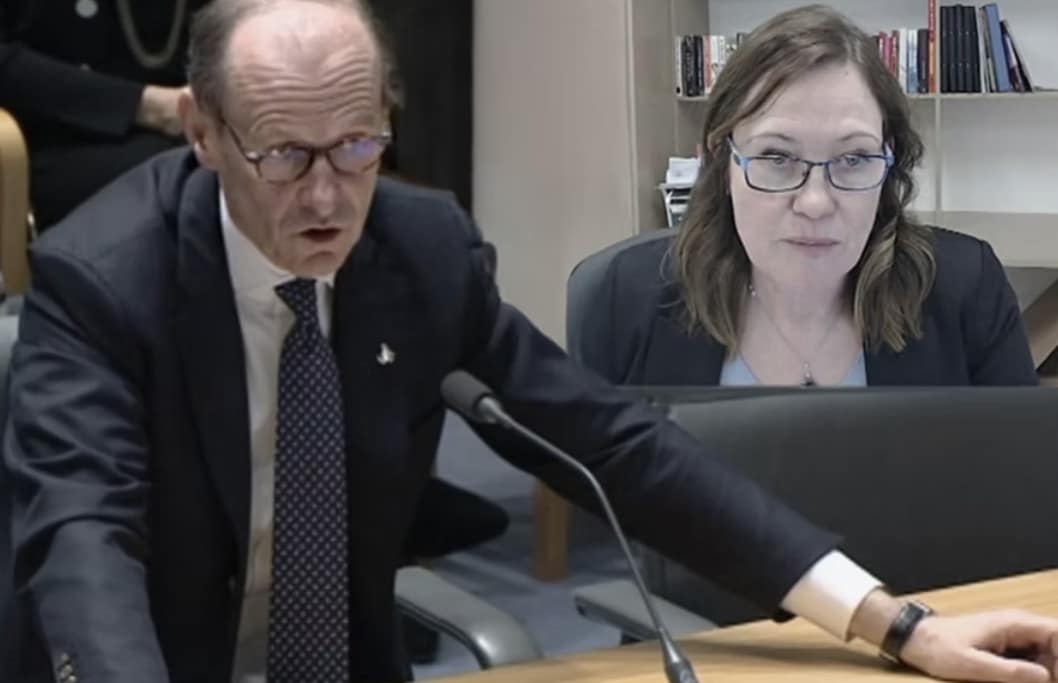
Mr Elliott cut her off before she could finish her question, attempting to shut down any reference to counter service, or as it is generally referred to in Australia and internationally, “cash service”.
“When you say at the counter,” Mr Elliott said, “all of our branches accept cash. Some do it only, though, through ATMs.”
Ms Lawrence noted that she understood of the cost of running bank branch networks but then summed up in just one sentence Australia’s collective confusion over the trend towards cashless banks.
“But that’s kind of the business you’re in,” she said incredulously, before tearing into Mr Elliott over the customers he is leaving behind by “forgetting what the core service and business model (of his bank) actually is”.
As of March 2025, ANZ is just a handful of branches away from the majority of its banks in the most populated areas of Australia being cashless.
Victoria has already hit the milestone, with ANZ stripping cash service from 43 out of 76 sites in the Melbourne CBD, suburbs and Geelong, where its branch network has been reduced to just 33.
This fundamental change to Australia’s fourth largest bank’s business model has occurred quietly over the past two years, with ANZ rolling out the branch-to-office conversions on a site-by-site basis.
On its website, the cashless branches are called “specialist hubs” and the bank acknowledges they are tellerless.
Currently, there is no requirement under ANZ’s licence to advise the Government of its decision to discontinue cash service – the bank only has to be honest about what level of service is available at a site when reporting for the Australian Prudential Regulation Authority’s annual points of presence data collection.
This has largely been done, but with the regulator (APRA) not providing any analysis of the data, cashless sites are indistinguishable from other offices reported by banks.
The only flag that ANZ was going cashless has been its shrinking branch list while its office list (under “other face-to-face”) has burgeoned.
Nationally, 113 former ANZ branches will no longer provide cash service to personal customers in Australia’s major cities, leaving just 127 where anyone unable to use an ATM can deposit or withdraw cash or obtain assistance from a teller with transactions.
There are indications Coburg in Victoria and Capalaba in Queensland could be the next branches to go.
Regional Australia – all locations outside the capital cities – has lost 20 branches to cashlessness, with most of these in the major regional cities of Geelong, Newcastle and Wollongong and on the Sunshine and Gold coasts.
The exceptions to this are sites at the less populated Wodonga in Victoria, which was scrubbed from ANZ’s branch network in 2023, and Mackay in Queensland, which was removed some time after June 30 last year.
The Mackay downgrade is problematic for the Federal Government because it occurred in defiance of a deal ANZ made with Treasurer Jim Chalmers to not to reduce its regional branch footprint for three years from June 28, 2024, in return for being allowed to purchase Suncorp Bank.
ANZ came under intense scrutiny when it closed its branch in the regional town of Katoomba in October last year after the Suncorp deal had been signed but escaped penalty by exploiting a loophole over the “major cities” classification APRA uses to report its points of presence data.
The loophole does not apply to Mackay, which APRA classifies as inner regional.
In another headache for ANZ, the number of lost ANZ branches also includes sites where cash service is only provided to business customers, with data reporting legislation clear on the requirement that for a site to be classified as a branch, it must provide face-to-face cash service to both personal and business customers.
ANZ reported 12 sites that do not provide cash service to personal customers as branches to APRA in 2024 when they should have been listed as offices.
As for the other major banks, NAB’s cashless banks are known as “expert centre (tellerless)”, “self service tellerless branch” and occasionally, “pop-up tellerless branch”. Before this they were referred to as “digital self-serve cashless branches”, which replaced “digital store branches”.
In total, NAB’s cashless banks number 27, eight of which were downgraded from branches in the past eight months.
The Commonwealth does not disclose to customers whether it has removed tellers/cash service from branches but it is highly likely any sites listed by the bank as “specialist centres” are former branches that have had cash service removed.
There are 12 sites that meet this criterion among the 47 “other face-to-face” locations reported to APRA in 2024, most having changed over in 2022 and 2023.
Two of these sites have closed since the 2023-2024 data period but according to the bank’s website – and despite the Commonwealth’s chief executive Matt Comyn telling customers in February that the bank is committed to cash – another three have been added in Sydney and Melbourne since June 30 last year, bringing CBA’s current total of cashless banks to 13.
Westpac is a mystery.
It is either bucking the trend and maintaining cash service at all its branches or not reporting the removal of tellers to the Government. Given that there were credible anecdotal reports of a Westpac branch in Mandurah WA having cash service removed in 2022, this is a question best left to APRA to investigate.
Locations of Australia’s cashless ANZ, NAB and Commonwealth banks – interactive map
View Australia’s cashless banks in a full screen map
Cash access
Cashless banks are a major contributing factor in the decline in cash access worldwide.
The term “cash access” is used to describe everything that goes into supporting the use of cash in society, from being able to withdraw and deposit banknotes and coin at your local bank, to where that money can be used.
When banks change their business model to become cashless, they are stepping away from one of the core responsibilities they have always fulfilled in a community, which is to protect cash access.
While cash is still legal tender and there are people who cannot for a variety of reasons use digital technology, a bank being made cashless has the same impact as a branch being closed – for businesses it becomes harder and more expensive to manage cash flow and for individuals there is a risk of people becoming financially excluded.
With financial exclusion comes welfare issues.
In Australia, the national Digital Inclusion Index puts the number of people who are excluded from the digital world, and as a result rely on face-to-face banking, at 23.6 per cent of the population, or almost 6.3 million people.
For many of the most disadvantaged, the latest release of digital inclusion data shows the situation is not improving, with some people with lower digital ability scores going significantly backwards over the past three years, including those on the lowest incomes and those aged over 75.
This means that as ANZ accelerated towards a mainly cashless bank network in Australia’s major cities, digital ability in the nation’s most vulnerable demographics has been in decline.
It’s a worrying fact on the back of Governor of the Reserve Bank Michele Bullock telling parliament last month she believed Australia would be cashless in 10 years.
Her comments were criticised as being ill-informed by cash advocates but if Ms Bullock seriously thinks this may come to pass, she has a responsibility to get up to speed on the issue and take note of the experiences of other countries.
Overseas, banks removing cash service and pushing customers on to their own digital payment systems has been the trigger for the collapse of cash access and progression towards “cashless societies”.
Sweden has gone the furthest down this path, with in-store cash payments falling to their lowest level ever recorded in 2022 at eight per cent of total expenditure.
Since then, cash payments have gained ground, moving up to 10 per cent in 2023, but Sweden’s central bank, Sveriges Riksbank, says cash in circulation and cash withdrawal figures indicate cash use is still in decline.
Sweden like many countries has been accused at times of sleepwalking into cashlessness, but both the government and central bank have made it very clear since the late 2010s that due to welfare, economic and even security reasons, this is not a situation they want to see continue.
Legislation forcing the country’s largest banks to provide basic deposit and withdrawal services passed in 2021.
The new Sveriges Riksbank Act of 2023 has also seen the central bank take on clearer and partly expanded responsibility for cash infrastructure and the Government is now consulting on legislation to protect the right to pay cash for essential items.
In Australia, ANZ is now at the forefront of pushing a behaviour change to “digital only” thanks to no regulatory controls over the provision of cash service.
While the Government has been skirting around the more obvious problems of branch closures and the acceptance of cash, it has overlooked the role cashless banks are playing in the decline of cash access.
Both the Government and the Reserve Bank’s understanding of the issue appears poor.
Banks where cash service has been removed did not even rate a mention in a Reserve Bank report on cash access published earlier this year.
The report also missed the mark badly in assuming post offices and ATMs are maintaining access levels where banks have been closed.
Had any of the researchers read or listened to even a small proportion of the evidence presented to the 2023-24 Senate Inquiry Into Regional Bank Closures they would know cash availability at post offices is inconsistent and not guaranteed, ATMs are often empty or out of service for days and many banks that do remain are only opening for a few hours, two or three days a week.
There are critical lessons to be learnt from Sweden on protecting cash access.
The Riksbank has not tip-toed around calling out banks for the role they have played in Sweden’s “march to cashless”, with its Technical Manager for Banknotes and Coins, Marten Gomer, saying the “Swedish banks have been working towards a cashless future since before 2010”.
“They have actively tried to get their customers to pay with digital alternatives, promoted cashless and closed down cash handling in their offices,” he said.
“In hindsight, I think we acted too late.
“The legislation around cash and legal tender should have been strengthened much earlier and the role of who is responsible for taking care of retailers and private persons’ access to cash services should have been much clearer.
“It is difficult for us now to make regulations that make sense, since much of the cash services is gone and very few people need cash and very few people pay with cash.
“The problem is the relative few that can’t or don’t want to pay with cards or phones, they are at risk of being left behind.
“Also, for preparedness and continuity, there is no solution except cash.”
If the Australian Government is, as it says, genuinely committed to protecting cash access, the introduction of mandatory reporting of cashless banks is essential.
It also needs to make a decision on whether a bank with more cashless sites than those providing cash service should still be allowed to call itself a bank and enjoy the full privileges of its licence to operate.
Financial Sector (Shareholdings) (Suncorp-Metway Limited) Instrument 2024 – Download
Update: ANZ closed its Sydney Rd Coburg branch on March 18, 2025, moving the BSB number to a new site at the former Pentridge Prison as a cashless specialist hub.
This article appeared at The Regional on 17 March 2025.
Stories on The Regional’s website are free to read and always will be.
If you enjoyed this article you can show your support by joining our mailing list
(either by filling out the form on our Home page or sending us an email or message).
We’d also get very excited if you put a “like” on our Facebook page.