Red Imported Fire Ant detections have increased around the NSW border since the highly invasive pests were found at Tallebudgera, 6km across the border into Queensland, in July 2023, with 7 additional sites resulting in an Emergency Biosecurity Order that has just been extended.
Implemented on July 17, 2024, the Biosecurity (Fire Ant) Emergency Order made by Chief Invasive Species Officer, Scott Charlton, was extended on August 6 for another 6 months.
“The introduction, presence and spread of fire ants in New South Wales may have a significant biosecurity impact to the economy, the environment, and the community because of the ability of fire ant colonies to harm ecosystems, reduce crop yields, harm human health, damage infrastructure, and prevent the use of outdoor and amenity areas,” the order states.
Since the detection at Tallebudgera, 132 Fire Ant nests have been found at 7 locations south of the Fire Ant infested area in Queensland, within 18 km of the NSW border.
Fire Ants were detected at South Murwillumbah on November 24, 2023, then this year at Wardell on January 19, at Currumbin Waters, Queensland, on March 6, at Oakey, Queensland, on April 18, at Meringandan West, Queensland, on May 14, on May 22 at Currumbin Waters, Queensland, at Nirimba, Queensland, on May 29, at Currimundi, Queensland, on July 12.
Most recently, Fire Ant detection dogs sniffed out foraging ants on the same Wardell site on July 11, which were destroyed.
The Biosecurity Emergency Order restricts the movement of Fire Ant carrier materials into NSW from the infected area in Queensland, and the movement of materials from affected areas in NSW around the state.
How to identify Red Fire Ants and their nest
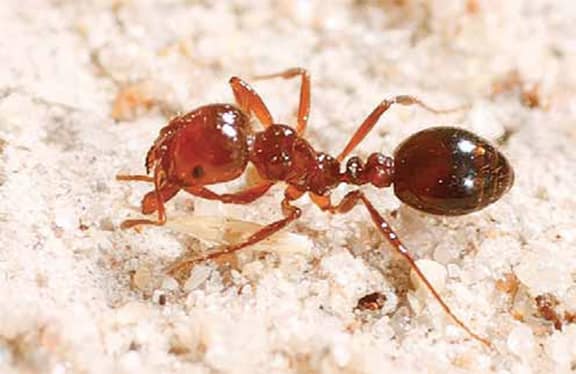
Red Fire Ants have four characteristics that set them apart from other ants:
- They are 2 to 6 mm long, a variety of sizes live within a nest;
- they are dark reddish-brown in colour;
- they have darker brown-black abdomens;
- they are aggressive and if disturbed hundreds of ants will come out of a nest and try to sting over and over.
When magnified, Red Fire Ants have two segments in their waist section.
Red Fire Ant nests are typically mounds of flattish patches of soil with no obvious entrance holes, they can be up to 40 cm high and are usually built higher in colder weather.
Nests can be found around pits for water, gas, or telecommunications infrastructure, near water sources, along footpaths and driveways, next to and under timber, pot plants, pavers, rocks, logs, or bricks, while in rural areas check around dams and irrigation lines, along the edges of cultivated land, along fence lines and cropped land.
Smaller nests may not be obvious and can be found in gardens, on roadsides, landslips, or on eroded or exposed soil from earthworks, plus nests have also been found in piles of organic matter or hay bales.
If you locate a Red Fire Ant nest, as they will attack and sting if disturbed, it is recommended to wear latex gloves and gently prod the edge of the nest with a stick, if they are Fire Ants they will run up the stick towards you, so quickly spray the ants with a can of household insect spray and wipe the sprayed ants onto a tissue.
Take photos of the dead ants on the tissue and submit the photos via the online form at https://www.dpi.nsw.gov.au/biosecurity/forms/report-exotic-ants or email the photos to invasive.species@dpi.nsw.gov.au
Keep the dead ants and the tissue in a container or plastic bag in case NSW DPI wants to check them.
For more information visit https://www.dpi.nsw.gov.au/dpi/bfs/insect-pests/rifa

This article appeared in the Clarence Valley Independent, 14 August.