


Forest & Wood Communities Australia (FWCA), Media Release, 23 June 2026.
Forest & Wood Communities Australia (FWCA) has written to Macquarie University researcher Dr Carmen da Silva seeking clarification regarding comments made during a recent ABC Sydney Radio interview in which she stated that Australians need to “try to stop native forest logging” in order to help protect native bees.
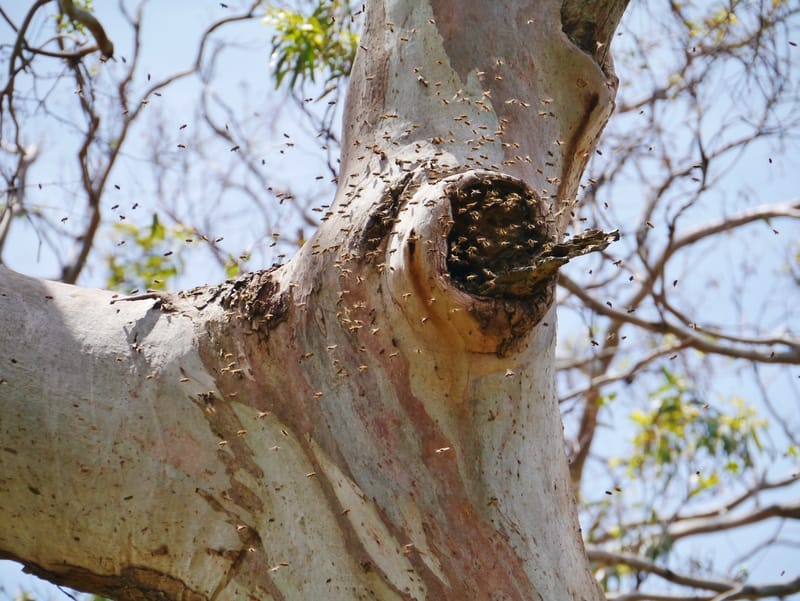
FWCA Chair Steve Dobbyns said the organisation welcomed the research and acknowledged the importance of understanding the challenges facing Australia’s native bee populations under a changing climate.
“Native bees are an important but often overlooked component of Australia’s biodiversity, and research that improves our understanding of their ecology and climate vulnerability should be encouraged,” Mr Dobbyns said.
“However, after reviewing Dr da Silva’s recently published paper, FWCA has been unable to identify how a recommendation to cease native forest logging arose from research that appears not to have examined forestry as a causal factor.”
Mr Dobbyns said the study focused on the thermal tolerance of 95 Australian native bee species and examined how nesting behaviour influences vulnerability to rising temperatures.
“The paper investigated climate vulnerability, heat tolerance and nesting ecology,” he said.
“It did not compare logged and unlogged forests, assess the impacts of timber harvesting on bee populations, measure bee abundance before and after harvesting operations, or attempt to isolate forestry impacts from other environmental variables.”
FWCA has asked Dr da Silva to clarify whether her statement that Australia should stop native forest logging was:
- a conclusion arising from the research itself;
- based on a separate body of scientific literature not discussed in the interview; or
- a personal opinion regarding native forest management policy.
“If there is a body of scientific evidence demonstrating that contemporary regulated native forest harvesting contributes to native bee decline, then that evidence should be identified and openly discussed,” Mr Dobbyns said.
“If not, then it is important that the distinction between scientific findings and personal policy views is made clear.”
Mr Dobbyns said the issue was not about restricting academic freedom but about maintaining public confidence in science.
“Researchers are entitled to hold and express personal views on public policy issues,” he said.
“However, when policy recommendations are presented during discussion of scientific research, many listeners will reasonably assume those recommendations are supported by the evidence being discussed.”
“Where that connection is unclear, it is appropriate to seek clarification.”
Mr Dobbyns also noted that the study identified climate warming and temperature exposure as the primary mechanisms influencing native bee vulnerability.
“This naturally raises broader questions about other landscape-scale disturbances that may alter forest microclimates, including drought, forest decline and severe bushfires,” he said.
“High-intensity bushfires can remove canopy cover, increase ground temperatures, destroy nesting resources and reduce flowering across extensive landscapes for many years.”
“These factors appear directly relevant to the mechanisms identified in the study and may warrant further investigation.”
Mr Dobbyns said FWCA looked forward to Dr da Silva’s response.
“Good science is strengthened through open discussion, scrutiny and evidence,” he said.
“We are simply seeking clarification about the scientific basis for a statement that has the potential to influence public policy and public perceptions about native forest management.”
Australian Rural & Regional News has also invited Dr da Silva’s response and will publish it in full once received.

