


The Hon. Peter Malinauskas, Premier of South Australia, The Hon. Clare Scriven, Minister for Primary Industries and Regional Development (SA), The Hon. Emily Bourke, Minister for Climate, Environment and Water (SA), Joint Media Release, 23 June 2026.
Wildlife and livestock surveillance activities are underway in South Australia following the detection of H5 bird flu in two vagrant migratory seabirds in Western Australia.
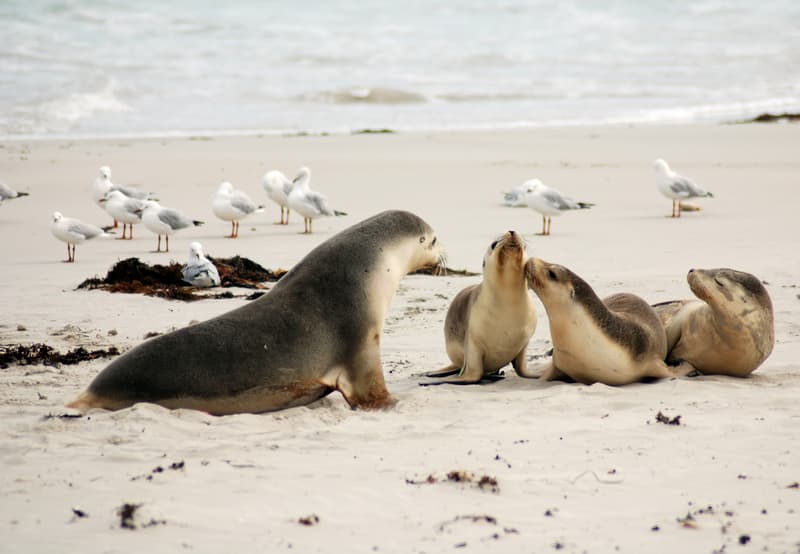
Ground-based surveillance and drone surveys are being undertaken at sea lion breeding sites along the state’s west and far west coasts, as part of a coordinated response to the ongoing risk of H5 bird flu spreading to SA.
While there are currently no confirmed detections of H5 bird flu in South Australia, the Malinauskas Government has undertaken significant preparedness activities over recent years to strengthen the state’s readiness for any potential incursion.
This includes the amplification of bird flu surveillance, with an increase in the number of locations regularly surveyed and increased testing frequency around SA’s highest-risk areas.
Officers from the Department of Primary Industries and Regions South Australia (PIRSA) and the Department of Environment and Water (DEW) are closely monitoring sea lions, birds and other wildlife in these areas for signs of illness or mass mortality.
The South Australian Research and Development Institute (SARDI) will build on this coastal surveillance work through helicopter-supported aerial and ground surveys of sea lion breeding sites between Ceduna and the WA border – including offshore islands and the Bunda Cliffs – as well as key offshore island breeding sites off the central west coast of Eyre Peninsula.
The Government has also been working with poultry and other livestock industries to ensure they understand their reporting pathways and are preparing to manage any potential on-farm detection of H5 bird flu.
The Malinauskas and Albanese Governments have invested a combined $8.1 million into PIRSA to strengthen emergency animal disease preparedness, surveillance, diagnostics, workforce capability and response readiness.
Other preparedness efforts have included training and simulation exercises, additional investment in specialised response capabilities including mobile diagnostic laboratories, decontamination units and other fit-for-purpose equipment to enable rapid deployment and on-ground responses, and other targeted environmental and wildlife activities.
A further $3.5 million has been invested into DEW to support activities to prepare for, build on-ground resilience in, and support response efforts for the environment and our wildlife, including:
- Management and response planning in key areas such as Seal Bay Conservation Park, Coorong National Park, Adelaide International Bird Sanctuary National Park, and Adelaide International Dolphin Sanctuary.
- Habitat restoration and feral bird control on offshore islands of Fleurieu Peninsula.
- Predator control and habitat restoration to safeguard migratory and threatened birds on the Limestone Coast.
- Fox and feral cat control to protect bird species’ breeding, nesting and roosting sites along the metropolitan coast.
- Feral pig control at the Coongie Lakes Ramsar site in the Far North.
- Facilities dedicated to the protection of threatened species across the state.
- Inoculating sea lions and installing pup shelters for exposure protection.
- Feral cat control around Seal Bay, noting that feral cats are potential vectors for H5 bird flu.
Federal funding has also been allocated to the Zoo and Aquarium Association to help safeguard threatened native species at Cleland Wildlife Park, Adelaide Zoo and Monarto Safari Park.
The community is urged to be vigilant and report any dead or sick birds or wildlife showing signs of bird flu. Possible signs of bird flu in birds include:
- Multiple sick or dead birds in one location
- Weakness, inability to stand or fly
- Neurological signs or abnormal behaviour
- Swelling or discolouration
- Respiratory distress
If you see sick or dead birds or other wildlife, do not touch them. Avoid contact. Record what you see. Report it to the Emergency Animal Disease Hotline on 1800 675 888 from anywhere in Australia.
For more information visit birdflu.gov.au. For more information on bird flu preparedness in SA, visit pir.sa.gov.au/avian-influenza.
Quotes attributable to Peter Malinauskas
H5 bird flu has not yet been detected in our state, but we have been busy doing the work to ensure we are well prepared for the real possibility that it does arrive.
This includes the amplification of our bird flu surveillance, with an increase in the number of locations regularly surveyed and increased testing frequency around SA’s highest-risk areas.
South Australians can assist this effort by being alert, and reporting to the Emergency Animal Disease hotline any dead or sick birds, or other wildlife showing signs of bird flu.
Quotes attributable to Clare Scriven
While H5 bird flu has not been detected in South Australia, we remain vigilant and ready to respond to any potential future incursion.
We have boots on the ground and have deployed a range of resources to stay ahead of the bird flu detection in Western Australia.
Our Government has also been working alongside the state’s poultry industry and other livestock producers to ensure they are ready to respond to and manage any potential on-farm detection.
I encourage everyone to remain alert and report any birds or other wildlife displaying weakness, respiratory distress or other abnormal behaviours to the Emergency Animal Disease Hotline.
Quotes attributable to Emily Bourke
We are closely monitoring wildlife along the west and far west coasts, on top of the extensive work we have been undertaking in recent years to prepare for the eventual arrival of H5 bird flu in Australia.
We have been working closely with wildlife organisations to build ecological resilience for our threatened species through habitat restoration, weed and pest control.
This work is crucial because we know that healthy wildlife populations have the best chance of recovery when a detection occurs.
We can all play a role in achieving the strongest response to H5 bird flu by being alert and reporting any birds or other wildlife displaying weakness, respiratory distress or abnormal behaviour to the Emergency Animal Disease Hotline.

