


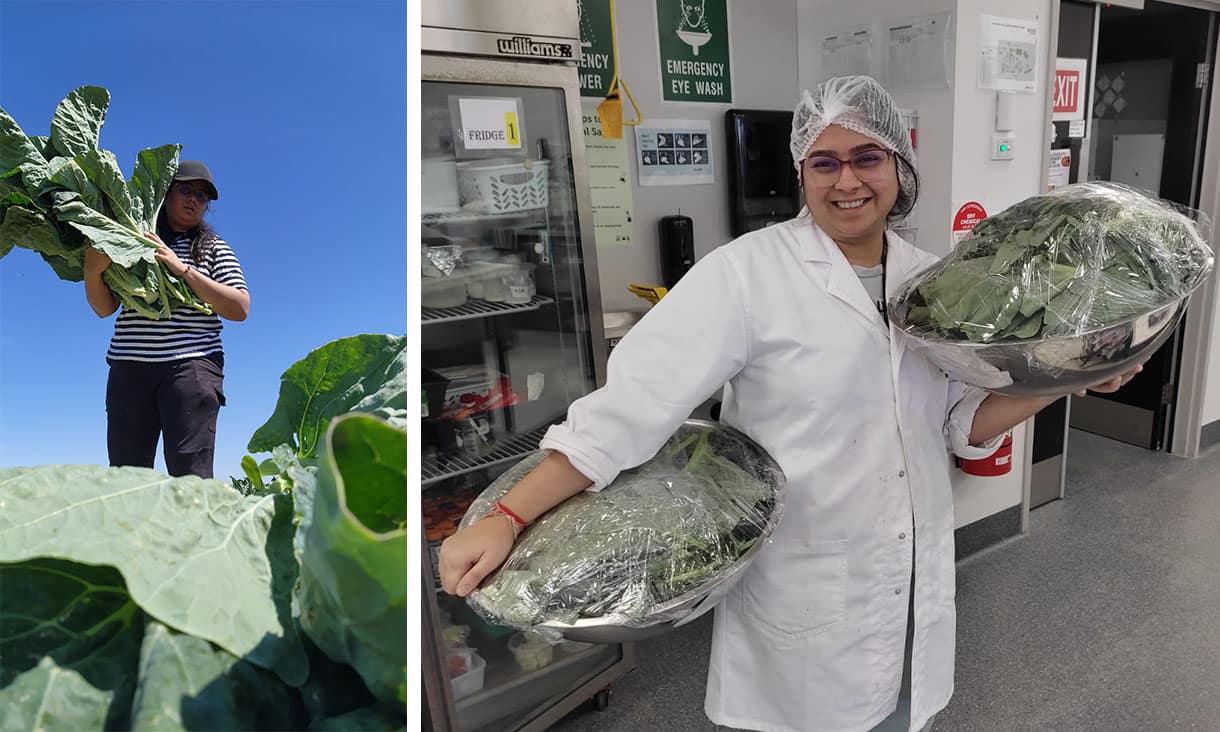
Researchers at RMIT have found that high-power ultrasound can help extract protein from discarded cauliflower leaves, opening up a potential new use for a vegetable by-product that is usually thrown away. If developed further, the process could help food manufacturers turn vegetable waste into useful ingredients for healthy plant-based and more sustainable foods, while reducing waste from crops already being grown. The study used cauliflower leaves from a commercial farm in western Melbourne and found ultrasound treatment improved protein recovery. While still early-stage, the work points to one possible way to recover value from vegetable waste in the food system.
Australian Rural & Regional News found out more about the process and its practical potential from Kinjal Furia, the study’s lead author and RMIT PhD candidate. See the Q&A below the RMIT release.
Ultrasound unlocks protein from cauliflower waste: RMIT University
RMIT University, Media Release, 17 June 2026
An RMIT innovation uses ultrasound to extract leaf protein from discarded cauliflower leaves, identifying a potential new use for vegetable scraps.
The process could help food manufacturers turn vegetable waste into protein ingredients, reducing waste and adding value to existing crops.
The early-stage research found that high-power ultrasound increased dry matter yield and improved protein recovery from the leaves, while different processing settings changed the final concentrate’s particle size, colour, solubility and structure.
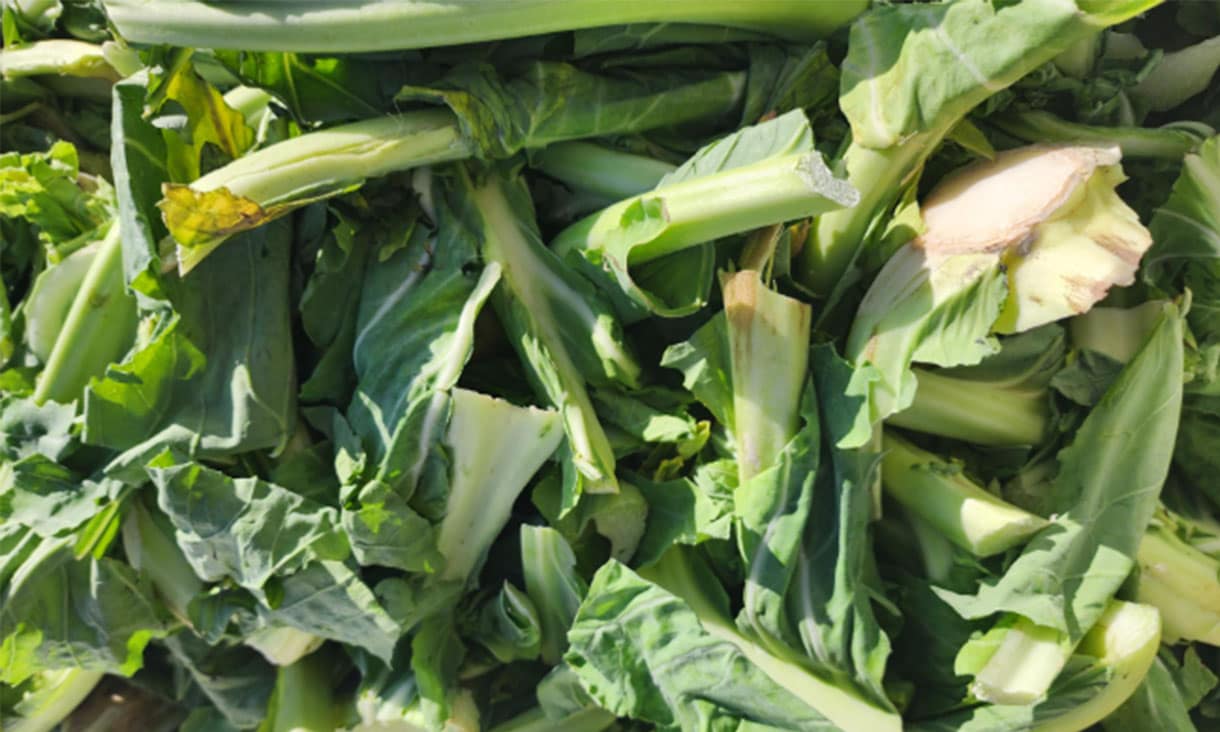
Cauliflower leaves are abundant but often discarded during processing, despite containing protein and dietary fibre. The resulting leaf protein concentrate could have future food and animal feed applications.
Lead researcher Professor Asgar Farahnaky from RMIT’s School of Science said the team used cauliflower leaves from a commercial farm in western Melbourne to test different ways of processing the waste to see how much protein they could recover.
They found that ultrasound improved protein recovery from the leaves.
“Ultrasound uses high-frequency sound waves to disrupt plant cell walls and help release protein from the leaves,” Farahnaky said.
“There is growing interest in alternative protein sources, and using existing waste streams could be a practical way to meet that demand without requiring additional production.”
He said further work was needed to test the process at pilot scale, assess energy efficiency and evaluate sensory acceptability in food products.
Study lead author and RMIT PhD candidate Kinjal Furia said the research was about adding value to what was already in the system.
“If we can use food waste streams more effectively, we can reduce environmental impacts while responding to growing interest in alternative protein sources,” Furia said.
The researchers acknowledge support from Harvest Moon, which supplied the cauliflower leaves, and The Leaf Protein Co., which provided in-kind contribution to the project.
Australian Rural & Regional News found out more from
Kinjal Furia, the study’s lead author and RMIT PhD candidate
ARR.News: Can this process be applied generally to vegetable by products, other than cauliflower leaves? Or would there need to be variations on the process depending upon the source vegetable matter?
Kinjal Furia: The process has potential to be applied to other vegetable by-products, not only cauliflower leaves. However, it would not be a “one-size-fits-all” process. Each vegetable source has different moisture content, fibre structure, protein level, pigments, phenolics, and anti-nutritional compounds, so the extraction conditions would need to be optimised depending on the raw material. For example, leafy materials such as cauliflower leaves, broccoli leaves, spinach waste, or alfalfa may be more suitable than highly fibrous or starchy residues.
ARR.News: The process seems quite complex, requiring a whole dedicated plant, and the collection of bulk by products within a time frame. Is this so?
Kinjal Furia: At large scale, this process would require coordinated collection, transport, and processing of bulk by-products within a suitable time frame, because fresh green biomass is highly perishable. This means commercial feasibility would likely depend on locating processing close to farms, packing houses, or vegetable processors, or using a hub-and-spoke model whereby by-products are collected and processed rapidly.
ARR.News: Really, how feasible is this at scale, and is the value of the protein extracted (as a food and as a product) worth it?
Kinjal Furia: In terms of scale-up, the process is technically feasible, but economic feasibility is still the key question. The value would not only come from the protein itself, but also from reducing waste, creating a new ingredient stream, improving sustainability outcomes, and potentially producing co-products such as fibre-rich fractions or animal feed ingredients. However, the final commercial value would depend on protein yield, functionality, food-grade quality, processing cost, drying cost, logistics, and market demand.
ARR.News: Have you done any modelling as to the viability and cost/ benefit as yet?
Kinjal Furia: At this stage, work has mainly focused on the technical feasibility, protein recovery, composition, and functional properties of the extracted protein. I have not yet completed a full techno-economic or cost–benefit model. However, this is an important next step. Future modelling would need to include raw material availability, transport distance, processing capacity, energy and water use, drying costs, labour, ingredient selling price, and comparison with existing plant proteins such as soy, pea, or commercial leaf protein.

