Sebastian Calderon, Murray Pioneer
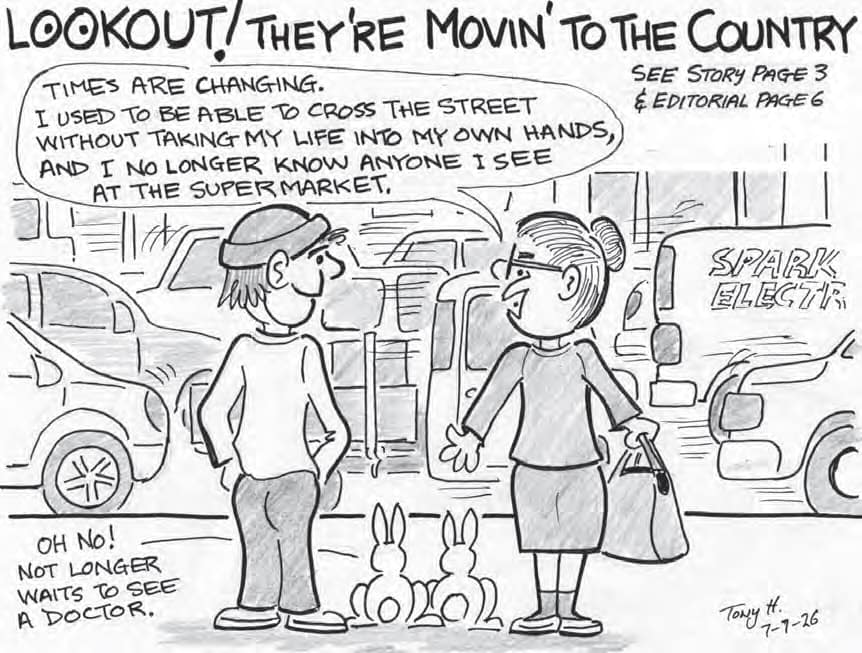
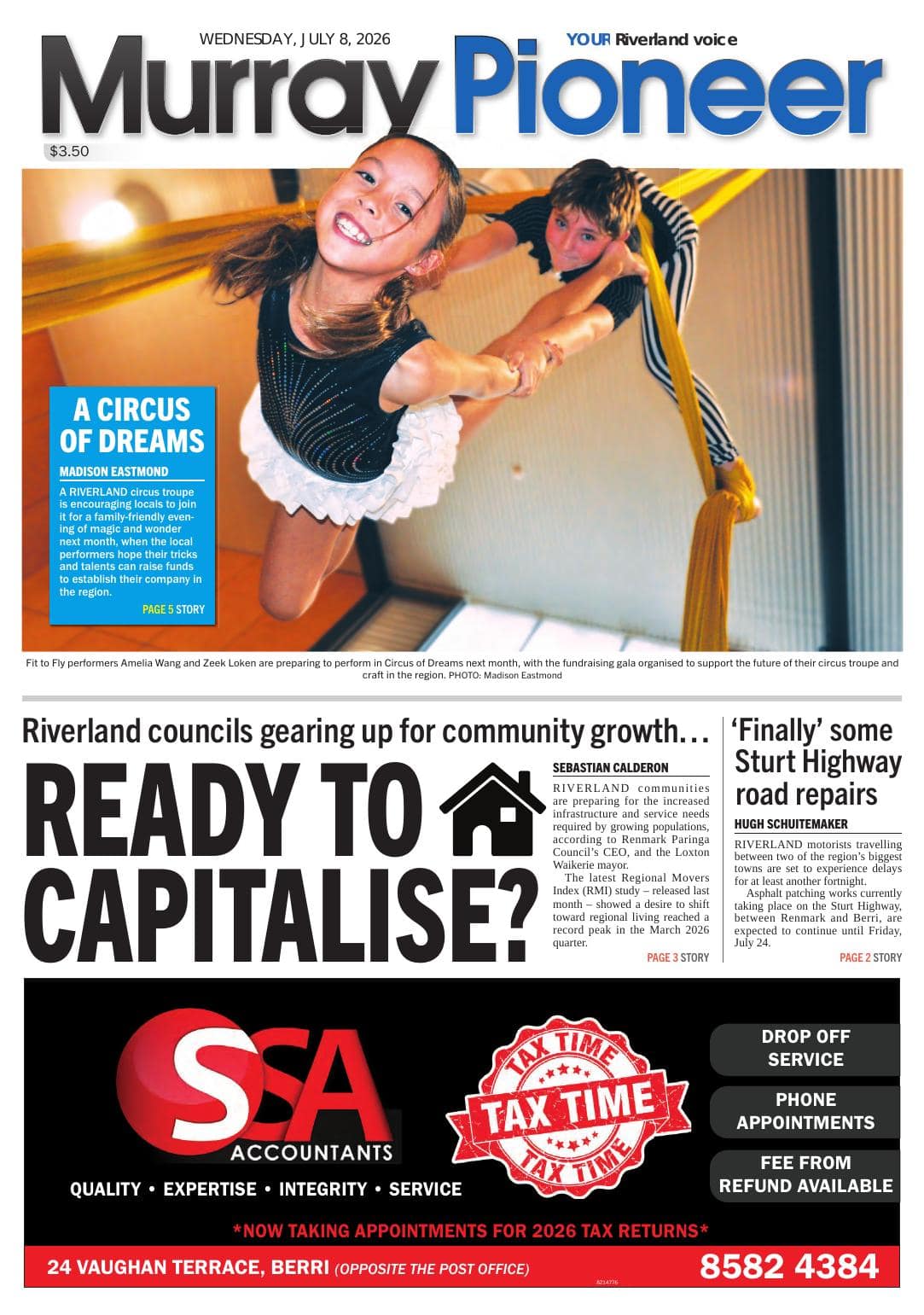
Riverland communities are preparing for the increased infrastructure and service needs required by growing populations, according to Renmark Paringa Council’s CEO, and the Loxton Waikerie mayor.
The latest Regional Movers Index (RMI) study – released last month – showed a desire to shift toward regional living reached a record peak in the March 2026 quarter.
Data for the quarter showed capital city residents moving to Australia’s regions outnumbered those moving in the opposite direction by 29.7 per cent.
Renmark Paringa CEO Tony Siviour said “Renmark continues to attract strong interest from people seeking to relocate to regional areas, particularly those looking for lifestyle benefits and more affordable housing options”.
“Developers are responding to demand with new land divisions under construction or in the final stages of approvals prior to commencing construction,” Mr Siviour said.
“To ensure continued growth in Renmark is successfully managed, council has developed a growth strategy which identifies current infrastructure and services and what is required to accommodate growth. The strategy provides a long-term framework to encourage investment, support population growth and facilitate appropriate residential development.”
“Council is pleased to see the strategy help to guide orderly growth and providing confidence for developers to invest in our communities.”
Loxton Waikerie Mayor Trevor Norton said “a couple of weeks ago in Canberra, I was privileged to attend an address from Liz Ritchie, the CEO of Regional Australia Institute, outlining the opportunities and challenges of increased movement of Australia’s population from cities to regions”.
“Currently 40 per cent of Australia’s population – or 10 million people – live in the regions and with this societal transition comes an increased need for infrastructure.” Mr Norton said.
“Childcare, medical services, aged care, schools/education are some of the main reasons people come and stay in the regions.
“We have partnered with Woodleigh, Loxton District Childcare Centre, on the construction of a new centre which is about to open. This will double capacity, from 75 to 150 places for the young.
“The Riverview Lutheran Rest Home is beginning construction of an additional 22-room aged care facility.
“This growth drives the need for accommodation for the extra staff and people moving into the town.
“Council has been very active, partnering with Cornerstone Housing, to build 15 units, for essential workers, on Anzac Crescent, with another proposal for six units on Drabsch Street to support the increased needs of the Loxton Hospital.
“Continued expansion of the Loxton Retirement Village is also under consideration.
“Government and councils can’t provide all the funding for developments, so we are always looking to attract and collaborate with private investors to bring our united community investment forward with genuine engagement.
“Our adopted growth strategy also addresses the overall need for housing across the Loxton Waikerie district and some code amendments for future rezoning and housing development is included.
“People are the soft infrastructure of our communities and essential to the continuing provision of services in the region.”
Regional Australia Institute (RAI) chief executive officer Liz Ritchie said the record result confirmed the enduring and growing appeal of regional living and cemented the need for a co-ordinated national approach to population planning.
“This is the highest level of capital to regional movement the RMI has ever recorded.” she said.
“Australians are continuing to choose regional life in greater numbers, even as economic conditions shift.
“Across Covid, inflation, housing pressures and tight labour markets, the trend has been remarkably consistent – people are leaving capital cities for regions, and they’re doing so at increasing rates.
Adelaide is recording an increased share of net outflows, indicating movement from capital cities is becoming increasingly broad-based.
Beyond these established locations, the RMI shows population growth emerging across a wider mix of regional communities, with growth hotspots now evident across most states.”
Commonwealth Bank regional and agri-business banking executive general manager Kylie Allen said the record RMI result reinforced the long-term strength of rural Australia.
“This is a significant milestone, and the data shows Australians are making long-term, considered decisions to build their lives in regional communities,” Ms Allen said.
“What stands out this quarter is the scale of movement we’re seeing, both from capital cities and between regional communities.
“For many regional businesses, this creates opportunities to respond to a larger and more diverse customer base. We’re seeing that reflected in our business lending, with businesses investing to support larger populations and increased economic activity across their regions.
This article appeared in Murray Pioneer, 8 July 2026.