

Merilyn Vale, Coast Community News
Four councillors have spoken up about practices at Central Coast Council meetings, saying power is being abused, procedures aren’t being followed and debate is being gagged.
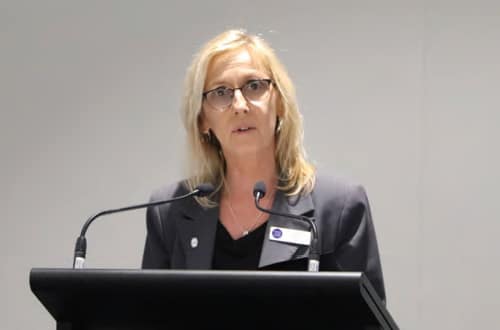
The comments highlight the party political divide dominating meetings with the complaints coming from two Labor councillors – Kyle MacGregor and Margot Castles – and two independent councillors – Jane Smith and Corinne Lamont – who don’t hold the numbers in Council.
The four Liberal councillors – Trent McWaide, John McNamara, Jared Wright, Rachel Stanton – one Liberal-values councillor Doug Eaton and three Team Central Coast councillors – Kyla Daniels, Deputy Mayor John Mouland and Mayor Lawrie McKinna – have the numbers.
The February meeting saw a long debate ensue after Cr Doug Eaton attempted to push through a number of items from the Environment and Planning Committee without debate.
His plan was contrary to the code of meeting practice and the minority councillors were not happy.
They wanted to be able to debate some of the items as per the adopted code.
Cr Eaton said the items had been voted on unanimously at the committee level and that showed there was cross-factional support.
Cr Smith said this comment would assume that all Liberal and Team Central Coast councillors voted the same way and all Labor councillors voted the same way – in line with a pre-determined position on a matter, irrespective of the personal views of individual councillors on the merits of the matter.
“This kind of caucusing is not permitted under the Code of Conduct,” Cr Smith said.
The standing committees of Council are made up of a subset of councillors and can only make recommendations that then go to a full Council meeting.
In July 2025, the CEO had a meeting with the Committee Chairs to come up with a process that meant two councillors had to ask for an item to be called up to be discussed at a Council meeting.
Cr Smith said the meeting itself and the outcome were both extraordinary.
“The Committee Chairs become ‘gatekeepers’ on what can be discussed at the Council meeting,” she said.
It also contradicted the normal process of one councillor being able to “star” an item for debate at a Council meeting.
But neither procedure was used at the February meeting, an “appalling” abuse of process, according to Cr Smith, gagging debate on a range of matters.
The eight Liberal and Team Central Coast councillors supported Cr Eaton’s motion. The remaining seven councillors opposed it. That 8-7 vote is a common outcome at Council meetings.
At the January meeting, Cr Smith had attempted to get the committee structure replaced with a second Council meeting each month.
“What has been demonstrated again and again is the inefficiency of this structure,” she said.
“Inevitably, the debate that is held in the Committee meeting is often repeated at the Council meeting.”
When it became obvious she was not going to get the numbers, she changed the motion to allow for consultation.
“I requested that the Mayor – in his leadership role – facilitate those discussions; initially the Mayor agreed,” Cr Smith said.
“Disappointingly, it appears that after receiving a text message and reading his phone the Mayor flipped his position.
“Even with prompting, he refused to entertain the idea of having a discussion with other councillors and used his casting vote to reject the motion – effectively using his vote to avoid meeting with his colleagues to discuss options of how to do it better.”
Cr Lamont said she has always argued that the committees should have all councillors as members, so all Council business can be debated and resolved in one meeting.
“A unanimous vote in a committee of six or seven councillors is not the same as a vote of the full 15-member Council,” she said.
“The Ordinary Council meeting is where final decisions are made, in public, with the full elected body present.
“When items are bundled together and debate is restricted, it reduces transparency and limits whole of Council accountability.
“Community members have spoken up against this ‘stealth’ practice.”
Cr Lamont said the current situation fragmented debate, concentrated agenda control and made it harder for residents to see where and how decisions were really being made.
“When councillors are prevented from debating items at the full Council level, it raises serious fairness concerns,” she said.
Cr Castles said she was deeply concerned at the change in process, saying it was a way of trying to avoid scrutiny in the chamber.
Cr MacGregor said councillors had time and again raised issues with breaches of the code of meeting practice going back well over 12 months.
He said sectional interests were being supported rather than the community interest.
He mentioned an item that was on the agenda – the terms of reference for a Land and Environment Court Appeals Working Group – and said it was an example of councillors getting involved in operational legal matters.
“These are the kind of things that lead to ministerial intervention,” Cr MacGregor said.
“It’s about time people actually wise up and follow the rules rather than exploiting them, acting contrary to them and pretending that they’re serving the community in doing so.”
This article appeared in Coast Community News, 12 March 2026.

