

Hugh Schuitemaker, Murray Pioneer
A senior Riverland politician is “deeply concerned” at the potential risks caused by a decision to allow bee colonies from varroa mite outbreak areas into South Australia.
PIRSA has announced the movement of bee colonies from varroa-positive interstate jurisdictions into South Australia will now be permitted entry under specific movement conditions, in an attempt to support business continuity for the beekeeping industry and pollination-dependent partners.
A PIRSA spokesperson said an incursion of varroa into South Australia was “highly likely”.
“While PIRSA is allowing bee movements from varroa-positive jurisdictions, there are strict conditions in place for permitted entry,” the spokesperson said.
“PIRSA is also increasing compliance activities, including border checks permit verification, and surveillance. This reflects a balanced, risk-managed approach developed in consultation with the South Australian Varroa Industry Advisory Committee.
“Allowing the movement of hives from varroa-positive jurisdictions with strict controls supports critical pollination services and business continuity for South Australian agriculture, while maintaining strong biosecurity safeguards.
“PIRSA’s varroa development officers are available to assist all beekeepers — commercial or recreational — with hive management, biosecurity practices, and monitoring and education.”
“Strict conditions” in place for the permitted entry of colonies into SA include:
- No proximity to known varroa detections within 25km in the past 12 months.
- No previous varroa detections in the beekeeper’s operations.
- Mandatory testing, certification, and pre-treatment protocols.
Riverland-based MLC, and opposition spokesperson for regional South Australia Nicola Centofanti said protecting the state’s horticultural industries needed to remain a priority.
“The Minister (for Primary Industries and Regional Development Clare Scriven) has now confirmed what industry has been warning for months, that there is a significant shortfall in local hives, and the situation is continuing to deteriorate,” Dr Centofanti said.
“While I welcome the acknowledgement of the problem, the government’s response remains deeply concerning. Opening our borders to hives from varroa-affected jurisdictions is not a decision that should be taken lightly.
“The risk to South Australia’s bee population, and by extension our food and fibre industries, is real, and must be managed with absolute rigour and transparency.”
Dr Centofanti said “South Australia is now facing a pollination crisis, with hive numbers in steep decline”.
“Without healthy, local hives, our pollination-dependent crops are at risk and with them, the economic future of key agricultural sectors,” she said.
“We need a co-ordinated plan to rebuild South Australia’s hive capacity, including targeted drought support for apiarists, incentives to keep hives in pollination service, and greater transparency around the health of our state’s beekeeping network.
“Proactive leadership is needed now more than ever. This is not just a seasonal hiccup, it’s a structural biosecurity and food production risk that must be treated with the urgency it deserves.
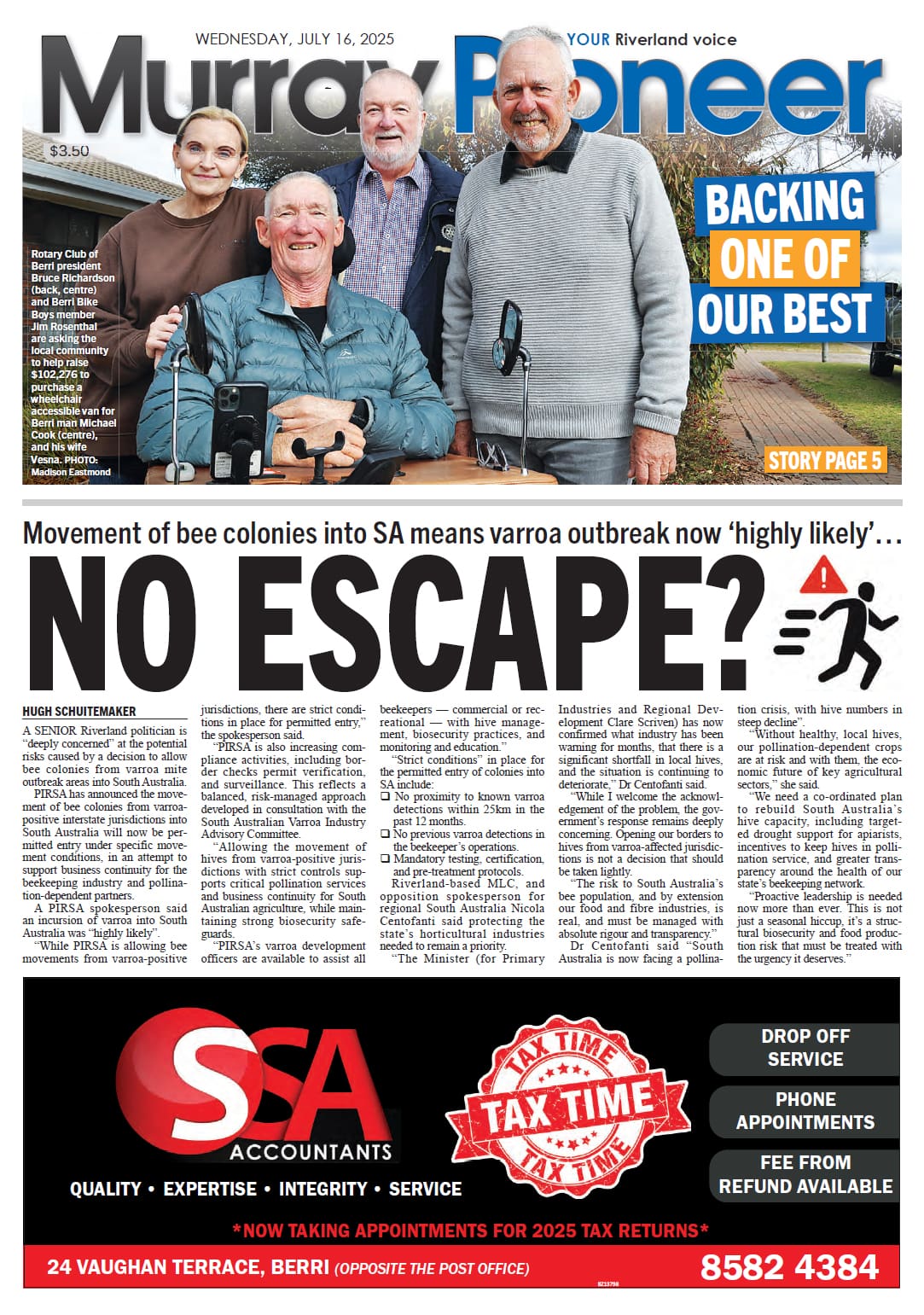
This article appeared in Murray Pioneer, 16 July 2025.