

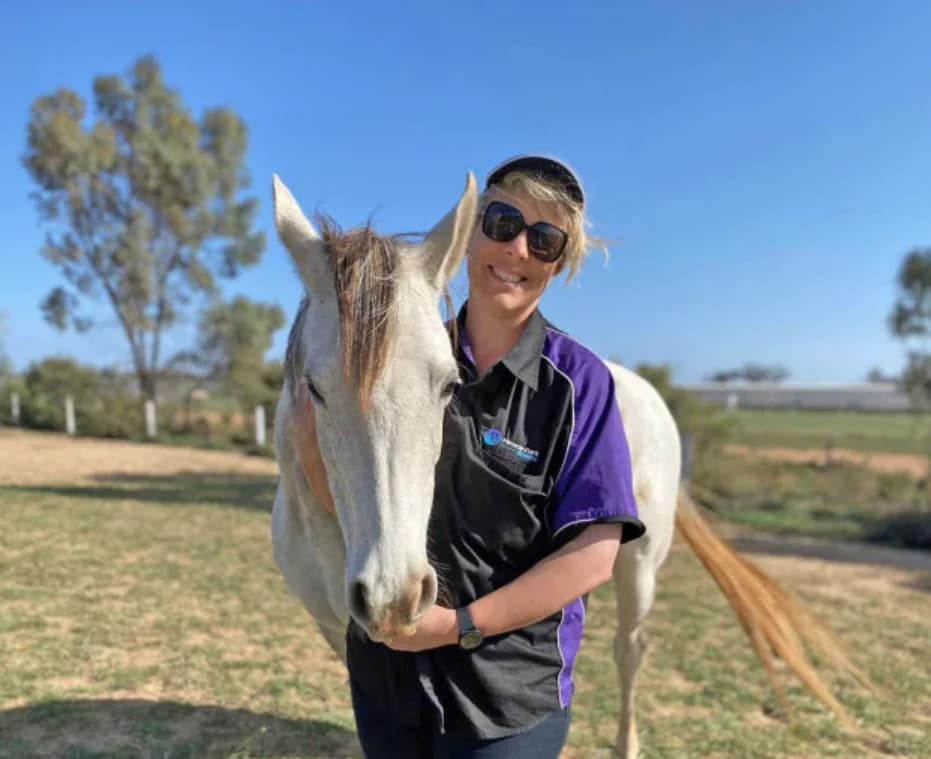
Madison Eastmond, Murray Pioneer
A Berri equine charity is searching for volunteers so its therapy services for the wider Riverland community can continue.
Born from a childhood love of horses and a deep passion for helping others, Mel Sargent said that Miracle Park Stables has been her “dream for 20 years”.
With extensive experience as a registered nurse, Ms Sargent, and her husband, began the initiative in 2021 — with the Berri charity now a stable equine team that hope to make lasting change in community mental health and animal welfare.
“There is a huge gap of mental health programs that work,” Mrs Sargent said.
“Especially here in the Riverland, there are very little options for services and the chance for healing.”
However, with the recent assisted RSPCA rescue of three Kosciuszko Brumbies and the expanding services the Miracle Stables provides, the charity is in need of volunteers to keep facilities running for Riverland clients.
“We currently need people with horse experience and preferably with disability experience,” Ms Sargent said.
“In our sessions we don’t have horses tied up — they are loose in the stable area so they can be groomed, decorated, and interact freely, or otherwise wander in the main herd.
“So, for the work that we do, and to keep our clients safe in paddock with loose horses, we need a facilitator who recognises and can understand horse body language.
“However, there are roles for people without such knowledge — and we encourage those interested in helping with the basic care and management of horses to contact us — but, to run client sessions we need that experience.”
Over the past three years, Miracle Park Stables have provided therapeutic avenues for those struggling with mental health and/or have a disability to build self-esteem, self-efficacy, resilience and emotional regulation skills through a variety of programs, including:
- Equine Partnered Experiential Therapy:
A program offered for complex mental health issues and anyone wanting to delve deeper within themselves in a safe, thera-peutic environment. Partnered with a trained facilitator, the program involves observing and interacting with the equine partners in a therapeutic space with no riding involved.
- Therapeutic Riding:
A program available for NDIS participants, providing therapeutic benefits and assisting with improved balance, co-ordination, strength and greater range of movement. Therapeutic riding will also help participants to develop self-awareness and will improve emotional regulation and social skills.
- Therapeutic Horse Connection:
A program available for NDIS participants who may choose not to, or are unable to ride horses. These sessions can include activities such as grooming, decorating a horse or pony’s mane, art therapy involving the ponies, leading the horses or ponies through our obstacle course, or learning from them in their herd environment.
- Equine Assisted Learning:
An introductory program is a mini module on boundaries and consent. This program is a valuable tool to help kids learn important communication skills, including understanding non-verbal body-language.
- Horse Time:
An unstructured program that includes mindfulness exercises and games with an equine partner. The program also provides the opportunity to groom a pony, or just sit in the yards and watching them play.
- Equine Mindfulness Experience:
A program designed for individuals, families, groups and corporate team building to relax while also learning about self-care, resilience, boundaries, temperament types and personality profiling to enhance communication, with no riding involved.
- Responsive Horsemanship Coaching:
A three-stepped program that teaches horse riding. Each step will build on the previous sessions to develop a well-rounded understanding of caring for horses and learning to communicate with horses in a natural and holistic way.
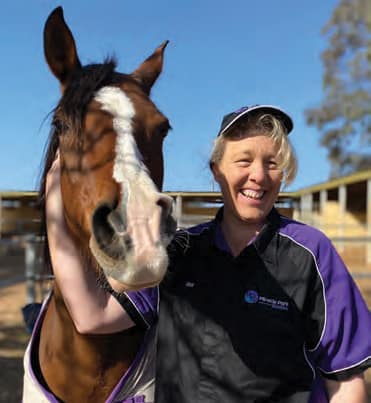
Ms Sargent said that horses operate in the present, respond immediately and honestly to what is happening in the moment, and are experts at reading non-verbal signals and body language.
“Horses have a really similar social structure to people — they experience the same emotions as people,” Ms Sargent said.
“They are amazing mirrors of our emotions.
“They will reflect back what the person is feeling. Even if someone is saying they’re calm, if they’re in the herd and dysregulated, the horses will be very wary because they can feel that incognisance.
“So, when we do breath work and grounding the horses will come back because you become a safe space — ultimately you learn to self-regulate, because if you want the horses near you, you have to do the work.”
With an inherent, gentle nature, curiosity, and a drive to work in a herd which causes horses to seek connection, even with people, Ms Sargent said such feedback enables a deepening in awareness of self and can encourage confidence and improve personal strengths.
“You can just imagine how healing it can be when a horse is choosing to interact with someone,” she said.
“Of course, being around the horses can help the person regulate, but healing can also come from the interaction with the horse and the connection that can be built.”
Ms Sargent said it was her own experience with complex PTSD and the peace she found with horses that inspired her to share the experience with her community.
“I am so passionate about helping people with trauma,” she said.
“Having a horse provide that secure base is what helped me and I really just wanted to provide that for others — watching people heal, grow, and change has been magical.
“We recently had a couple of kids come through that have significant childhood trauma — they were selectively non-verbal and very shy.
“Since engaging with our programs, one has been able to go back to school and begin to make friends.
“It’s that transition from insecure attachment — the relationship and attachment with one of the ponies has been able to model a secure attachment, which allows the child to develop a capacity to explore the world and make connections with others”¦ it’s really beautiful.”
Ms Sargent said Miracle Park Stables was also open to anyone wanting a place to relax or spend time with animals.
“There are always positive benefits to being around these animals,” she said.
“Even when we teach riding — only using a bareback pad and a halter without bits in their mouth so the horse is comfortable — it’s therapeutic because we teach first being a partner with the horse. We lead the rider around the arena, and have them feel the horse’s movement and gently guide the animal around an obscure course.
“The horse-riding skills are based on communication first — it’s about using your body, energy, and position to inform the horse of your intention, it’s not just pull and kick.”
Along with finishing her Masters in Counselling, Ms Sargent hopes to continue expanding the services at Miracle Park Stables.
“We are hoping to expand our services to those with a physical disability soon,” she said.
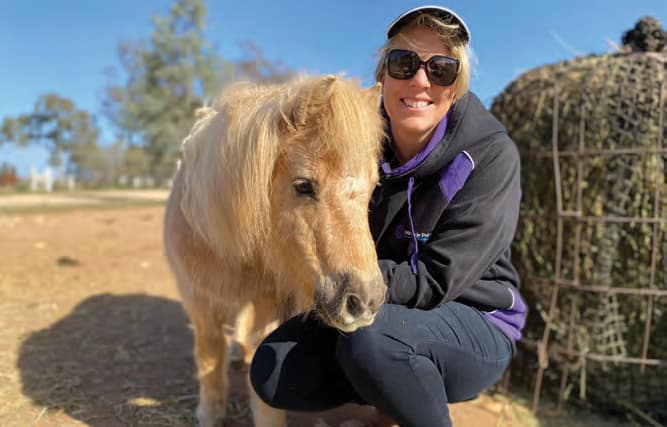
“We are also in the process of setting up a Pay It Forward fundraiser for our pony Zim, who passed away a few weeks ago to colic.
“He was the absolute best with children, so we want to create a legacy in his name of funding that can be set aside for those who cannot afford our services.”
For more information, or to register interest in volunteering, message the Miracle Park Stables’ Facebook page (www.facebook.com/miracleparkstables/), visit the website (www.miraclepark.com.au), or email (miracleparkstables@gmail.com).
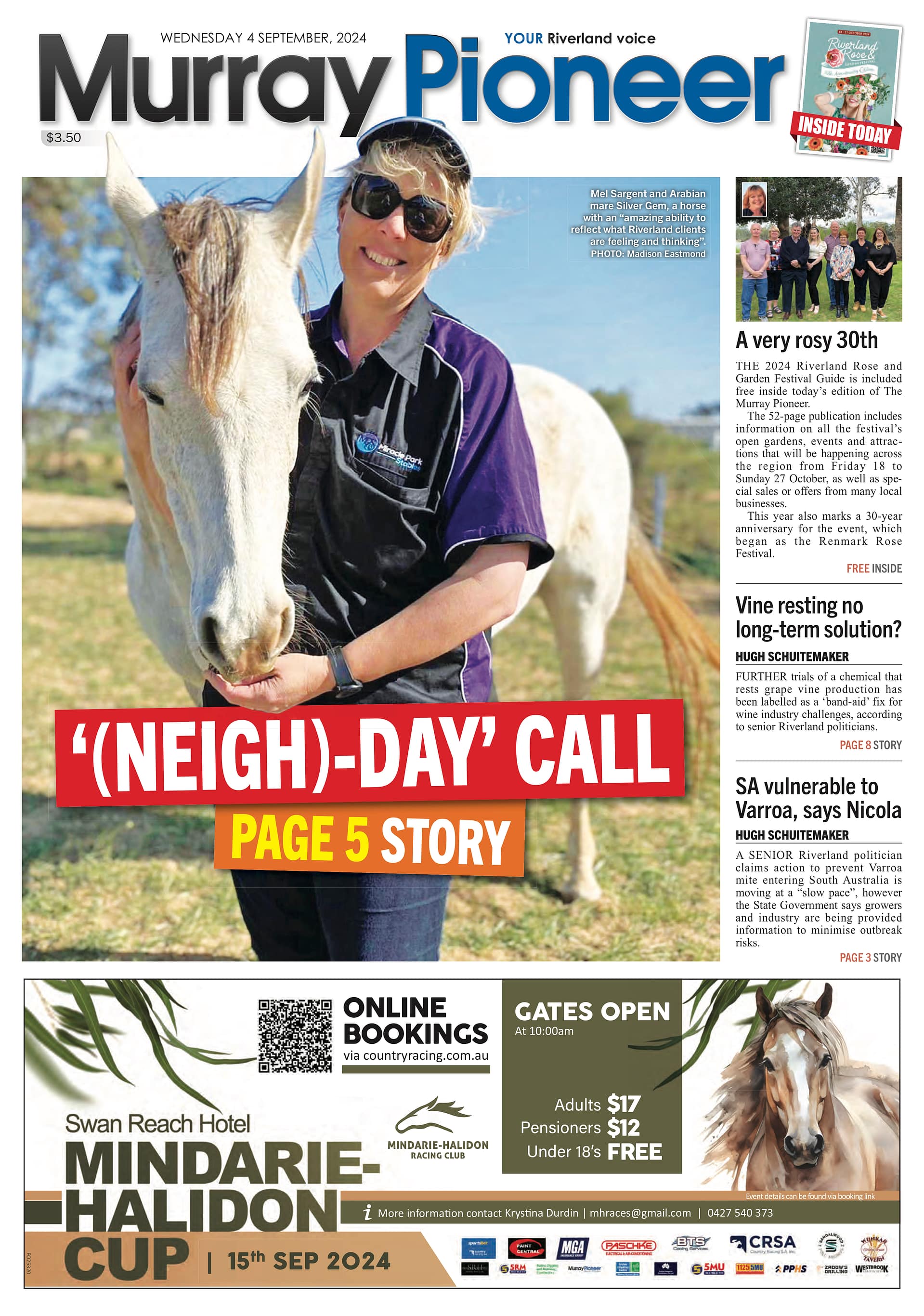
This article appeared in the Murray Pioneer, 4 September 2024.

